-
Your next favorite book
is waiting.
Summary | Excerpt | Reading Guide | Reviews | Read-Alikes | Genres & Themes | Author Bio
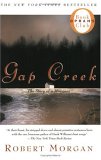
Please be aware that this discussion guide will contain spoilers!
Join BookBrowse free to unlock all 13 discussion questions, author background, themes, and more for Gap Creek.
Join free — it takes 30 secondsAlready a member? Log in →
Unless otherwise stated, this discussion guide is reprinted with the permission of Touchstone. Any page references refer to a USA edition of the book, usually the trade paperback version, and may vary in other editions.
 (1).gif)
A few books well chosen, and well made use of, will be more profitable than a great confused Alexandrian library.
Click Here to find out who said this, as well as discovering other famous literary quotes!

Can you name the title?
Test your book knowledge with our daily trivia challenge!
Your guide toexceptional books
BookBrowse seeks out and recommends the best in contemporary fiction and nonfiction—books that not only engage and entertain but also deepen our understanding of ourselves and the world around us.