Book Club Discussion Questions
In a book club? Subscribe to our Book Club Newsletter and get our best book club books of 2026!
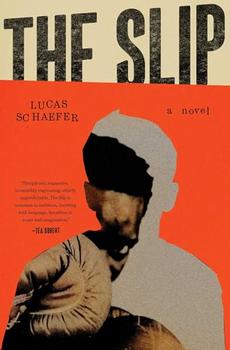
For supplemental discussion material see our Beyond the Book article, The Widespread Appeal of Boxing and our BookBrowse Review of The Slip.
Please be aware that this discussion guide will contain spoilers!
- Unlike many places in America, Terry Tucker's Boxing Gym isn't segregated along lines of race and class, geography and gender. At the gym, immigrants from Mexico and the Caribbean work out alongside born-and-bred Austinites, "a jumble of humanity sweating it out as one." How does the gym's varied clientele contribute to its success? What tensions arise from the gym's diversity?
-
Throughout The Slip, David Dalice makes choices that could, at best, be called ethically questionable, from boasting to his teenage underlings about his alleged sexual experiences to more consequential actions later. Why do you think David behaves as he does? Were you sympathetic to David, and how did your sympathies evolve over the course of the story?
-
How does Nathaniel's understanding of race—and particularly the meaning of Blackness—contribute to his actions? Where do you sense this understanding comes from?
-
Belinda St. James has what at the end of the book is characterized as a "complicated love" for her child, who decides as a teenager to, in Belinda's sassy estimation, ditch the name she gave him, Charles Rex, and be known simply as X. How would you describe Belinda's parenting style? Did you understand her approach? Did you agree with it?
-
In the first half of the "XXX" section of the book, we get to know X through his sort-of-romance with a troubled boy in his class named Jesse Filkins. In the second half, X begins a new sort-of-romance, with life-changing results. What is the link between these two relationships? How is X's conception of himself tied up in his connection to his suitors?
-
Who gets to be considered an American, and why, is an issue at the heart of the intersecting immigration plotlines in The Slip. Compare the journeys of Haitian-born David Dalice and Mexican-born Alexis Cepeda. How do their immigration stories have an impact on their lives in the US? Do you think they conceive of themselves as American? Do others?
-
Much of The Slip takes place in 1998—a time when search engines were still novel, and smartphones nonexistent. How does the time period affect the plot? Do you think the conversations and conflicts concerning race, gender, and sexuality would've transpired differently if they were set today?
-
In "Leonard District," we spend a year following Miriam Lopez, the police officer investigating Nathaniel's case a decade after his disappearance. In what ways did Miriam's experience as a rookie cop conform to or diverge from your expectations?
-
The Jewish women who attend Citizen Police Academy with Nathaniel's uncle, Bob Alexander, seem, at first, tangential to the mystery of the boy's disappearance over a decade earlier. However, it is through these women that the reader learns key details about the cold case. Why do you think the author chose to tell this part of the story from their perspective? What did you make of their evolution over the course of the class?
-
A slip is a defensive strategy in boxing, but the title could also refer to the many characters who give each other—and sometimes themselves—"the slip." Which "slip" most surprised you? Most resonated with you? Which characters do you think benefited from their transformations, and which didn't?
Unless otherwise stated, this discussion guide is reprinted with the permission of Simon & Schuster.
Any page references refer to a USA edition of the book, usually the trade paperback version, and may vary in other editions.