Book Club Discussion Questions
Please be aware that this discussion guide will contain spoilers!
The Reality of WarSocial
studies classes study the world’s wars and the impact war has on a
global society. Students learn about ancient wars and the more modern
wars that have been fought in the name of freedom. They know about the
American Revolution, the Civil War, and World Wars I and II. Some
students know about the Korean War, the Vietnam Conflict, and the
Persian Gulf War. Before the events of September 11, 2001, students in
America’s schools knew little about the personal tragedies related to
war. War was simply something that happened in books, in another time,
and on foreign lands. Now, war surrounds them–on television, radio, and
in film. Some know firsthand what it feels like to lose a parent to
terrorists, and others wait eagerly in front of the television in hopes
of gaining a glimpse of a family member or friend who may be in the
Iraqi desert or on the streets of Baghdad. Like the main characters in
the novels in this guide, the innocence of America’s children has been
marked by violence. A new page of history is being written every day,
and it is being done before the eyes of the world’s youngest citizens.
For
this reason, it is extremely important that parents and teachers talk
with children about war, and offer hope that the world might someday
find a peaceful solution to global conflict. Sometimes it is difficult
to find the words to explain the complex issues of war, but books are
always a good way to spark understanding and conversation. This guide
offers discussion for the following books:
The Gadget by Paul Zindel;
Girl of Kosovo by Alice Mead;
Lord of the Nutcracker Men by Iain Lawrence;
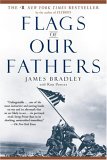
Flags of our Fathers by James Bradley with Ron Powers, adapted for young people by Michael French;
Forgotten Fire by Adam Bagdasarian; and
For Freedom by Kimberly Brubaker Bradley.
Pre-Reading ActivityEngage
students in a discussion about the recent war in Iraq, and how it was
reported in the news. Divide the class into three groups, and assign
each group one of the major newspapers or magazines to read. Ask that
they read a few issues of the publications during the time of the war
and take note of the major headlines, the views of the journalists,
etc. Allow students time at the end of each week to share their
findings. What conclusions can be drawn about the role of journalists
in war?
Questions about the Book
- Engage the class in a discussion about the meaning of patriotism. What is the relationship between duty and patriotism?
- Private Tex Stanton, Second Platoon, Easy Company said, “Life was never
regular again. We were changed from the day we put our feet in that
sand.” (p. 69) Discuss how the Battle of Iwo Jima changed the men who
fought there. Compare and contrast how each of the six flag raisers
were changed.
📖
Get the full reading guide
Join BookBrowse free to unlock all 4 discussion questions, author background, themes, and more for Flags of Our Fathers.
Join free — it takes 30 seconds
Already a member? Log in →
- How does the author develop themes of identity and belonging throughout the narrative?
- What role does the setting play in shaping the characters' decisions and relationships?
- Discuss how the ending reframes the events of the story. Were you surprised?
Unless otherwise stated, this discussion guide is reprinted with the permission of Bantam Books.
Any page references refer to a USA edition of the book, usually the trade paperback version, and may vary in other editions.



 (1).gif)