Book Club Discussion Questions
Please be aware that this discussion guide will contain spoilers!
The Book
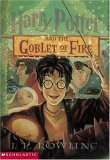
Wizards and Hogwarts! Muggles and mudbloods! Quidditch and broomsticks! None of those things mean anything to Harry Potter, a small, skinny, bespectacled boy with an unusual lightning-bolt shaped scar on his forehead—until his eleventh birthday. That's when he starts receiving letters inviting him to Hogwarts School of Witchcraft and Wizardry. Harry learns that his parents did not die in a car crash but were killed by Voldemort, the Lord of Darkness, and that he's famous in the world of wizardry. So Harry leaves the home of his Aunt Petunia, Uncle Vernon, and their hateful son Dudley, who are mere muggles (humans without one drop of magic in them), and embarks on a new life. And the changes continue as Harry spends year after year at Hogwarts, a place where he not only learns about being a wizard, but also about friendship and loyalty and fear and courage, and about his own past and future, his family, and his destiny.
Harry's first four years at Hogwarts are chronicled in the first four Harry Potter books. In each of those stories, amidst fun and laughter, pranks and pitfalls, mystery and suspense, Harry continues his battle against the evil Lord Voldemort. The books have become enormously popular for their captivating mixture of magical pranks and misadventures, eccentric characters (such as Moaning Myrtle who haunts the girls' bathroom, and Nearly Headless Nick who was not quite completely beheaded, and the Veela who bewitch those around them), courageous heroes and sneering, scheming villains, brilliantly original ideas, and breathtaking excitement — rollicking good reads that appeal to readers of all ages.
Themes
While the fun of fantasy might be its otherworldliness, its power lies is the truths it reveals about the real world. So the magical world of Harry Potter, a world of flying cars and dragons, unicorns and magic potions, invisibility cloaks and evil powers, becomes real as readers discover truths about bravery, loyalty, choice, and the power of love. Read the following quotations from the Harry Potter books and discuss the truth that each reveals.
"The truth. It is a beautiful and terrible thing, and should therefore be treated with great caution." (
The Sorcerer's Stone, page 298)
"...to have been loved so deeply, even though the person who loved us is gone, will give us some protection forever." (
The Sorcerer's Stone, page 299)
"It takes a great deal of bravery to stand up to our enemies, but just as much to stand up to our friends." (
The Sorcerer's Stone, page 306)
"It is our choices, Harry, that show what we truly are, far more than our abilities." (
The Chamber of Secrets, page 333)
"You can exist without your soul, you know, as long as your brain and heart are still working. But you'll have no sense of self anymore, no memory, no ... anything. There's no chance at all of recovery. You'll just—exist. As an empty shell." (
The Prisoner of Azkaban, page 247)
"You think the dead we loved ever truly leave us? You think that we don't recall them more clearly than ever in times of great trouble?....You know, Harry, in a way, you did see your father last night....You found him inside yourself." (
The Prisoner of Azkaban, page 427-428)
"Understanding is the first step to acceptance, and only with acceptance can there be recovery." (
The Goblet of Fire, page 680)
"You place too much importance...on the so-called purity of blood! You fail to recognize that it matters not what someone is born, but what they grow to be!" (
The Goblet of Fire, page 708)
Setting
In a way, Rowling follows the classic fantasy formula of beginning each book in the real world (the Dursleys' home), moving into the fantasy world (Hogwarts School), and then returning to the real world (the Dursleys again). What other fantasies follow this same pattern? Consider classics such as
Peter Pan,
The Indian in the Cupboard, and
The Lion, The Witch and The Wardrobe. Compare these with other works that take place entirely in a fantasy world, such as
The Prydain Chronicles and
The Hobbit. In another way, though, the Harry Potter books are a mixture of these two styles. The world of Hogwarts is not entirely separated from the everyday "muggle" world, but is more a magical world-within-a-world, a world that exists in the real world, although ordinary people are unaware of it. Discuss how this affects your appreciation of the books.
Book 4,
Harry Potter and the Goblet of Fire, opens in Tom Riddle, Sr.'s parents' home, unlike the previous three books which opened in the Dursley's home. How does the change of setting for the beginning of this book affect the tone of the book? Why do you think Rowling departed from the expected setting for the beginning?
Characterization
We believe in Harry because of his human qualities, especially his human frailties. Find instances where Harry is acting more like a bungling muggle than a great wizard. Why is it important for readers that Harry not always be a great wizard?
Rounded characters are characters who change and grow. Find instances of change in Harry. For example, Harry becomes angriest when taunted about his parents' death; however, by book three, when he faces Peter, the person who led Voldemort to his parents, he stops Lupin and Black from killing Peter, saying, "I don't reckon my dad would've wanted them to become killers—just for you" (
Prisoner of Azkaban, page 376). In book four, when Harry could have claimed the Triwizard cup, he instead offers to share it with Cedric. Find other instances of increasing maturity in Harry.
Find examples throughout all four books where Rowling helps us understand characters by telling us what these characters believe. Consider statements such as the one Dumbledore makes at the end of
The Goblet of Fire when he says, "Differences of habit and language are nothing at all if our aims are identical and our hearts are open." (p. 723) or Quirrell's comment to Harry in
The Sorcerer's Stone when he explains "There is no good and evil, there is only power, and those too weak to seek it." (p. 291).
In
The Prisoner of Azkaban, Aunt Marge explains why some folks are no good: "If there's something rotten on the inside, there's nothing anyone can do about it (page 25)." She thinks she's describing Harry. In fact, which characters is she more aptly describing?
Consider the professors and other staff that Harry and his friends meet at Hogwarts, especially Dumbledore, McGonagall, Lockhart, Quirrell, Lupin, Snape, Moody, and Hagrid. Generally, each is much more, or sometimes much less, than the person he or she claims to be. Is it significant that Rowling made each of these characters teachers? What lessons does each character really teach Harry?
If you were making a flow chart of how the characters related to one another for both the Dark Lord and his forces, and Harry Potter and his forces, how would the characters line up? Is Voldemort opposite Dumbledore or Potter? If Barty Crouch, Jr., is Voldemort's most loyal follower, who is Harry's? Which characters from
The Goblet of Fire do you think will become increasingly important in the remaining books?
Conflict
Harry and Voldemort provide the major conflict (good against evil) in each story. Compare their two characters and discuss how their differences provide the conflict for the novels. Consider each of the following instances:
- In The Sorcerer's Stone, when Mr. Ollivander sells Harry a wand that was the brother of a wand owned by Voldemort, Mr. Ollivander explains to Harry that "The wand chooses the wizard" and then tells him, "I think we must expect great things from you, Mr. Potter....After all, He-Who-Must-Not-Be-Named did great things—terrible, yes, but great" (p. 85). How can Ollivander call Voldemort a great wizard? What makes Harry a different kind of great from Voldemort?
- In The Chamber of Secrets, Dobby says he knew of Harry's "greatness but not of his goodness" (page 15). What is the difference between greatness and goodness? Could Harry be the great wizard everyone thinks he is if he were not also filled with goodness? Later in the story, Tom Marvolo Riddle reveals himself to Harry as Voldemort. He tells Harry "There are strange likenesses between us, after all. Even you must have noticed. Both half-bloods, orphans, raised by muggles. Probably the only two Parselmouths to come to Hogwarts since the great Slytherin himself" (page 317). What does Harry think of these likenesses?
- In The Prisoner of Azkaban, when Harry has the opportunity to kill the character responsible for his parents' death, he chooses not to do it. How does that separate him once and for all from his archenemy, Voldemort?
📖
Get the full reading guide
Join BookBrowse free to unlock all 66 discussion questions, author background, themes, and more for Harry Potter & The Goblet of Fire.
Join free — it takes 30 seconds
Already a member? Log in →
- How does the author develop themes of identity and belonging throughout the narrative?
- What role does the setting play in shaping the characters' decisions and relationships?
- Discuss how the ending reframes the events of the story. Were you surprised?
Unless otherwise stated, this discussion guide is reprinted with the permission of Scholastic.
Any page references refer to a USA edition of the book, usually the trade paperback version, and may vary in other editions.

 (1).gif)