Book Club Discussion Questions
Please be aware that this discussion guide will contain spoilers!
Introduction
A man is diagnosed with lung cancer -- precisely the same cancer that had proved deadly to his father not long before -- and then is surprised to discover in a follow-up visit to the doctor that he is in fact perfectly healthy. And, the good news is not delivered with the amount of sensitivity that a new lease on life would seem to merit -- describing the attending doctor, the book reads, "'Go and live properly, young man.' He swiveled his chair around, dismissing me."
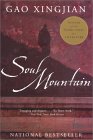
So begins Gao Xingjian's
Soul Mountain. It is from this peculiar and clear-eyed position that a journey begins through the remote mountains of China. The narrator explores rural villages and reflects on the influence that the Cultural Revolution has had on the people and the land, and reveals a rich inner life and a poignant search of meaning and a sense of purpose.
The text begins in the second person, telling what it is that You do. Then it quickly switches to being told in the first person. Later there is a She and a He, both of whom take control of the tale for their parts. And while there is a clear connection between these narrative voices, each one also has his own story, his own feelings, and his own reasons for being on the trip. There is inevitably a certain comfort that the reader acquires with regard to the changing voices -- for, as with any set of characters, we expect different things from each one. Their issues cross over and their narratives correlate -- perhaps only vaguely at times, or even indiscernibly on occasion -- but always powerfully with regard to their genuine sense of yearning.
Soul Mountain is an incredible epic that benefits from an author capable of describing the sound of a river at night with a great sense of poetry. And yet, he also has a precision in his writing that is almost icy in the way it captures both beauty and ugliness in people and in the world. A complicated and heartfelt novel that is rich in poetry and history, it displays an unabashed desire to find meaning in the accidents of politics, the progression of history, and all of the surprising effects of life.
Discussion Questions
- How many protagonists are there in this book? In what ways can I, You, He, and She be linked?
- Xingjian's writing seems often to be used as a tool for uncovering history -- for discovering past events that have been obscured by political forces such as the Cultural Revolution, or even just the general decay of nature, as with metal tiles rusting off of a roof. Would you say that the preservation of the past through art is a driving motivation of the book? If so, why does it matter? And if not, then what is the preoccupation with stories of the past, both ancient and recent?
- What is Soul Mountain? Is it ever reached, or would that be too literal a translation of something deeply metaphorical?
📖
Get the full reading guide
Join BookBrowse free to unlock all 8 discussion questions, author background, themes, and more for Soul Mountain.
Join free — it takes 30 seconds
Already a member? Log in →
- How does the author develop themes of identity and belonging throughout the narrative?
- What role does the setting play in shaping the characters' decisions and relationships?
- Discuss how the ending reframes the events of the story. Were you surprised?
Unless otherwise stated, this discussion guide is reprinted with the permission of Harper Perennial.
Any page references refer to a USA edition of the book, usually the trade paperback version, and may vary in other editions.



 (1).gif)