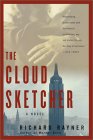
Book Club Discussion Questions
Please be aware that this discussion guide will contain spoilers!
Introduction
"Katerina was his passion and his flaw; his inspiration, his
blindness; his history; his future; she was the million stars that pricked
and made brilliant his soul" (p. 328).
For a little boy, eleven years old at the beginning of the 20th century, great
dreams begin with simple things. A clipped-out newspaper story about a new
invention called the elevator inspires a passion to build skyscrapers, or as
they are called in Finland, "cloud sketchers." And with an equal
force, a beautiful little girl's hand mirror becomes his talisman for a grand,
impossible, and ultimately tragic love.
Yet, when Richard Rayner's epic novel opens, it is already 1928, the luxury
liner
Ile de France is docking, and Esko Vaananen, a famous architect, is
about to be arrested for murder. What brings him to this crossroads and has
entangled him in a homicide is the tale of a child who becomes a man driven to
do extraordinary things.
Rayner's rapidly unfolding narrative, filled with sharp surprises and unexpected
encounters, flashes back to Esko's childhood in a tiny Finnish village as close
to the Arctic Circle as Helsinki. There Esko has already been burned - literally
and figuratively - by a tragedy that has left his face badly scarred, his mother
dead, and his father a political fugitive. Then, as the Russian Revolution
spills over into Finland with horrific results, Esko is swept along on this
great tide of history into a fateful encounter with Katerina Malysheva, the
exquisitely lovely child of a Russian aristocrat. When she gives him her mirror
at their first meeting, Esko - a disfigured, impoverished village boy - falls in
love and seals his fate.
Traveling from war torn Europe to glittering Jazz Age Manhattan, Esko pursues
his twin visions - to build a modern skyscraper that will change the New York
skyline and to find Katerina. That quest will lead the introspective, tall,
blond young man to make painful choices involving his art and ethics, and
ultimately into pacts with different kinds of devils, such as a ruthless land
speculator named MacCormick who can finance his building project and a Mafioso
chieftain Paul Mantilini who can save his life.
Rayner's riveting plot and lush prose plunges readers with equal ease into the
quiet snowbound expanses of Finland, the bloody battle of Tampere (the defining
battle in the Finnish Civil War), and the sexy rhythms of Harlem speakeasies in
a seamless narrative that covers 30 years. It is also a fascinating treatise on
modern architecture, especially that of New York City, that exposes the human
drama behind the structures that have awed the world - and the human cost of
transforming grand visions and magnificent dreams into stone and steel.
Discussion Questions
- Rayner writes "Architecture never lies. It invariably expresses both
its own era and the character of the men who build it" (p. 4). How did
Esko's skyscraper reflect his character? Take a building you particularly
like, and discuss how it reflects its era and what it might reveal about the
person who envisioned or designed it.
- As a young boy Esko asks, "What does an elevator mean?" In light of the September 11, 2001, terrorist attack on the World Trade
Towers - arguably the world's most iconic skyscrapers - has the
"meaning" of skyscrapers changed?
- Would you describe Esko's love for Katerina as an obsession? If so, how
does obsessive love differ from other types of love? How does it differ from
his feelings for his wife Anna? Does obsessive love have any positive
characteristics along with its more obvious destructive ones?
📖
Get the full reading guide
Join BookBrowse free to unlock all 11 discussion questions, author background, themes, and more for Cloud Sketcher.
Join free — it takes 30 seconds
Already a member? Log in →
- How does the author develop themes of identity and belonging throughout the narrative?
- What role does the setting play in shaping the characters' decisions and relationships?
- Discuss how the ending reframes the events of the story. Were you surprised?
Unless otherwise stated, this discussion guide is reprinted with the permission of Harper Perennial.
Any page references refer to a USA edition of the book, usually the trade paperback version, and may vary in other editions.

 (1).gif)