Book Club Discussion Questions
Please be aware that this discussion guide will contain spoilers!
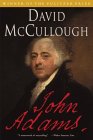
- John Adams had an insatiable desire to explore human nature. In
defending the British soldiers involved in The Boston Massacre, Adams says
to the jury, "Facts are stubborn things, and whatever may be our wishes, our
inclinations, or the dictums of our passions, they cannot alter the state of
facts and evidence." How has his decision to defend the British Army, even
under suspicion of political treason, prepared him to draft a strong
argument for independence?
- In Thoughts on Government, Adams begins to formulate thoughts
on public education. Adams writes, "Laws for the liberal education of youth,
especially for the lower classes of people, are so extremely wise and
useful..." When Adams was a young boy he dismissed the idea of education and
only wished to be a farmer. How has his background influenced his opinion on
education? Why did he see education as essential to the farmer as to the
statesman in the pursuit of an independent nation?
- On slavery, Abigail Adams writes, "It always seed a most iniquitous
scheme to me- [to] fight ourselves for what we are daily robbing and
plundering from those who have as good a right to freedom as we have." Even
Adams with his great display of integrity during The Boston Massacre trial,
has managed to omit the issue of slavery from the Declaration of
Independence. Who in Congress owned slaves and who did not? How could the
abolition of slavery have helped The American Revolution? What stakes were
involved?
📖
Get the full reading guide
Join BookBrowse free to unlock all 12 discussion questions, author background, themes, and more for John Adams.
Join free — it takes 30 seconds
Already a member? Log in →
- How does the author develop themes of identity and belonging throughout the narrative?
- What role does the setting play in shaping the characters' decisions and relationships?
- Discuss how the ending reframes the events of the story. Were you surprised?
Unless otherwise stated, this discussion guide is reprinted with the permission of Simon & Schuster.
Any page references refer to a USA edition of the book, usually the trade paperback version, and may vary in other editions.