
-
Your next favorite book
is waiting.
Summary | Excerpt | Reviews | Read-Alikes | Genres & Themes | Author Bio

An American Family
by Annette Gordon-ReedThis epic work tells the story of the Hemingses, an American slave family whose close blood ties to our President Jefferson had been systematically expunged from American history until very recently.
This epic work tells the story of the Hemingses, whose close blood ties to our third president had been systematically expunged from American history until very recently. Now, historian and legal scholar Annette Gordon-Reed traces the Hemings family from its origins in Virginia in the 1700s to the family's dispersal after Jefferson's death in 1826. It brings to life not only Sally Hemings and Thomas Jefferson but also their children and Hemings's siblings, who shared a father with Jefferson's wife, Martha. The Hemingses of Monticello sets the family's compelling saga against the backdrop of Revolutionary America, Paris on the eve of its own revolution, 1790s Philadelphia, and plantation life at Monticello. Much anticipated, this book promises to be the most important history of an American slave family ever written.
Chapter 1: Young Elizabeth's World
Elizabeth Hemings began life when America was still a colonial possession.
She lived through the Revolution in the home of one of the men who helped make
it and died during the formative years of the American Republic, an unknown
person in the midst of pivotal events in national and world history. Hemings
lived at a time when chattel slavery existed in every American colony, but was
dramatically expanding and thriving in the Virginia that was her home. She was,
by law, an item of property—a nonwhite, female slave, whose life was bounded by
eighteenth-century attitudes about how such persons fit into society. Those
attitudes, years in the making by the time Hemings was born, fascinate because
they are at once utterly familiar and totally alien.
Most Americans today admit the existence of racism and sexism, even as we
often disagree about examples of them. When we encounter these practices while
studying the eighteenth ...

National Book Awards
2008

Pulitzer Prize
2009
 Edmund S. Morgan, author of American Slavery.
Annette Gordon-Reed has broken a path into territory that has hitherto eluded historians: what happens to intimate human relations, those between lover and loved, parent and child, brother and sister, when one among them is enslaved to another. In a richly detailed narrative of events, public and private, she reconstructs the feelings of the participants: Thomas Jefferson, his slave mistress, and her blood relatives. The result is not simply a fascinating story in itself, but a new perspective on how the humanity of slaves and a slave owner could adjust and survive in circumstances designed to obliterate it. We have had other studies of master-slave relationships, but none that has penetrated to the depth of this one. Joseph J. Ellis, author of American Sphinx.
Thomas Jefferson often described his slaves at Monticello as 'my family.' Annette Gordon-Reed has taken that description seriously. Surely more seriously than Jefferson ever intended! The result, the story of the Hemings family, is the most comprehensive account of one slave family ever written. It is not a pretty story, but it is poignant beyond belief. And it demonstrates conclusively that we must put aside Gone With the Wind forever and begin to study Faulkner's Absalom, Absalom."
Edmund S. Morgan, author of American Slavery.
Annette Gordon-Reed has broken a path into territory that has hitherto eluded historians: what happens to intimate human relations, those between lover and loved, parent and child, brother and sister, when one among them is enslaved to another. In a richly detailed narrative of events, public and private, she reconstructs the feelings of the participants: Thomas Jefferson, his slave mistress, and her blood relatives. The result is not simply a fascinating story in itself, but a new perspective on how the humanity of slaves and a slave owner could adjust and survive in circumstances designed to obliterate it. We have had other studies of master-slave relationships, but none that has penetrated to the depth of this one. Joseph J. Ellis, author of American Sphinx.
Thomas Jefferson often described his slaves at Monticello as 'my family.' Annette Gordon-Reed has taken that description seriously. Surely more seriously than Jefferson ever intended! The result, the story of the Hemings family, is the most comprehensive account of one slave family ever written. It is not a pretty story, but it is poignant beyond belief. And it demonstrates conclusively that we must put aside Gone With the Wind forever and begin to study Faulkner's Absalom, Absalom."
If you liked The Hemingses of Monticello, try these:
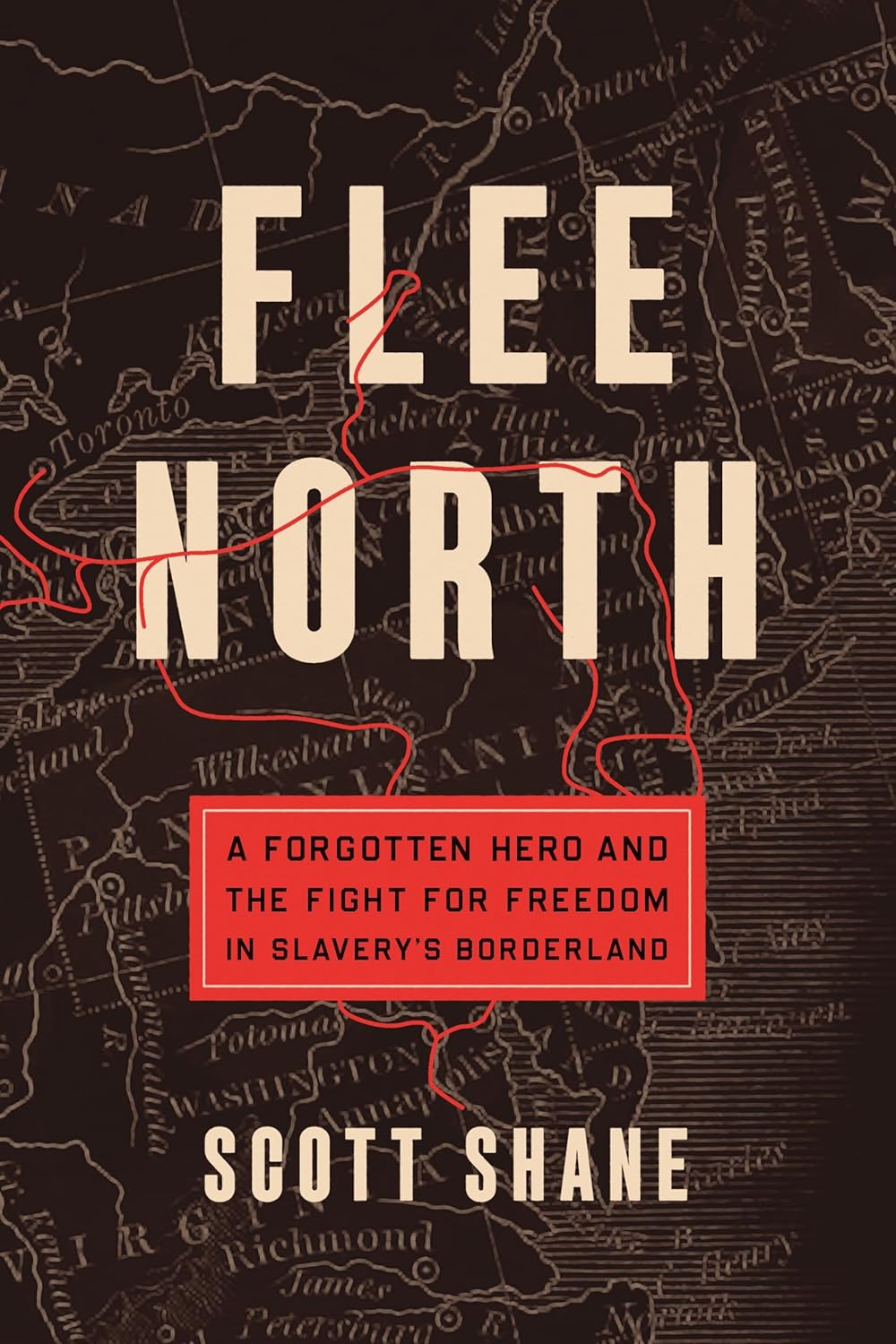
by Scott Shane
Published 2024
A riveting account of the extraordinary abolitionist, liberator, and writer Thomas Smallwood, who bought his own freedom, led hundreds out of slavery, and named the underground railroad, from Pulitzer Prize-winning author and journalist, Scott Shane. Flee North tells the story for the first time of an American hero all but lost to history.

by Tiya Miles
Published 2022
A renowned historian traces the life of a single object handed down through three generations of Black women to craft an extraordinary testament to people who are left out of the archives.

The Immortal Life of Henrietta Lacks
by Rebecca Skloot
Published 2011
Winner of BookBrowse's 2010 Best Book Award
Intimate in feeling, astonishing in scope, and impossible to put down, The Immortal Life of Henrietta Lacks captures the beauty and drama of scientific discovery, as well as its human consequences.
 (1).gif)
Be sincere, be brief, be seated
Click Here to find out who said this, as well as discovering other famous literary quotes!

Can you name the title?
Test your book knowledge with our daily trivia challenge!