
-
Your next favorite book
is waiting.
Summary | Excerpt | Reviews | Beyond the book | Read-Alikes | Genres & Themes | Author Bio
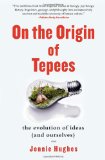
The Evolution of Ideas (and Ourselves)
by Jonnie Hughes Book Reviewed by:
Why do some ideas spread, while others die off? Does human culture have its very own "survival of the fittest"? And if so, does that explain why our species is so different from the rest of life on Earth?
Throughout history, we humans have prided ourselves on our capacity to have ideas, but perhaps this pride is misplaced. Perhaps ideas have us. After all, ideas do appear to have a life of their own. And it is they, not us, that benefit most when they are spread. Many biologists have already come to the opinion that our genes are selfish entities, tricking us into helping them to reproduce. Is it the same with our ideas?
Jonnie Hughes, a science writer and documentary filmmaker, investigates the evolution of ideas in order to find out. Adopting the role of a cultural Charles Darwin, Hughes heads off, with his brother in tow, across the Midwest to observe firsthand the natural history of ideas - the patterns of their variation, inheritance, and selection in the cultural landscape. In place of Darwin's oceanic islands, Hughes visits the "mind islands" of Native American tribes. Instead of finches, Hughes searches for signs of natural selection among the tepees.
With a knack for finding the humor in the quirks of the American cultural landscape, Hughes takes us on a tour from the Mall of America in Minneapolis to what he calls the "maul" of America - Custer's last stand - stopping at road-sides and discoursing on sandwiches, the shape of cowboy hats, the evolution of barn roofs, the 28.99 wording of jokes, the wearing of moustaches, and, of course, the telling features from tepees of different tribes. Original, witty, and engaging, On the Origin of Tepees offers a fresh way of understanding both our ideas and ourselves.
Super-Natural?
Yet it is neither our life-threatening larynx nor our naked, spotty, sweaty
skin, nor our dangerously large heads, nor our wonderful brains and
sparkling intelligence that singles us out as the weirdest wonders in all
creation. There is something even more peculiar about our species than
all these things, and that is this: we are the only species on the planet that
cannot be fully explained by Charles Darwin's otherwise faultless theory
of evolution by natural selection.
Natural selection is powerful enough to explain how male hammerheaded
fruit bats became flying trumpets, how oarfish came to look
and move so oddly, how elephants developed their trunks and infrasound,
even how naked mole rat queens came to run their reproductive
dictatorships. It does all of this without needing to call on some divine
creator, because natural selection is a theory that can explain how
nature makes marvels without intentional...
Hughes takes on the complex task of attempting to square the development of human culture with what we know about the principles of evolution and natural selection at work in the biological world. He isn't working alone - in fact, his project is more of a translation, of laying out the work of other scientists and thinkers in an engaging, instructive narrative form for the lay-reader. Images and anecdotes make his logic vivid in the mind... He is a good storyteller, crisp and funny, and always generous, even when the ideas he entertains become radically complex. Whether his charm, which works so well on the average reader, will win over specialists in the field remains to be seen...continued
Full Review
 (820 words)
(Reviewed by Jennifer G Wilder).
 Daniel Dennett, New Scientist, Letters
Ambitious and original. Unlike the vast majority of recent writings about memes, this is a serious book that does "add to the theory". It belongs on the reading list of anybody who hopes to use Richard Dawkins's insight into memes, offering a serious scientific account of cultural change and innovation. That it is entertaining is a bonus, not a substitute for substance. Professor Susan Blackmore, author of The Meme Machine
This book is a delight. Not only has Hughes described the world with meme's eye vision but he has woven the insights of this view into a funny and endearing travel tale. Anyone interested in memes and the evolution of culture is bound to enjoy it. At last! At last not only has someone seriously adopted a meme's-eye view of the world but has described the world seen through its lenses with humour, intelligence and real insight. Hughes' hilarious travels through the American West do for culture what Darwin did for biology. I will buy a copy for both my meme-loving and my meme-hating friends.
Daniel Dennett, New Scientist, Letters
Ambitious and original. Unlike the vast majority of recent writings about memes, this is a serious book that does "add to the theory". It belongs on the reading list of anybody who hopes to use Richard Dawkins's insight into memes, offering a serious scientific account of cultural change and innovation. That it is entertaining is a bonus, not a substitute for substance. Professor Susan Blackmore, author of The Meme Machine
This book is a delight. Not only has Hughes described the world with meme's eye vision but he has woven the insights of this view into a funny and endearing travel tale. Anyone interested in memes and the evolution of culture is bound to enjoy it. At last! At last not only has someone seriously adopted a meme's-eye view of the world but has described the world seen through its lenses with humour, intelligence and real insight. Hughes' hilarious travels through the American West do for culture what Darwin did for biology. I will buy a copy for both my meme-loving and my meme-hating friends.According to the Oxford English Dictionary, a meme (pronounced meem) is, "n. An element of a culture that may be considered to be passed on by non-genetic means, esp. imitation". A meme is a nugget of meaning, the smallest building block of an idea, the basic unit of culture. What a gene is to biology, some say, the meme is to anthropology. Just as an advanced organism, like an elephant, has a complex genetic code built up over millennia, so too does a cultural production such as Darwin's On the Origin of Species. In this case, an accretion of small ideas evolved over time and combined in new ways. In Jonnie Hughes's On the Origin of Tepees, memes are the building blocks of all human skill and knowledge. Like genes, they want to ...
If you liked On the Origin of Tepees, try these:
by Rob Dunn
Published 2014
A biologist shows the influence of wild species on our well-being and the world and how nature still clings to us - and always will.
by Jared Diamond
Published 2013
The World Until Yesterday provides a mesmerizing firsthand picture of the human past as it had been for millions of years - a past that has mostly vanished - and considers what the differences between that past and our present mean for our lives today.
by Neil Shubin
Published 2013
From one of our finest and most popular science writers comes the answer to a scientific mystery as big as the world itself: How are the events that formed our solar system billions of years ago embedded inside each of us?


 (1).gif)
In war there are no unwounded soldiers
Click Here to find out who said this, as well as discovering other famous literary quotes!

Can you name the title?
Test your book knowledge with our daily trivia challenge!