-
Your next favorite book
is waiting.
Summary | Excerpt | Reviews | Beyond the book | Read-Alikes | Genres & Themes | Author Bio
 Book Reviewed by:
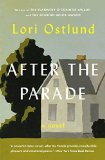
From Flannery O'Connor and Rona Jaffe Award winner Lori Ostlund, a deeply moving and beautiful debut novel about a man who leaves his longtime partner in New Mexico for a new life in San Francisco, launching him on a tragicomic road trip and into the mysteries of his own Midwestern childhood.
Sensitive, big-hearted, and achingly self-conscious, forty-year-old Aaron Englund long ago escaped the confines of his Midwestern hometown, but he still feels like an outcast. After twenty years under the Pygmalion-like direction of his older partner Walter, Aaron at last decides it is time to stop letting life happen to him and to take control of his own fate. But soon after establishing himself in San Francisco - where he alternates between a shoddy garage apartment and the absurdly ramshackle ESL school where he teaches - Aaron sees that real freedom will not come until he has made peace with his memories of Morton, Minnesota: a cramped town whose four hundred souls form a constellation of Aaron's childhood heartbreaks and hopes.
After Aaron's father died in the town parade, it was the larger-than-life misfits of his childhood - sardonic, wheel-chair bound dwarf named Clarence, a generous, obese baker named Bernice, a kindly aunt preoccupied with dreams of The Rapture - who helped Aaron find his place in a provincial world hostile to difference. But Aaron's sense of rejection runs deep: when Aaron was seventeen, Dolores - Aaron's loving, selfish, and enigmatic mother - vanished one night with the town pastor. Aaron hasn't heard from Dolores in more than twenty years, but when a shambolic PI named Bill offers a key to closure, Aaron must confront his own role in his troubled past and rethink his place in a world of unpredictable, life-changing forces.
Lori Ostlund's debut novel is an openhearted contemplation of how we grow up and move on, how we can turn our deepest wounds into our greatest strengths. Written with homespun charm and unceasing vitality, After the Parade is a glorious new anthem for the outsider.
Chapter 1
Aaron had gotten a late start—some mix-up at the U-Haul office that nobody seemed qualified to fix—so it was early afternoon when he finally began loading the truck, nearly eight when he finished. He wanted to drive away right then but could not imagine setting out so late. It was enough that the truck sat in the driveway packed, declaring his intention. Instead, he took a walk around the neighborhood, as was his nightly habit, had been his nightly habit since he and Walter moved here nine years earlier. He always followed the same route, designed with the neighborhood cats in mind. He knew where they all lived, had made up names for each of them—Falstaff and Serial Mom, Puffin and Owen Meany—and when he called to them using these names, they stood up from wherever they were hiding and ran down to the sidewalk to greet him.
He passed the house of the old woman who, on many nights, though not this one, watched for him from her kitchen window and then...
At times the novel can feel like a set of short stories, only loosely connected through the character of Aaron. Ostlund won a Flannery O'Connor Award for a previous short story collection, and you can understand why: she creates unforgettable scenes and characters, each one with a fully realized backstory. I wasn't sure that she quite brought them all together as a novel, though: Aaron himself is not as vivid as some of the secondary characters, especially Clarence, and I never understood exactly why Aaron left Walter. Still, the overarching theme of the novel is strong and resonant: "after the parade," after everything has changed irrevocably, you must keep going, pushing past loneliness and trauma to build a new life...continued
Full Review
 (713 words)
(Reviewed by Rebecca Foster).
 Daniel Wallace, author of Big Fish and The Kings and Queens of Roam
As full-bodied and full-blooded a novel as I've read in a long time. The prose sparkles, and the author is so smart andso kind to her characters: a rare combination and so refreshing to read. Kate Christensen, author of The Great Man
After the Parade is remarkable both for the clarity and precision of Lori Ostlund's writing and her seemingly clairvoyant empathy for the misfits of the world: the different, the foreign, the gay, the bullied, the lonely. Aaron Englund is one of the most lovable, quietly heroic protagonists in recent memory, and Ostlund is a gem of a writer. Megan Mayhew Bergman, author of Birds of a Lesser Paradise and Almost Famous Women
Ostlund's After the Parade is a generous and full-bodied novel, insightful and quietly provocative. Ostlund gives us characters we believe in and ache for, and she renders them with generosity and sparkling complexity. A confident, moving meditation on home and the construction, and reconstruction, of adult lives. Richard Russo, author of the Pulitzer Prize winning novel of Empire Falls
Lori Ostlund's wonderful novel After the Parade should come with a set of instructions: Be perfectly still. Listen carefully. Peer beneath every placid surface. Be alive to the possibility of wonder. Yiyun Li, author of The Vagrants and Kinder Than Solitude
After the Parade is about leave-taking and homecoming, two instrumental actions that shape the life of every one of us. So rare does one see a wise writer like Lori Ostlund. Her insight comes from understanding her characters yet not dissecting them with a mental scalpel, and portraying life with its most complex and wondrous dynamics in time and space rather than inventing a static canvas. A new talent to celebrate!
Daniel Wallace, author of Big Fish and The Kings and Queens of Roam
As full-bodied and full-blooded a novel as I've read in a long time. The prose sparkles, and the author is so smart andso kind to her characters: a rare combination and so refreshing to read. Kate Christensen, author of The Great Man
After the Parade is remarkable both for the clarity and precision of Lori Ostlund's writing and her seemingly clairvoyant empathy for the misfits of the world: the different, the foreign, the gay, the bullied, the lonely. Aaron Englund is one of the most lovable, quietly heroic protagonists in recent memory, and Ostlund is a gem of a writer. Megan Mayhew Bergman, author of Birds of a Lesser Paradise and Almost Famous Women
Ostlund's After the Parade is a generous and full-bodied novel, insightful and quietly provocative. Ostlund gives us characters we believe in and ache for, and she renders them with generosity and sparkling complexity. A confident, moving meditation on home and the construction, and reconstruction, of adult lives. Richard Russo, author of the Pulitzer Prize winning novel of Empire Falls
Lori Ostlund's wonderful novel After the Parade should come with a set of instructions: Be perfectly still. Listen carefully. Peer beneath every placid surface. Be alive to the possibility of wonder. Yiyun Li, author of The Vagrants and Kinder Than Solitude
After the Parade is about leave-taking and homecoming, two instrumental actions that shape the life of every one of us. So rare does one see a wise writer like Lori Ostlund. Her insight comes from understanding her characters yet not dissecting them with a mental scalpel, and portraying life with its most complex and wondrous dynamics in time and space rather than inventing a static canvas. A new talent to celebrate!Most of us are familiar with high-profile book recognitions such as the Man Booker Prize or the National Book Award. There are many lesser known writing awards and programs that are prestigious and well known in literary circles. Lori Ostlund, author of After the Parade, can include two such recognitions as part of her biography: The Flannery O'Connor award and being accepted to attend the Bread Loaf Conference.
The Flannery O'Connor Award
Every year since 1983, the University of Georgia Press has considered manuscripts for the Flannery O'Connor Award for Short Fiction, given annually to the two best short story collections or novellas. The competition, which charges a $30 fee per application, attracts nearly 300 entries per year. ...
If you liked After the Parade, try these:
The Curious Charms of Arthur Pepper
by Phaedra Patrick
Published 2017
In this poignant and sparkling debut, a lovable widower embarks on a life-changing adventure
This Is Your Life, Harriet Chance!
by Jonathan Evison
Published 2016
Part dysfunctional love story, part poignant exploration of the mother/daughter relationship, Jonathan Evison has crafted a bighearted novel with an endearing heroine at its center.

by Nick Hornby
Published 2016
Insightful and humorous, Nick Hornby's latest does what he does best: endears us to a cast of characters who are funny if flawed, and forces us to examine ourselves in the process.
 (1).gif)
In order to become the master, the politician poses as the servant
Click Here to find out who said this, as well as discovering other famous literary quotes!

Can you name the title?
Test your book knowledge with our daily trivia challenge!