
-
Your next favorite book
is waiting.
Summary | Excerpt | Reviews | Beyond the book | Read-Alikes | Genres & Themes | Author Bio

and Other Stories
by Ayse Papatya Bucak Book Reviewed by:
A debut story collection of spectacular imaginative range and lyricism from a Pushcart Prize–winning author.
In Ayse Papatya Bucak's dreamlike narratives, dead girls recount the effects of an earthquake and a chess-playing automaton falls in love. A student stops eating and no one knows whether her act is personal or political. A Turkish wrestler, a hero in the East, is seen as a brute in the West. The anguish of an Armenian refugee is "performed" at an American fund-raiser. An Ottoman ambassador in Paris amasses a tantalizing collection of erotic art. And in the masterful title story, the Greek god Apollo confronts his personal history and bewails his Homeric reputation as he tries to memorialize, and make sense of, generations of war.
A joy and a provocation, Bucak's stories confront the nature of historical memory with humor and humanity. Surreal and poignant, they examine the tension between myth and history, cultural categories and personal identity, performance and authenticity.
The Gathering of Desire
It was the age of automatons and already there was a fly made of brass, a mechanical tiger, an eight foot elephant, and a duck that swallowed a piece of grain and excreted a small pellet. There was a dancing woman and a trumpet playing man. A miniature Moscow that burned and collapsed and sprang up again.
And once there was, and once there wasn't,
in the time when magic was mystery and science was fact,
in the time when God's hand could arm man's puppet,
when miracles were seen to be believed, and schemes were believed to be seen,
there was the Ottoman Turk, the chess-playing mechanical man.
Philadelphia, 1827
Outside the Turk's cabinet is the stage, the audience, and an opponent coaxed out of the crowd by Maelzel the showman. Inside the Turk's cabinet is the dim light of the candle, its smoke which does not ventilate as quickly as it burns, the magnets and mechanics that allow S. to control the ...
The Trojan War Museum is a unique balancing act, a testament to Bucak's ability to juggle multiple moods and themes in a way that corresponds with the reality of actual human emotion and captures the complexity of personal motivations...This sophisticated understanding of human behavior, along with Bucak's exceptionally clever plotlines, elevate the collection to greatness...continued
Full Review
 (634 words)
(Reviewed by Lisa Butts).
 Joan Silber, author of Improvement
What a beautiful, wildly imagined book. The Trojan War Museum gives us stories with branching paths, and they resemble fairy tales, historical accounts, news reports, and dreams. This is fiction of great originality and great delight. Kelly Link, author of Get in Trouble
One of the best and most surprising collections I've read in a long time. This is a wonder cabinet of stories so singular and marvelous that I spent a long time after each, wanting to linger in the space it had created. Lydia Kiesling, author of The Golden State
This is a truly lovely, truly surprising book. Ayse Papatya Bucak's stories are narratively precise, and they are also beautiful vignettes on human culture, deftly probing the fissures and pressure points of history and bringing up new forms like the sponge divers in one of her stories. This collection absolutely glows with life.
Joan Silber, author of Improvement
What a beautiful, wildly imagined book. The Trojan War Museum gives us stories with branching paths, and they resemble fairy tales, historical accounts, news reports, and dreams. This is fiction of great originality and great delight. Kelly Link, author of Get in Trouble
One of the best and most surprising collections I've read in a long time. This is a wonder cabinet of stories so singular and marvelous that I spent a long time after each, wanting to linger in the space it had created. Lydia Kiesling, author of The Golden State
This is a truly lovely, truly surprising book. Ayse Papatya Bucak's stories are narratively precise, and they are also beautiful vignettes on human culture, deftly probing the fissures and pressure points of history and bringing up new forms like the sponge divers in one of her stories. This collection absolutely glows with life.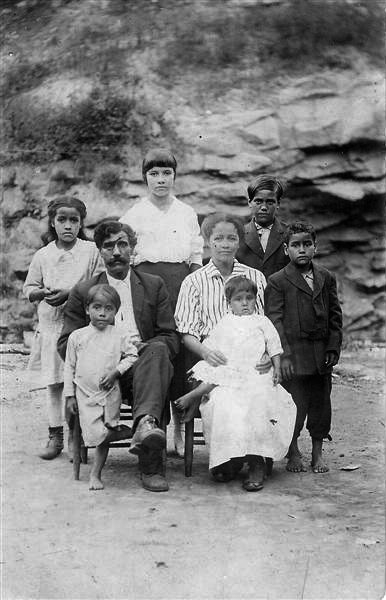 In Ayşe Papatya Bucak's The Trojan War Museum, the main character of one of the stories, "Mysteries of the Mountain South," learns that her racial history is more complicated than she previously thought when her grandmother explains that she has a "Melungeon" great-grandparent. Melungeon is a term historically used to describe a "tri-racial" group in the Appalachian states of Virginia, Tennessee and Kentucky with mixed ancestry from Europeans, Native Americans and African Americans. The term is believed to have come from the French word mélange, meaning "to mix."
The term Melungeon was common in the 19th and 20th centuries. Melungeons living in the Appalachian states in 19th century were largely accepted in society, and ...
If you liked The Trojan War Museum, try these:

by Gwen E. Kirby
Published 2022
Margaret Atwood meets Buffy in these funny, warm, and furious stories of women at their breaking points, from Hellenic times to today.

by Zadie Smith
Published 2020
Zadie Smith has established herself as one of the most iconic, critically respected, and popular writers of her generation. In her first short story collection, she combines her power of observation and her inimitable voice to mine the fraught and complex experience of life in the modern world.

Orange World and Other Stories
by Karen Russell
Published 2020
A stunning new collection of short fiction that showcases Karen Russell's extraordinary, irresistible gifts of language and imagination.

 (1).gif)
The most successful people are those who are good at plan B
Click Here to find out who said this, as well as discovering other famous literary quotes!

Can you name the title?
Test your book knowledge with our daily trivia challenge!