
-
Your next favorite book
is waiting.
Summary | Excerpt | Reading Guide | Reviews | Beyond the book | Read-Alikes | Genres & Themes | Author Bio

The Undercover Mission That Changed Our Understanding of Madness
by Susannah Cahalan Book Reviewed by:
From "one of America's most courageous young journalists" (NPR) and the author of the blockbuster #1 New York Times bestselling memoir Brain on Fire comes a propulsive narrative history investigating the 50-year-old mystery behind a dramatic experiment that changed the course of modern medicine.
For centuries, doctors have struggled to define mental illness--how do you diagnose it, how do you treat it, how do you even know what it is? In search of an answer, in the 1970s a Stanford psychologist named David Rosenhan and seven other people--sane, normal, well-adjusted members of society--went undercover into asylums around America to test the legitimacy of psychiatry's labels. Forced to remain inside until they'd "proven" themselves sane, all eight emerged with alarming diagnoses and even more troubling stories of their treatment. Rosenhan's watershed study broke open the field of psychiatry, closing down institutions and changing mental health diagnosis forever.
But, as Cahalan's explosive new research shows, very little in this saga is exactly as it seems. What really happened behind those closed asylum doors, and what does it mean for our understanding of mental illness today?
1
MIRROR IMAGE
Psychiatry, as a distinct branch of medicine, has come far in its short life span. The field has rejected the shameful practices of the recent past—the lobotomies, forced sterilizations, human warehousing. Today's psychiatrists boast a varied arsenal of effective drugs and have largely dropped the unscientific trappings of psychoanalytic psychobabble, the "schizophrenogenic" or "refrigerator" mothers of yesteryear who had been blamed for triggering insanity in their offspring. Two decades into the twenty- first century, psychiatry now recognizes that serious mental illnesses are legitimate brain disorders.
Despite all these advancements, however, the field lags behind the rest of medicine. Most of our major innovations—better drugs, improved therapies—were in play around the time we first walked on the moon. Though the American Psychiatric Association reassures us that psychiatrists are uniquely qualified to "assess both the mental and physical aspects ...
Susannah Cahalan's The Great Pretender is a fascinating deep-dive into one of the most influential studies in the history of psychology, Stanford University professor David Rosenhan's 1973 paper "On Being Sane in Insane Places." But while the extent of Rosenhan's influence on the field is clear, it turns out that little else about his story is straightforward. As the book unfolds, it becomes evident that there is yet another layer of meaning to its title—neither Rosenhan nor the details of his study are quite what they appear to be...continued
Full Review
 (962 words)
(Reviewed by Elisabeth Herschbach).
 Ada Calhoun, author of St. Marks Is Dead and Wedding Toasts I'll Never Give
Breathtaking! Cahalan's brilliant, timely, and important book reshaped my understanding of mental health, psychiatric hospitals, and the history of scientific research. A must-read for anyone who's ever been to therapy, taken a brain-altering drug, or wondered why mental patients were released in droves in the 1980s. And a thrilling, eye-opening read even for those who thought they weren't affected by the psychiatric world. Andrew Scull, author of Madness in Civilization: A Cultural History of Insanity
The Great Pretender is an extraordinary look at the life of a Stanford professor and a famous paper he published in 1973, one that dramatically transformed American psychiatry in ways that still echo today. The book is fast-paced and artfully constructed—an incredible story that constitutes a tribute to Cahalan's powers as both a writer and a sleuth. Luke Dittrich, New York Times bestselling author of Patient H.M.
The Great Pretender is a tight, propulsive, true-life detective story which somehow also doubles as a sweeping history of our broken mental health-care system...It is an amazing achievement, and there is no question it will go down as the definitive account of one of the most influential psychology experiments of all time.
Ada Calhoun, author of St. Marks Is Dead and Wedding Toasts I'll Never Give
Breathtaking! Cahalan's brilliant, timely, and important book reshaped my understanding of mental health, psychiatric hospitals, and the history of scientific research. A must-read for anyone who's ever been to therapy, taken a brain-altering drug, or wondered why mental patients were released in droves in the 1980s. And a thrilling, eye-opening read even for those who thought they weren't affected by the psychiatric world. Andrew Scull, author of Madness in Civilization: A Cultural History of Insanity
The Great Pretender is an extraordinary look at the life of a Stanford professor and a famous paper he published in 1973, one that dramatically transformed American psychiatry in ways that still echo today. The book is fast-paced and artfully constructed—an incredible story that constitutes a tribute to Cahalan's powers as both a writer and a sleuth. Luke Dittrich, New York Times bestselling author of Patient H.M.
The Great Pretender is a tight, propulsive, true-life detective story which somehow also doubles as a sweeping history of our broken mental health-care system...It is an amazing achievement, and there is no question it will go down as the definitive account of one of the most influential psychology experiments of all time.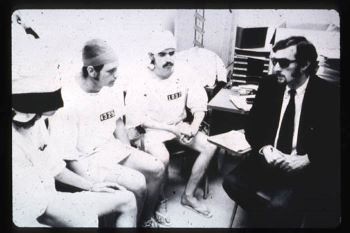 In The Great Pretender, former New York Post investigative reporter Susannah Cahalan uncovers evidence that Stanford University psychologist David Rosenhan fabricated at least some of the details in his famous 1973 paper "On Being Sane in Insane Places."
If true, this certainly wouldn't have been the only time a high profile researcher's work has turned out to be flawed or even downright fraudulent. A particularly brazen example is that of repeat offender Diederik Stapel, a former professor of social psychology at Tilburg University in the Netherlands. Stapel rose to prominence in his field with a series of studies that gained media attention around the world. One study purportedly showed that carnivores are more selfish than ...
If you liked The Great Pretender, try these:

The Gallery of Miracles and Madness
by Charlie English
Published 2021
The untold story of Hitler's war on "degenerate" artists and the mentally ill that paved the way for the Holocaust.

by Robert Kolker
Published 2021
The heartrending story of a midcentury American family with twelve children, six of them diagnosed with schizophrenia, that became science's great hope in the quest to understand the disease.
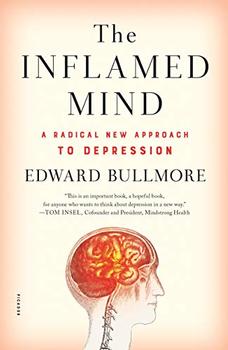
by Edward Bullmore
Published 2019
Worldwide, depression will be the single biggest cause of disability in the next twenty years. But treatment for it has not changed much in the last three decades. In the world of psychiatry, time has apparently stood still...until now with Edward Bullmore's The Inflamed Mind: A Radical New Approach to Depression.


 (1).gif)
When I get a little money I buy books...
Click Here to find out who said this, as well as discovering other famous literary quotes!

Can you name the title?
Test your book knowledge with our daily trivia challenge!