
-
Your next favorite book
is waiting.
Summary | Excerpt | Reviews | Beyond the book | Read-Alikes | Genres & Themes | Author Bio

The Incendiary Rise of Juul
by Jamie Ducharme Book Reviewed by:
A propulsive, eye-opening work of reporting, chronicling the rise of Juul and the birth of a new addiction.
It began with a smoke break. James Monsees and Adam Bowen were two ambitious graduate students at Stanford, and in between puffs after class they dreamed of a way to quit smoking. Their solution became the Juul, a sleek, modern device that could vaporize nicotine into a conveniently potent dosage. The company they built around that device, Juul Labs, would go on to become a $38 billion dollar company and draw blame for addicting a whole new generation of underage tobacco users.
Time magazine reporter Jamie Ducharme follows Monsees and Bowen as they create Juul and, in the process, go from public health visionaries and Silicon Valley wunderkinds to two of the most controversial businessmen in the country.
With rigorous reporting and clear-eyed prose that reads like a nonfiction thriller, Big Vape uses the dramatic rise of Juul to tell a larger story of big business, Big Tobacco, and the high cost of a product that was too good to be true.
1
SMOKE WITHOUT FIRE (2004–2005)
James Monsees didn't know what he was doing anymore. Standing outside Stanford University's Design Loft one night in late 2004, a burning cigarette perched between his fingers, the twenty-four-year-old suddenly couldn't square who he was with the smoky mess of paper and tobacco in his hand. Here he was, well on his way to a master's degree from one of the most prestigious product design programs in the country, and yet he was still sucking on a burning tube of tobacco and chemicals, knowing full well it was terrible for his health. It felt primitive. More than that, it felt dumb. He looked over at his classmate and smoke-break buddy Adam Bowen, who was puffing away on his own cigarette, and felt only bewilderment. Why were they both still doing this?
Adam couldn't think of a single good reason, either. He'd tried to quit smoking plenty of times before—always cold turkey, never successfully—and yet there he stood, filling his lungs with ...
Ducharme writes in a level-headed, even tone, carefully weighing up her findings as though they were evidence presented in court. She allows for the possibility that in the early days Juul was not so much malicious as simply irresponsible. However, while Bowen and Monsees never actively sought out an underage demographic for their product, the colorful, aspirational aesthetic of Juul's early media campaigns makes its take-up by teenagers seem almost inevitable. Despite multiple warnings that their branding would attract the underage, the company — and Monsees in particular — refused to alter Juul's image. Ducharme's analysis suggests that the spread of teenage vaping could have been avoided, and that Juul is at least partly culpable for a whole new generation of nicotine-addicted young people...continued
Full Review
 (640 words)
(Reviewed by Grace Graham-Taylor).
 Christopher Leonard, author of the New York Times bestseller Kochland
Jamie Ducharme has uncovered the iceberg beneath our public-health equivalent of the Titanic disaster. Big Vape is a dazzling story that crackles with the energy of a nicotine buzz, mixing tales of groundbreaking innovation with those of corporate greed and government dysfunction. More than anything, this is a story about American capitalism today, and it explains why a new generation is hooked on the most addictive of drugs. This is a landmark piece of investigative reporting.
Leana Wen, M.D. author of Lifelines: A Doctor's Journey in the Fight for Public Health
Combining meticulous research with gripping storytelling, this is a must-read with important lessons for policymakers, CEOs, and public health professionals alike. As a physician, I witnessed firsthand the harmful impact of vaping on young people. Big Vape explains how this happened. Readers will learn a lot. Reeves Wiedeman, author of Billion Dollar Loser
The rise and fall of Juul is an instructive tale, and Jamie Ducharme does an excellent job detailing how one bad decision after another led the company astray in this deft rendition of grand start-up dreams gone up in smoke.
Christopher Leonard, author of the New York Times bestseller Kochland
Jamie Ducharme has uncovered the iceberg beneath our public-health equivalent of the Titanic disaster. Big Vape is a dazzling story that crackles with the energy of a nicotine buzz, mixing tales of groundbreaking innovation with those of corporate greed and government dysfunction. More than anything, this is a story about American capitalism today, and it explains why a new generation is hooked on the most addictive of drugs. This is a landmark piece of investigative reporting.
Leana Wen, M.D. author of Lifelines: A Doctor's Journey in the Fight for Public Health
Combining meticulous research with gripping storytelling, this is a must-read with important lessons for policymakers, CEOs, and public health professionals alike. As a physician, I witnessed firsthand the harmful impact of vaping on young people. Big Vape explains how this happened. Readers will learn a lot. Reeves Wiedeman, author of Billion Dollar Loser
The rise and fall of Juul is an instructive tale, and Jamie Ducharme does an excellent job detailing how one bad decision after another led the company astray in this deft rendition of grand start-up dreams gone up in smoke. In Big Vape, Jamie Ducharme describes an existential crisis at the heart of Juul; while its founders (and many of its employees) saw the business as a tech start-up, to the Food and Drug Administration (and much of the public) it looked like a manufacturer of tobacco products. This distinction is not a mere matter of brand identity — having "tech company" status offers huge advantages to businesses. Many companies covet this privileged label, and there are good reasons why.
In the first place, it comes with a certain prestige. Calling yourself a tech start-up signifies modernity, newness and, importantly, profitability. Inferring connection to Silicon Valley is like dangling bait to investors, even if the association is a vague...
If you liked Big Vape, try these:
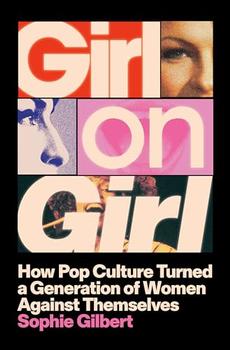
by Sophie Gilbert
Published 2025
From Atlantic critic and Pulitzer Prize finalist Sophie Gilbert, a blazing critique of early aughts pop culture.

by John Carreyrou
Published 2020
The full inside story of the breathtaking rise and shocking collapse of Theranos, the multibillion-dollar biotech startup, by the prize-winning journalist who first broke the story and pursued it to the end, despite pressure from its charismatic CEO and threats by her lawyers.
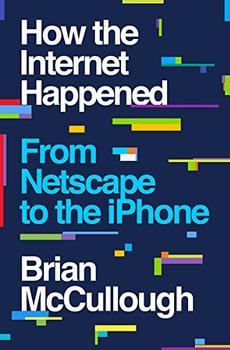
by Brian McCullough
Published 2018
Tech-guru Brian McCullough delivers a rollicking history of the internet, why it exploded, and how it changed everything.


 (1).gif)
The low brow and the high brow
Click Here to find out who said this, as well as discovering other famous literary quotes!

Can you name the title?
Test your book knowledge with our daily trivia challenge!