-
Your next favorite book
is waiting.
Summary | Excerpt | Reading Guide | Reviews | Beyond the book | Read-Alikes | Genres & Themes | Author Bio
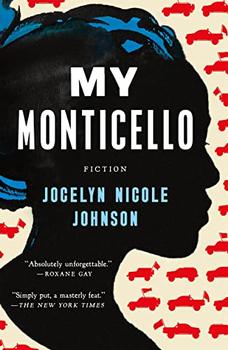
Fiction
by Jocelyn Nicole Johnson Book Reviewed by:
A young woman descended from Thomas Jefferson and Sally Hemings driven from her neighborhood by a white militia. A university professor studying racism by conducting a secret social experiment on his own son. A single mother desperate to buy her first home even as the world hurtles toward catastrophe. Each fighting to survive in America.
Tough-minded, vulnerable, and brave, Jocelyn Nicole Johnson's precisely imagined debut explores burdened inheritances and extraordinary pursuits of belonging. Set in the near future, the eponymous novella, "My Monticello," tells of a diverse group of Charlottesville neighbors fleeing violent white supremacists. Led by Da'Naisha, a young Black descendant of Thomas Jefferson and Sally Hemings, they seek refuge in Jefferson's historic plantation home in a desperate attempt to outlive the long-foretold racial and environmental unravelling within the nation.
In "Control Negro," hailed by Roxane Gay as "one hell of story," a university professor devotes himself to the study of racism and the development of ACMs (average American Caucasian males) by clinically observing his own son from birth in order to "painstakingly mark the route of this Black child too, one whom I could prove was so strikingly decent and true that America could not find fault in him unless we as a nation had projected it there." Johnson's characters all seek out home as a place and an internal state, whether in the form of a Nigerian widower who immigrates to a meager existence in the city of Alexandria, finding himself adrift; a young mixed-race woman who adopts a new tongue and name to escape the landscapes of rural Virginia and her family; or a single mother who seeks salvation through "Buying a House Ahead of the Apocalypse."
United by these characters' relentless struggles against reality and fate, My Monticello is a formidable book that bears witness to this country's legacies and announces the arrival of a wildly original new voice in American fiction.
CONTROL NEGRO
By the time you read this, you may have figured it out. Perhaps your mother told you, though she was only privy to my timeworn thesis—never to my aim or full intention. Still, maybe the truth of it breached your insides:
That I am your father, that you are my son.
In these typewritten pages I mean to make manifest the truth, the whole. But please do not mistake this letter for some manner of veiled confession. I cannot afford to be sorry, not for any of it. I hope you'll come to understand, it was all for a grander good.
You see, I needed a Control Negro, grotesque as that may sound—
You should know I was there on the day you were born, a reflection behind the nursery glass. I laid eyes on you while your mother rested, along with her husband—that man you must have accepted, at least for a time, as your father. You seemed to see me too, my blurred silhouette. Your birth (natural, vaginal) took place at the university's teaching hospital. I noted your weight ...
The end of the story shouldn't be spoiled, but "Control Negro" is a powerful, exceedingly dark demonstration of how the wounds of racial injustice trickle down from one generation to the next. The second half of the book consists of the eponymous novella, a story about a young Black woman named Da'Naisha escaping with her boyfriend and some neighbors from a violent uprising of white nationalists in Virginia. "My Monticello" unfolds as a dramatic and well-executed survival plot, but the story's most intriguing element is its thematic consideration of ownership and inheritance...continued
Full Review
 (659 words)
(Reviewed by Lisa Butts).
 Charles Yu, National Book Award-winning author of Interior Chinatown
I was enthralled from the opening lines of this book. These chilling, thought-provoking and expertly crafted stories showcase Johnson's range and ability―they broke my heart as well as my brain. A stunning collection. Colson Whitehead, Pulitzer Prize-winning author of The Nickel Boys and Harlem Shuffle
A badass debut by any measure―nimble, knowing, and electrifying. Danielle Evans, award-winning author of The Office of Historical Corrections
My Monticello is a gorgeous, devastating collection of stories spotlighting the ways a life, a country, and a planet can tend toward disaster but still be worth fighting for. Johnson's stories exquisitely balance the interior and the exterior: the world of inequalities and disappointments stacked against her characters is illuminated by their full and compelling desires, and by her honest exploration of the major and minor cruelties survival requires. This is a stunning debut by a brilliant and original new voice. Roxane Gay, New York Times bestselling author of Hunger and Ayiti
It is a rare breed of writer who can tell any kind of story and do so with exquisite deftness. Jocelyn Nicole Johnson is one such writer. Her debut collection, My Monticello, is comprised of six stories of astonishing range and each one explores what it means to live in a world that is at once home and not. She dissects the unbearable burdens of such displacement. The crowning glory of this collection is the title story, a novella about a world that has fallen apart and a small band of people who take refuge in Monticello, among the old ghosts of the former plantation, how they become family, and how they try to make a stand for their lives, for the world the way it once was. This collection is absolutely unforgettable and Johnson's prose soars to remarkable heights.
Charles Yu, National Book Award-winning author of Interior Chinatown
I was enthralled from the opening lines of this book. These chilling, thought-provoking and expertly crafted stories showcase Johnson's range and ability―they broke my heart as well as my brain. A stunning collection. Colson Whitehead, Pulitzer Prize-winning author of The Nickel Boys and Harlem Shuffle
A badass debut by any measure―nimble, knowing, and electrifying. Danielle Evans, award-winning author of The Office of Historical Corrections
My Monticello is a gorgeous, devastating collection of stories spotlighting the ways a life, a country, and a planet can tend toward disaster but still be worth fighting for. Johnson's stories exquisitely balance the interior and the exterior: the world of inequalities and disappointments stacked against her characters is illuminated by their full and compelling desires, and by her honest exploration of the major and minor cruelties survival requires. This is a stunning debut by a brilliant and original new voice. Roxane Gay, New York Times bestselling author of Hunger and Ayiti
It is a rare breed of writer who can tell any kind of story and do so with exquisite deftness. Jocelyn Nicole Johnson is one such writer. Her debut collection, My Monticello, is comprised of six stories of astonishing range and each one explores what it means to live in a world that is at once home and not. She dissects the unbearable burdens of such displacement. The crowning glory of this collection is the title story, a novella about a world that has fallen apart and a small band of people who take refuge in Monticello, among the old ghosts of the former plantation, how they become family, and how they try to make a stand for their lives, for the world the way it once was. This collection is absolutely unforgettable and Johnson's prose soars to remarkable heights.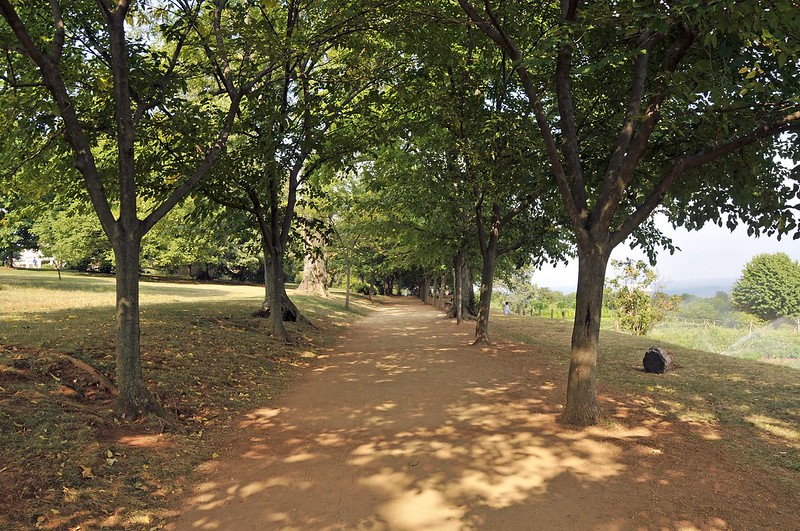 In the novella that makes up the second half of My Monticello, survivors of a white nationalist uprising seek shelter at Thomas Jefferson's estate. Jefferson's former residence and plantation located just outside of Charlottesville, Virginia is a UNESCO World Heritage Site and currently operates as a museum dedicated to the third U.S. president by the Thomas Jefferson Foundation. However, Jefferson's legacy as a founding father is complicated by his history as a slaveholder, despite his referring to slavery as a "moral depravity" and crafting legislation banning the import of enslaved Africans to Virginia. It is believed that Jefferson was the father of six children with an enslaved woman named Sally Hemings, who lived with and labored ...
If you liked My Monticello, try these:
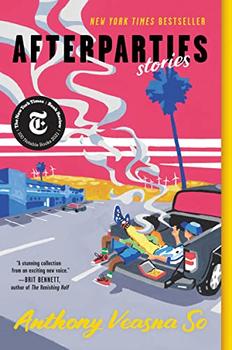
by Anthony Veasna So
Published 2022
A vibrant story collection about Cambodian-American life - immersive and comic, yet unsparing - that offers profound insight into the intimacy of queer and immigrant communities.
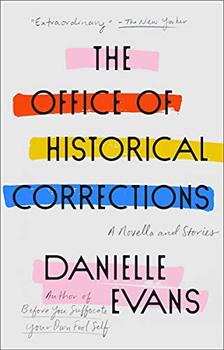
The Office of Historical Corrections
by Danielle Evans
Published 2021
The award-winning author of Before You Suffocate Your Own Fool Self brings her signature voice and insight to the subjects of race, grief, apology, and American history.

by Zadie Smith
Published 2020
Zadie Smith has established herself as one of the most iconic, critically respected, and popular writers of her generation. In her first short story collection, she combines her power of observation and her inimitable voice to mine the fraught and complex experience of life in the modern world.
 (1).gif)
Don't join the book burners. Don't think you are going to conceal faults by concealing evidence that they ever ...
Click Here to find out who said this, as well as discovering other famous literary quotes!

Can you name the title?
Test your book knowledge with our daily trivia challenge!