-
Your next favorite book
is waiting.
Summary | Excerpt | Reviews | Beyond the book | Read-Alikes | Genres & Themes | Author Bio

A Novel
by Marcial Gala Book Reviewed by:
From Marcial Gala, the author of the award-winning The Black Cathedral, Call Me Cassandra is a darkly magical tale of a haunted young dreamer, born in the wrong body and time, who believes himself to be a doomed prophetess from ancient Greek mythology.
Ten-year-old Rauli lives in a world that is often hostile. His older brother is violent; his philandering father doesn't understand him; his intelligence and sensitivity do not endear him to the other children at school. He loves to read, especially Greek myths, but in Cuba in the 1970s, novels and gods can be dangerous. Despite the signs that warn Rauli to repress and fear what he is, he knows three things to be true: First, that he was born in the wrong body. Second, that he will die, aged eighteen, as a soldier in the Cuban intervention in Angola. And third, that he is the reincarnation of the Trojan princess Cassandra.
Moving between Rauli's childhood and adolescence, between the Angolan battlefield, the Cuban city of Cienfuegos, and the shores of ancient Troy, Marcial Gala's Call Me Cassandra tells of the search for identity amid the collapse of Cuba's utopian dreams. Burdened with knowledge of tragedies yet to come, Rauli nonetheless strives to know himself. Lyrical and gritty, heartbreaking and luminous, Rauli's is the story of the inexorable pull of destiny.
Excerpt
Call Me Cassandra
I'm sitting here, watching the sea.
It's very early, so everyone in the house is still sleeping, but I got up, opened the door, and came out to the balcony. I brought over a chair from the living room to get comfortable. I'm ten years old and it's Sunday, so there's no school, I can spend the morning watching the sea and the morning stretches out to infinity, but then I hear my mother's voice behind me.
"Oh, Rauli, where have you gone off to?"
I feel like I don't want to be this Raúl, I want to be Cassandra, not Raúl. I don't want them to call me Spineless at school, I don't want my mother to call me Rauli, I want to spend a long time watching the sea, until the sea runs out before my eyes and becomes nothing more than a white line that makes my eyes tear up. I'm in Cienfuegos, I'm not yet a little pretend soldier here in Angola where it never rains, the captain still hasn't called me over to his tent to tell me, "Take off your clothes, we're going to ...
Despite the well-wrought writing that surrounds the execution of the themes, the execution itself remains fairly simple, and the story loses momentum at times. Still, Call Me Cassandra is awash in an understated, evocative aesthetic that is wholly intriguing. Gala flits between national, global, existential and personal concerns with ease. Despite its wide scope and link to epic poetry, the novel feels intimate rather than grand, always returning to the close quarters of human interaction even as the gods are ever-present and time is endlessly overlapping...continued
Full Review
 (680 words)
(Reviewed by Elisabeth Cook).
 José Eduardo Agualusa, author of The Society of Reluctant Dreamers
It has been many years since I read a novel that excited me so much and so deeply. Marcial Gala surprises in the dexterity, audacity and elegance with which he articulates a very original fictional mechanism, creating a narrator who remembers the future as much as the past―but is condemned to have no one believe his predictions. Call Me Cassandra takes a brave and sensitive look at Cuba's participation in the Angolan civil war. If there are books that restore our faith in literature, and literature's ability to make the other known to us, this is one of them. Junot Díaz, author of This is How You Lose Her
A spellbinding novel by one of the best writers of the Americas. Call Me Cassandra is Marcial Gala's masterpiece, blending Greek myth with the Cuban intervention in Angola. At the heart of this incandescent tale burns sensitive Rauli, caught between the Gods and the Revolution, between a body that he longs to escape and a world that lets no one like him escape. Call Me Cassandra is Chronicle of a Death Foretold but blacker and brilliantly better. Laura van den Berg, author of I Hold a Wolf By the Ears
I admire greatly the nimbleness of Marcial Gala's prose, the way his sentences swing effortlessly from emotional ruin to beauty to gallows hilarity and back again. As the storyline cuts between Rauli's childhood in Cienfuegos and his life as a soldier in Angola, a portrait of an unforgettable and defiant spirit emerges. Call Me Cassandra is a searching and uncompromising story about the vast complexities of displacement, the breathtaking power of the imagination, and the tidal pull of fate. I love this novel.
José Eduardo Agualusa, author of The Society of Reluctant Dreamers
It has been many years since I read a novel that excited me so much and so deeply. Marcial Gala surprises in the dexterity, audacity and elegance with which he articulates a very original fictional mechanism, creating a narrator who remembers the future as much as the past―but is condemned to have no one believe his predictions. Call Me Cassandra takes a brave and sensitive look at Cuba's participation in the Angolan civil war. If there are books that restore our faith in literature, and literature's ability to make the other known to us, this is one of them. Junot Díaz, author of This is How You Lose Her
A spellbinding novel by one of the best writers of the Americas. Call Me Cassandra is Marcial Gala's masterpiece, blending Greek myth with the Cuban intervention in Angola. At the heart of this incandescent tale burns sensitive Rauli, caught between the Gods and the Revolution, between a body that he longs to escape and a world that lets no one like him escape. Call Me Cassandra is Chronicle of a Death Foretold but blacker and brilliantly better. Laura van den Berg, author of I Hold a Wolf By the Ears
I admire greatly the nimbleness of Marcial Gala's prose, the way his sentences swing effortlessly from emotional ruin to beauty to gallows hilarity and back again. As the storyline cuts between Rauli's childhood in Cienfuegos and his life as a soldier in Angola, a portrait of an unforgettable and defiant spirit emerges. Call Me Cassandra is a searching and uncompromising story about the vast complexities of displacement, the breathtaking power of the imagination, and the tidal pull of fate. I love this novel.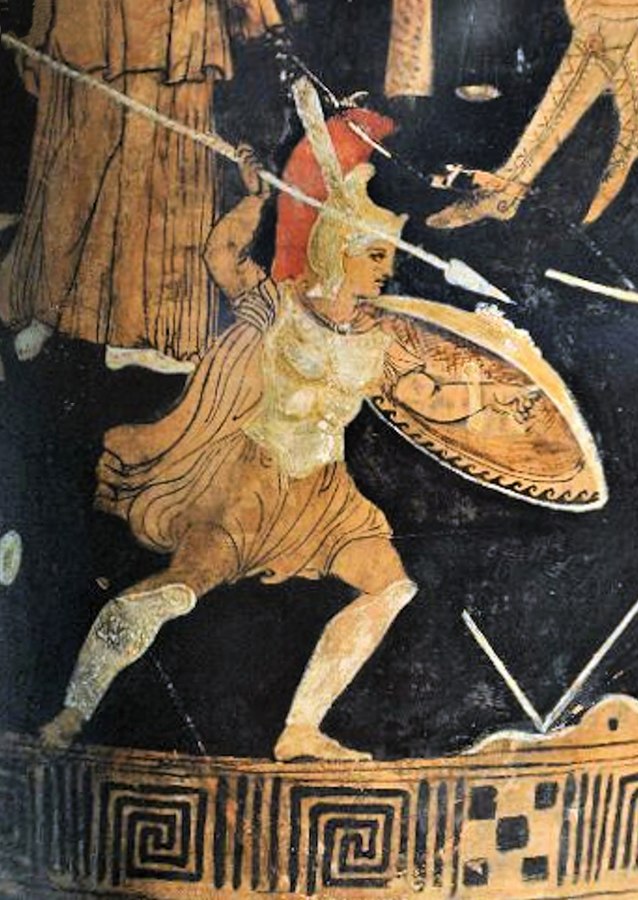 In Call Me Cassandra by Marcial Gala, the main character is visited by the Greek goddess Athena and instructed to read a Cuban edition of the Iliad, the epic poem attributed to the ancient Greek poet Homer and maintained through centuries of oral tradition.
The poem focuses on certain events towards the end of the Trojan War, including the siege of the Greek city of Troy, which was also called Ilios at the time — and is referred to this way in Gala's novel. Homer's epic opens nine years after the start of the war, which began when Paris, the son of the Trojan king Priam, ran off with Helen, the wife of the Achaean king Menelaus, inciting the Achaeans to send an army to Troy after her.
Broken into 24 books and over 15,000 lines ...
If you liked Call Me Cassandra, try these:
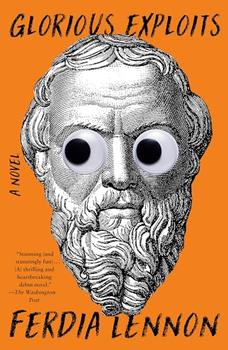
by Ferdia Lennon
Published 2025
An utterly original celebration of that which binds humanity across battle lines and history.
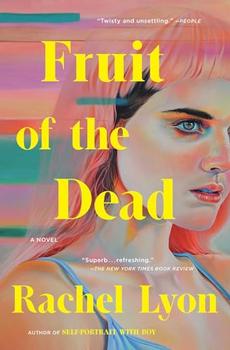
by Rachel Lyon
Published 2025
An electric contemporary reimagining of the myth of Persephone and Demeter set over the course of one summer on a lush private island, about addiction and sex, family and independence, and who holds the power in a modern underworld.

by Charles Burns
Published 2024
The beloved and award-winning author of Black Hole's haunting and visually arresting story of an artist's obsessions, and the value and cost of pushing the boundaries of creativity.
 (1).gif)
On the whole, human beings want to be good, but not too good and not quite all the time
Click Here to find out who said this, as well as discovering other famous literary quotes!

Can you name the title?
Test your book knowledge with our daily trivia challenge!