
-
Your next favorite book
is waiting.
Summary | Excerpt | Reviews | Beyond the book | Read-Alikes | Genres & Themes | Author Bio

The Last Forest and the Future of Life on Earth
by Ben Rawlence Book Reviewed by:
In the tradition of Elizabeth Kolbert and Barry Lopez, a powerful, poetic and deeply absorbing account of the "lung" at the top of the world.
For the last fifty years, the trees of the boreal forest have been moving north. Ben Rawlence's The Treeline takes us along this critical frontier of our warming planet from Norway to Siberia, Alaska to Greenland, Canada to Sweden to meet the scientists, residents and trees confronting huge geological changes. Only the hardest species survive at these latitudes including the ice-loving Dahurian larch of Siberia, the antiseptic Spruce that purifies our atmosphere, the Downy birch conquering Scandinavia, the healing Balsam poplar that Native Americans use as a cure-all and the noble Scots Pine that lives longer when surrounded by its family.
It is a journey of wonder and awe at the incredible creativity and resilience of these species and the mysterious workings of the forest upon which we rely for the air we breathe. Blending reportage with the latest science, The Treeline is a story of what might soon be the last forest left and what that means for the future of all life on earth.
1.
The Zombie Forest
Pinus sylvestris, Scots pine
GLEN LOYNE, SCOTLAND: 57° 04' 60' N
As the ice retreated to higher ground at the beginning of the current interglacial period, the boreal forest set off in pursuit. Plants that had not been seen on the islands of Britain for thousands of years began, gradually, to return. Ice persisted on the uplands of north Wales and the Highlands of Scotland, but in the valleys and the plains, lichens formed a crust on the exposed rocks. Then came mosses with their creeping fur, laying the ground for grasses and sedges first, soon to be followed by the pioneer shrubs of hazel, birch, willow, juniper and aspen. This boreal system worked its way north, across the land bridge where the English Channel now is, a sweeping tide of green on the heels of the ice, the cocktail of early seeds dispersed according to the natural cycles of wind, rain and the migratory patterns of animals, including humans.
Ten thousand years later, I follow. Pointing the ...
The Treeline is a moving meditation on what climate change truly means for ecosystems and their human inhabitants in a rapidly evolving, ecologically unique part of the world. Rawlence addresses the dislocations and disasters that will ensue, and indeed already have begun, but it isn't with hopeless fatalism. Instead, he ends with a call to action for humans to adapt and survive. Through scientific lessons, anthropological accounts and lyrical language, The Treeline is a valuable addition to the growing canon of climate change writing...continued
Full Review
 (834 words)
(Reviewed by Rose Rankin).
 Ben Ehrenreich, author of Desert Notebooks: A Roadmap for the End of Time
What an extraordinary book this is! Rawlence writes with elegant clarity about a world knocked out of whack. The Treeline is a fine work of science journalism, an adventure tale that tracks the shifting fortunes of the planet's northernmost forests, a record of the cruel legacies of capitalism and colonialism. Most of all it is a sustained act of attention, of observing and listening to a land that observes and listens back. This is not just a description of a warming world but an active invitation to live differently, to participate with wisdom and humility in the cacophonous and ever-unfinished abundance of terrestrial life. M.R. O'Connor, author of Wayfinding
In this beautiful homage to the world's northernmost forests, Ben Rawlence brings the zeal of a journalist and the heart of a naturalist to his journey following the treeline east into the rising sun. As Rawlence explores vast wildwoods of pine, birch, larch, and spruce, he uses alluring prose to present fascinating and challenging ideas of what a forest is: not a static place on a map but a creative, evolutionary process―a 'mobile community.' Rawlence documents how the treeline is now undergoing one of its greatest transformations with enormous consequences for humanity and the planet. By focusing his formidable curiosity and craft on the arboreal biosphere, Rawlence has given both trees and people an enormous gift. Sophy Roberts, author of The Lost Pianos of Siberia
A fascinating book drawing on a brilliant, original line of thinking to reveal the roots and reach of our changing boreal forests. Once again, Rawlence delivers a perfect combination of lyrical writing and rigorous reporting. Utterly illuminating.
Ben Ehrenreich, author of Desert Notebooks: A Roadmap for the End of Time
What an extraordinary book this is! Rawlence writes with elegant clarity about a world knocked out of whack. The Treeline is a fine work of science journalism, an adventure tale that tracks the shifting fortunes of the planet's northernmost forests, a record of the cruel legacies of capitalism and colonialism. Most of all it is a sustained act of attention, of observing and listening to a land that observes and listens back. This is not just a description of a warming world but an active invitation to live differently, to participate with wisdom and humility in the cacophonous and ever-unfinished abundance of terrestrial life. M.R. O'Connor, author of Wayfinding
In this beautiful homage to the world's northernmost forests, Ben Rawlence brings the zeal of a journalist and the heart of a naturalist to his journey following the treeline east into the rising sun. As Rawlence explores vast wildwoods of pine, birch, larch, and spruce, he uses alluring prose to present fascinating and challenging ideas of what a forest is: not a static place on a map but a creative, evolutionary process―a 'mobile community.' Rawlence documents how the treeline is now undergoing one of its greatest transformations with enormous consequences for humanity and the planet. By focusing his formidable curiosity and craft on the arboreal biosphere, Rawlence has given both trees and people an enormous gift. Sophy Roberts, author of The Lost Pianos of Siberia
A fascinating book drawing on a brilliant, original line of thinking to reveal the roots and reach of our changing boreal forests. Once again, Rawlence delivers a perfect combination of lyrical writing and rigorous reporting. Utterly illuminating.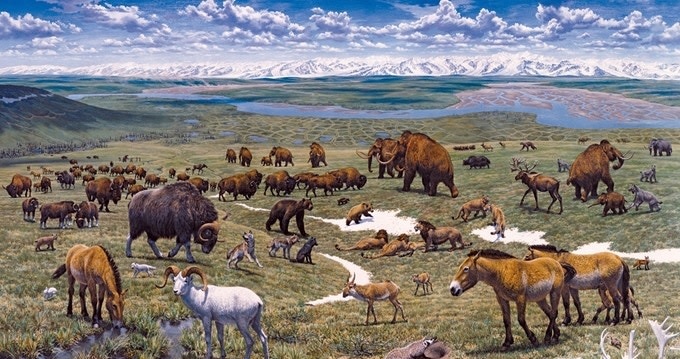 In his book The Treeline: The Last Forest and the Future of Life on Earth, Ben Rawlence describes how global warming is altering northern ecosystems like the tundra of Siberia. As temperatures rise, the permafrost no longer lives up to its name; instead of staying permanently frozen, the ice within is melting. This causes the ground to collapse into sinkholes as the water drains away, or the soil turns to slush underground, as Siberian scientists are finding.
As it warms, the permafrost releases greenhouse gases, including carbon dioxide and methane, that have been trapped in the ice for eons. This aggravates the warming that is causing the melting in the first place, since these gases trap more heat in the atmosphere and warm the ground...
If you liked The Treeline, try these:

by Ferris Jabr
Published 2025
A vivid account of a major shift in how we understand Earth, from an exceptionally talented new voice. Earth is not simply an inanimate planet on which life evolved, but rather a planet that came to life.
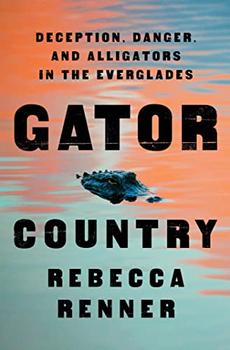
by Rebecca Renner
Published 2024
David Grann meets Susan Orlean in this page-turning true story of an underground operation into the mysterious world of alligator poaching and its larger than life Floridian characters
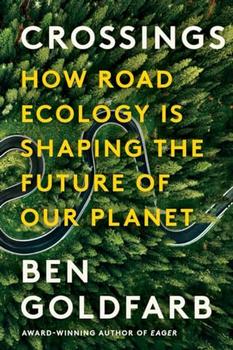
by Ben Goldfarb
Published 2024
An eye-opening account of the global ecological transformations wrought by roads, from the award-winning author of Eager.

 (1).gif)
Everywhere I go, I am asked if I think the university stifles writers...
Click Here to find out who said this, as well as discovering other famous literary quotes!

Can you name the title?
Test your book knowledge with our daily trivia challenge!