
-
Your next favorite book
is waiting.
Summary | Excerpt | Reviews | Beyond the book | Read-Alikes | Genres & Themes | Author Bio
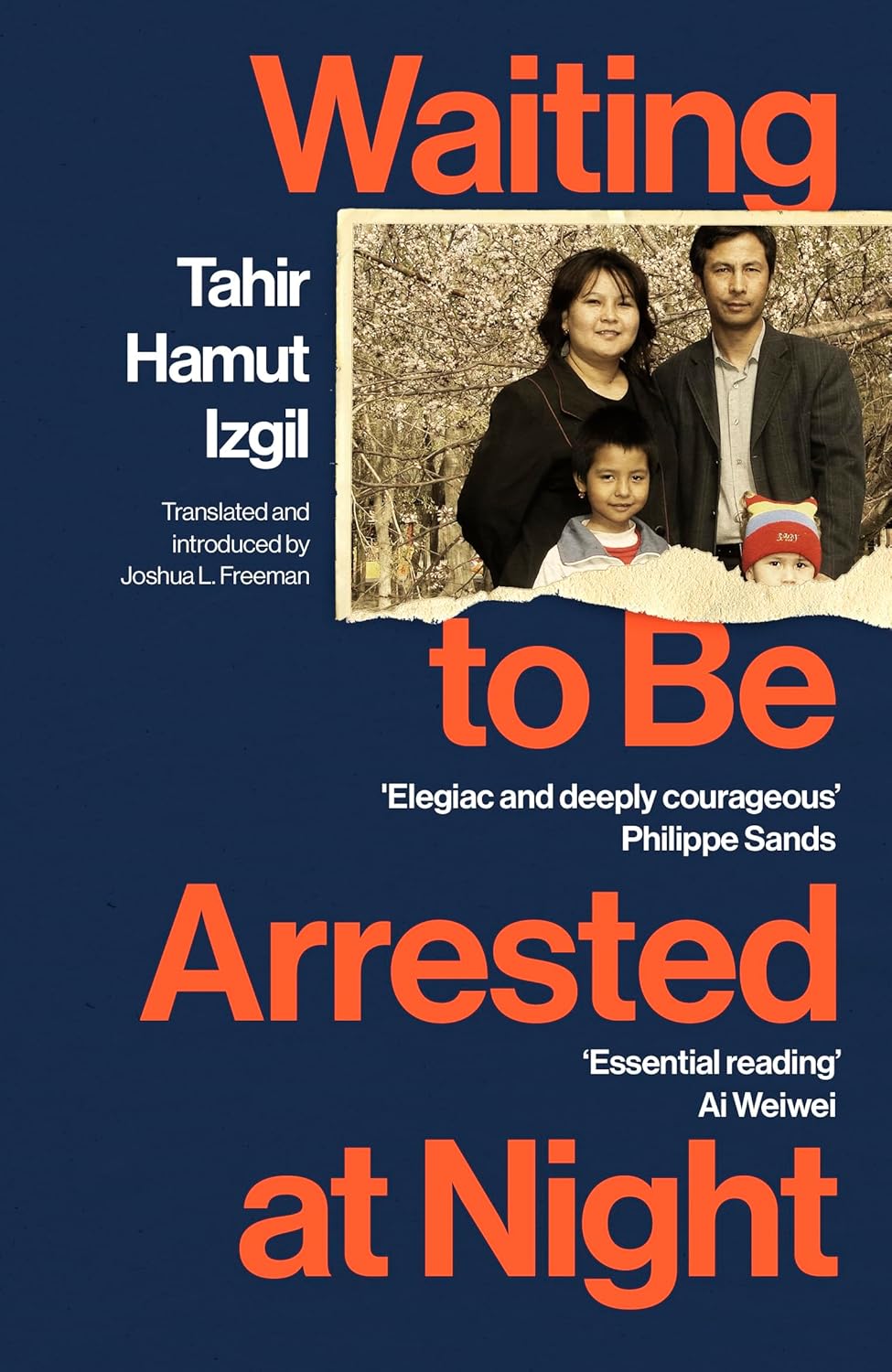
A Uyghur Poet's Memoir of China's Genocide
by Tahir Hamut Izgil Book Reviewed by:
A poet's account of one of the world's most urgent humanitarian crises, and a harrowing tale of a family's escape from genocide
One by one, Tahir Hamut Izgil's friends "disappeared". The Chinese government's brutal persecution of the Uyghur people had continued for years, but in 2017 it assumed a terrifying new scale. The Uyghurs, a predominantly Muslim minority group in western China, were experiencing an echo of the worst horrors of the twentieth century, amplified by China's establishment of an all-seeing high-tech surveillance state. Over a million people have vanished into China's internment camps for Muslim minorities.
Tahir, a prominent poet and intellectual, had been no stranger to persecution. After he attempted to travel abroad in 1996, police tortured him until he confessed to fabricated charges and sent him to a re-education through labor camp. But even having endured three years in the camp, he could never have predicted the Chinese government's radical solution to the Uyghur question two decades later. Was the first sign when Tahir was interrogated for hours after a phone call with a fellow poet in the Netherlands? Or when his old friend was sentenced to life in prison simply for calling for Uyghurs' legal rights to be enforced? Perhaps it was when the police seized Uyghurs' radios and installed jamming equipment to cut them off from the outside world.
Once Tahir noticed that the park near his home was nearly empty because so many neighbors had been arrested, he knew the police would be coming for him any day. One night, after Tahir's daughters were asleep, he placed by his door a sturdy pair of shoes, a sweater, and a coat so that he could stay warm if the police came for him in the middle of the night. It was clear to Tahir and his wife that fleeing the country was the family's only hope.
Waiting to Be Arrested at Night is the story of the political, social, and cultural destruction of Tahir Hamut Izgil's homeland. Among leading Uyghur intellectuals and writers, he is the only one known to have escaped China since the mass internments began. His book is a call for the world to awaken to the unfolding catastrophe, and a tribute to his friends and fellow Uyghurs whose voices have been silenced.
One
A Phone Call from Beijing
I keep returning to the first day of 2013.
That evening, I received an unexpected call from Ilham Tohti, an economics professor at Beijing's Central University for Nationalities. It had been years since we'd talked. He was at a Uyghur restaurant behind the university, celebrating the new year over dinner with a mutual friend of ours from Beijing.
After exchanging pleasantries, Ilham declared: "Xi Jinping has taken power. Things will get better for us now. Don't lose heart, and let our friends in Urumchi know that they should feel optimistic." Ilham was in an excellent mood. When he said things would get better, he was referring to Uyghurs' rapidly deteriorating political circumstances.
While today it's clear how absurd it was to expect any good to come to Uyghurs from Xi Jinping, at the time numerous Uyghur intellectuals cherished such hopes. Some liberal Han intellectuals likewise suggested that Xi might turn out to be relatively liberal. Given the lack of ...

National Book Critics Circle Awards
2023
Tahir Hamut Izgil's memoir, Waiting to be Arrested at Night, breaks through the complacency surrounding the oppression of the Uyghur people and powerfully reveals the terror of mass persecutions tearing an entire population apart. His poet's voice and lyricism add a dreamlike quality to events that seem too terrifying to be real, and almost too painful to describe...continued
Full Review
 (652 words)
(Reviewed by Rose Rankin).
 Ai Weiwei, author of 1000 Years of Joys and Sorrows
Tahir Hamut Izgil's gripping book evokes haunting memories of the terror and persecution he endured in his homeland, where dreams are turned into nightmares. Despite the gravity of his account, Izgil's writing remains serene and sincere; his stories are engaging and evoke empathy. To call this merely 'a good book' is an understatement—it is essential reading. Cornel West, author of Democracy Matters
Tahir Hamut Izgil's powerful and poignant memoir is an instant classic. He lays bare the vicious genocidal persecution of the precious Uyghur people in a very personal and persuasive way. His grand poetic temperament exemplifies the unstoppable resilience of the rich Uyghur soul. Ian Johnson, winner of the Pulitzer Prize
Waiting to Be Arrested at Night is a terrifying, compelling read of one family's efforts to escape the jaws that were closing around them and millions of others in China's far western region of Xinjiang. Drawing the reader into a vortex of fear and suspicion, Izgil has put forth a narrative that reads like a horror novel but is more disturbing because it tells a true story of out-of-control authoritarianism. Highly recommended for general readers and anyone seeking a readable first-person account of China's surveillance state. Janine di Giovanni, author of The Morning They Came For Us
A vital and urgent book about the tragedy of the Uyghur people, abandoned by the world and brutally oppressed by the Chinese government. Waiting to Be Arrested at Night addresses all of the horror and pain of everyday living under occupation, without any rights, without any voice, in the 21st century. This is why the voice of Tahir Hamut Izgil is one that must be heard. Julia Lovell, author of Maoism: A Global History
This is an exceptionally powerful, profoundly lyrical, and beautifully translated book—I urge you to read it. It illuminates, in unforgettable human detail and complexity, the current Chinese government's assault on Uyghur society and culture, and the urgent humanitarian crisis it has generated. Peter Hessler, author of River Town
Among our scattered glimpses of the Uyghur catastrophe in China—the digital surveillance, the mass arrests, the reeducation camps—it seems impossible to imagine the survival of any individual creative sensibility. But Tahir Hamut Izgil is a rare artist. He records in vivid detail his fear, his resourcefulness, his loss, and his survivor's guilt—the full emotional arc of a poet in flight and exile. Even if we can't comprehend why this tragedy is happening in Xinjiang, Tahir reminds us why it matters. Philip Gourevitch, author of We Wish to Inform You That Tomorrow We Will Be Killed with Our Families
An essential testimony to one of the defining crimes against humanity of the twenty-first century so far: China's gradually accelerating, systematic, sinisterly bureaucratic and high-tech campaign to make the Uyghur minority disappear. The poet Tahir Hamut Izgil is one of the few Uyghurs who escaped just in time to tell us. Philippe Sands, author of East West Street
Elegiac and deeply courageous, a most powerful literary indictment of the unfettered power of the state. A remarkable book. Tracy K. Smith, former poet laureate of the United States
I was riveted and chastened by Tahir Hamut Izgil's memoir of surveillance, internment, violent persecution, and miraculous flight. The humanitarian crisis affecting China's Uyghur citizens is an indictment of all nations and all people. Izgil's crystalline, courageous prose is a wake-up call for everyone invested in the myth—and also the possibility—of freedom.
Ai Weiwei, author of 1000 Years of Joys and Sorrows
Tahir Hamut Izgil's gripping book evokes haunting memories of the terror and persecution he endured in his homeland, where dreams are turned into nightmares. Despite the gravity of his account, Izgil's writing remains serene and sincere; his stories are engaging and evoke empathy. To call this merely 'a good book' is an understatement—it is essential reading. Cornel West, author of Democracy Matters
Tahir Hamut Izgil's powerful and poignant memoir is an instant classic. He lays bare the vicious genocidal persecution of the precious Uyghur people in a very personal and persuasive way. His grand poetic temperament exemplifies the unstoppable resilience of the rich Uyghur soul. Ian Johnson, winner of the Pulitzer Prize
Waiting to Be Arrested at Night is a terrifying, compelling read of one family's efforts to escape the jaws that were closing around them and millions of others in China's far western region of Xinjiang. Drawing the reader into a vortex of fear and suspicion, Izgil has put forth a narrative that reads like a horror novel but is more disturbing because it tells a true story of out-of-control authoritarianism. Highly recommended for general readers and anyone seeking a readable first-person account of China's surveillance state. Janine di Giovanni, author of The Morning They Came For Us
A vital and urgent book about the tragedy of the Uyghur people, abandoned by the world and brutally oppressed by the Chinese government. Waiting to Be Arrested at Night addresses all of the horror and pain of everyday living under occupation, without any rights, without any voice, in the 21st century. This is why the voice of Tahir Hamut Izgil is one that must be heard. Julia Lovell, author of Maoism: A Global History
This is an exceptionally powerful, profoundly lyrical, and beautifully translated book—I urge you to read it. It illuminates, in unforgettable human detail and complexity, the current Chinese government's assault on Uyghur society and culture, and the urgent humanitarian crisis it has generated. Peter Hessler, author of River Town
Among our scattered glimpses of the Uyghur catastrophe in China—the digital surveillance, the mass arrests, the reeducation camps—it seems impossible to imagine the survival of any individual creative sensibility. But Tahir Hamut Izgil is a rare artist. He records in vivid detail his fear, his resourcefulness, his loss, and his survivor's guilt—the full emotional arc of a poet in flight and exile. Even if we can't comprehend why this tragedy is happening in Xinjiang, Tahir reminds us why it matters. Philip Gourevitch, author of We Wish to Inform You That Tomorrow We Will Be Killed with Our Families
An essential testimony to one of the defining crimes against humanity of the twenty-first century so far: China's gradually accelerating, systematic, sinisterly bureaucratic and high-tech campaign to make the Uyghur minority disappear. The poet Tahir Hamut Izgil is one of the few Uyghurs who escaped just in time to tell us. Philippe Sands, author of East West Street
Elegiac and deeply courageous, a most powerful literary indictment of the unfettered power of the state. A remarkable book. Tracy K. Smith, former poet laureate of the United States
I was riveted and chastened by Tahir Hamut Izgil's memoir of surveillance, internment, violent persecution, and miraculous flight. The humanitarian crisis affecting China's Uyghur citizens is an indictment of all nations and all people. Izgil's crystalline, courageous prose is a wake-up call for everyone invested in the myth—and also the possibility—of freedom.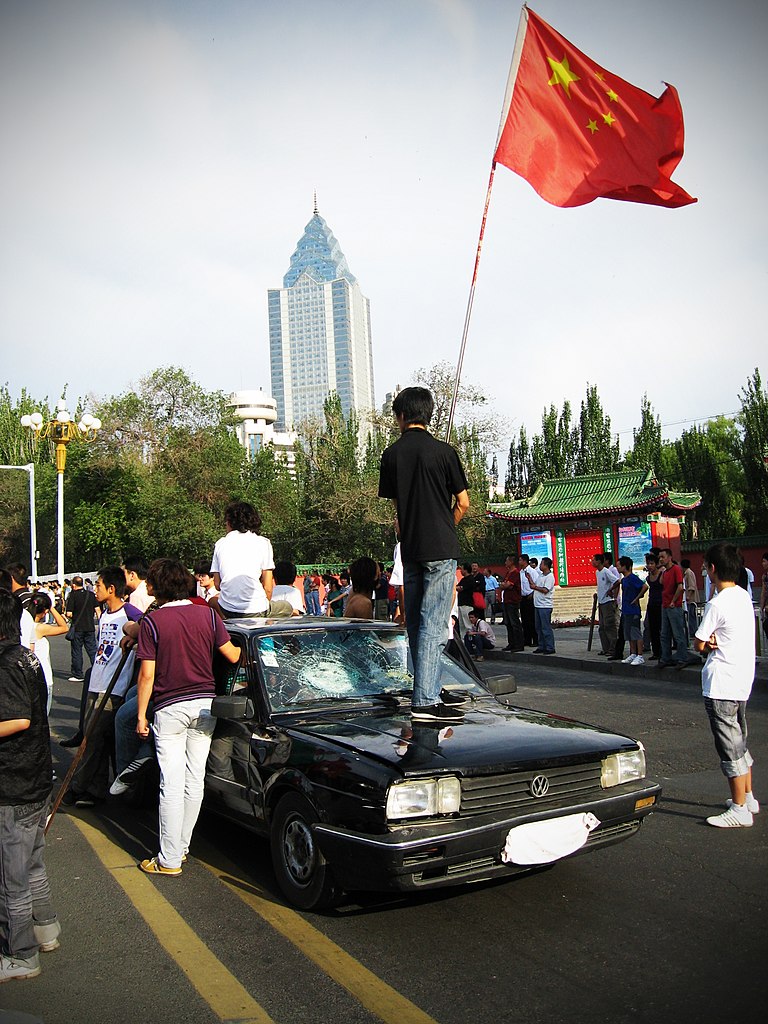 As Tahir Hamut Izgil recounts in his memoir, Waiting to be Arrested at Night: A Uyghur Poet's Memoir of China's Genocide, treatment of Uyghurs in China has changed dramatically in the last decade. In earlier years, ethnic-minority Uyghurs were no strangers to persecution by Han Chinese, as Izgil himself experienced with an arbitrary arrest and three-year prison sentence in the mid-1990s. Since 2015, however, mass arrests have sent an estimated one million Uyghurs to internment camps. Officially known as "vocational education centers," these camps hold people without due process or even formal charges. Human rights organizations and media outlets have reported torture and forced labor being inflicted upon detainees. How did the situation ...
If you liked Waiting to Be Arrested at Night, try these:

by Tania Branigan
Published 2024
An indelible exploration of the invisible scar that runs through the heart of Chinese society and the souls of its citizens.

1000 Years of Joys and Sorrows
by Ai Weiwei
Published 2022
In his widely anticipated memoir, "one of the most important artists working in the world today" (Financial Times) tells a century-long epic tale of China through the story of his own extraordinary life and the legacy of his father, the nation's most celebrated poet.
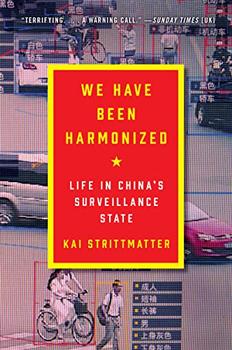
by Kai Strittmatter
Published 2021
Hailed as a masterwork of reporting and analysis, and based on decades of research within China, We Have Been Harmonized, by award-winning correspondent Kai Strittmatter, offers a groundbreaking look at how the internet and high tech have allowed China to create the largest and most effective surveillance state in history.


 (1).gif)
Censorship, like charity, should begin at home: but unlike charity, it should end there.
Click Here to find out who said this, as well as discovering other famous literary quotes!

Can you name the title?
Test your book knowledge with our daily trivia challenge!