
-
Your next favorite book
is waiting.
Summary | Excerpt | Reading Guide | Reviews | Beyond the book | Read-Alikes | Genres & Themes | Author Bio

A Memoir of a Kidnapping
by Shane McCrae Book Reviewed by:
An unforgettable memoir by an award-winning poet about being kidnapped from his Black father and raised by his white supremacist grandparents.
When Shane McCrae was three years old, his grandparents kidnapped him and took him to suburban Texas. His mom was white and his dad was Black, and to hide his Blackness from him, his maternal grandparents stole him from his father. In the years that followed, they manipulated and controlled him, refusing to acknowledge his heritage—all the while believing they were doing what was best for him.
For their own safety and to ensure the kidnapping remained a success, Shane's grandparents had to make sure that he never knew the full story, so he was raised to participate in his own disappearance. But despite elaborate fabrications and unreliable memories, Shane begins to reconstruct his own story and to forge his own identity. Gradually, the truth unveils itself, and with the truth, comes a path to reuniting with his father and finding his own place in the world.
A revelatory account of a singularly American childhood that hauntingly echoes the larger story of race in our country, Pulling the Chariot of the Sun is written with the virtuosity and heart of one of the finest poets writing today. And it is also a powerful reflection on what is broken in America—but also what might heal and make it whole again.
Chapter 1
Before I saw it cascading across the fabric store parking lot, tumbling across the fabric store parking lot like a gif of two impossibly small gray birds fighting that has been copied and pasted a hundred thousand times, reeling through the air above the fabric store parking lot, the four hundred thousand wings overlapping, intertwining, each of the paired birds seeming to flap away from its opponent even as it attacks its opponent, I hadn't known rain could fall sideways. I was seven years old. Maybe I was nine years old—any age after my grandparents kidnapped me and took me to Texas. I was three when I was kidnapped, any age. The day must have been a Saturday or a Sunday because when my grandmother and I stepped from the fabric store we were shocked at how dark the day had become, so it must have been midday, me not in school. Unless it was a summer day. Usually whenever we shopped for fabric store things, whenever my grandmother shopped for fabric store things, we ...
McCrae is simply a stunning writer. Like when describing himself and his family: "When I was a child, whiteness and blackness weren't facts about me, whiteness was a wheat field I stood in; blackness was a pit somewhere in the field, hidden by the somehow taller stalks growing from it." He writes his story as if childhood is timeless. In the span of a few pages, he is a seven-year-old watching sideways rain and then a kindergartener and then an acne-faced teenager...continued
Full Review
 (858 words)
(Reviewed by Valerie Morales).
 Hilton Als, Pulitzer Prize-winning author of White Girls
Shane McCrae's powerful, indelible poet's voice has now extended to the memoir, and how fortunate are we that the very things that distinguish his verse—truth-telling, sharp observation, more than a sense of the moment, profundity worn lightly—grace his harrowing and enlightening tale about race, and what makes an American family, and why. An essential story for our times. Ilya Kaminsky, author of Deaf Republic
Pulling the Chariot of the Sun is the kind of story that pulls you right in with its voice, the kind of book that sways you with heart-wrenching honesty and beautiful music. There is something magnetic to this story-telling, which gives us an incantation of memory that is as moving as it is spell-binding. For what tears up the family in this book is what tears up this country still, prevents it from finding itself. McCrae's voice is vulnerable and direct and precise, the voice of a poet who teaches us again what musical prose can do. This is such a compelling and necessary book. John Darnielle, author of Devil House
Pulling the Chariot of the Sun is a memoir, and a poem, and a story, and a collection of songs about identity and personal history and place and time and race and America: but any description of it, any attempt to confine it within the boundaries of genre or form, is doomed to failure. This is a singular book. McCrae writes like a fencer, tracing indelible figures in the reader's mind: a child in a fabric store, a car in a rainstorm, a wild hideaway between buildings in a subdivision. It's a book by a man who was kidnapped as a child, and raised by his kidnappers, and no further attempt to describe what's in these pages can prepare the reader for the hardness of the story nor the dazzling light of McCrae's prose. We live in a glut of memoir. McCrae's book will endure long after the glut has subsided.
Hilton Als, Pulitzer Prize-winning author of White Girls
Shane McCrae's powerful, indelible poet's voice has now extended to the memoir, and how fortunate are we that the very things that distinguish his verse—truth-telling, sharp observation, more than a sense of the moment, profundity worn lightly—grace his harrowing and enlightening tale about race, and what makes an American family, and why. An essential story for our times. Ilya Kaminsky, author of Deaf Republic
Pulling the Chariot of the Sun is the kind of story that pulls you right in with its voice, the kind of book that sways you with heart-wrenching honesty and beautiful music. There is something magnetic to this story-telling, which gives us an incantation of memory that is as moving as it is spell-binding. For what tears up the family in this book is what tears up this country still, prevents it from finding itself. McCrae's voice is vulnerable and direct and precise, the voice of a poet who teaches us again what musical prose can do. This is such a compelling and necessary book. John Darnielle, author of Devil House
Pulling the Chariot of the Sun is a memoir, and a poem, and a story, and a collection of songs about identity and personal history and place and time and race and America: but any description of it, any attempt to confine it within the boundaries of genre or form, is doomed to failure. This is a singular book. McCrae writes like a fencer, tracing indelible figures in the reader's mind: a child in a fabric store, a car in a rainstorm, a wild hideaway between buildings in a subdivision. It's a book by a man who was kidnapped as a child, and raised by his kidnappers, and no further attempt to describe what's in these pages can prepare the reader for the hardness of the story nor the dazzling light of McCrae's prose. We live in a glut of memoir. McCrae's book will endure long after the glut has subsided. As Shane McCrae documents in Pulling the Chariot of the Sun, he was born to a black father and a white mother. He lived alternately with both parents for three years until his maternal grandparents convinced his father to let him visit them for the weekend. When his father went to pick him up at the agreed time, the house was empty: "There was no sign of where they had gone."
Far from model guardians, his grandparents were physically abusive and racist, taunting blacks they saw on television and in person, telling him black people were inferior. Unsurprisingly, McCrae was a miserable student, failing most years he was enrolled until October 25, 1990, when he heard lines from Sylvia Plath's poem "Lady Lazarus" on the television drama ...
If you liked Pulling the Chariot of the Sun, try these:
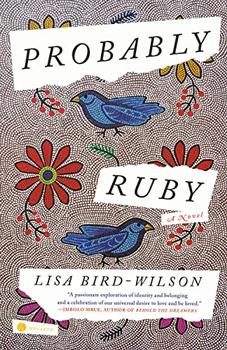
by Lisa Bird-Wilson
Published 2023
An Indigenous woman adopted by white parents goes in search of her identity in this unforgettable debut novel about family, race, and history.

by Dawn Turner
Published 2022
A "beautiful, tragic, and inspiring" (Publishers Weekly, starred review) memoir about three Black girls from the storied Bronzeville section of Chicago that offers a penetrating exploration of race, opportunity, friendship, sisterhood, and the powerful forces at work that allow some to flourish…and others to falter.

by Danielle Geller
Published 2022
A daughter returns home to the Navajo reservation to retrace her mother's life in a memoir that is both a narrative and an archive of one family's troubled history.


 (1).gif)
The most successful people are those who are good at plan B
Click Here to find out who said this, as well as discovering other famous literary quotes!

Can you name the title?
Test your book knowledge with our daily trivia challenge!