-
Your next favorite book
is waiting.
Summary | Excerpt | Reading Guide | Reviews | Beyond the book | Read-Alikes | Genres & Themes | Author Bio

 Book Reviewed by:
In this enchanting love story from the New York Times bestselling author of Seven Days in June, a free-spirited florist and an enigmatic musician are irreversibly linked through the history, art, and magic of Harlem.
Leap years are a strange, enchanted time. And for some, even a single February can be life-changing.
Ricki Wilde has many talents, but being a Wilde isn't one of them. As the impulsive, artistic daughter of a powerful Atlanta dynasty, she's the opposite of her famous socialite sisters. Where they're long-stemmed roses, she's a dandelion: an adorable bloom that's actually a weed, born to float wherever the wind blows. In her bones, Ricki knows that somewhere, a different, more exciting life awaits her.
When regal nonagenarian, Ms. Della, invites her to rent the bottom floor of her Harlem brownstone, Ricki jumps at the chance for a fresh beginning. She leaves behind her family, wealth, and chaotic romantic decisions to realize her dream of opening a flower shop. And just beneath the surface of her new neighborhood, the music, stories and dazzling drama of the Harlem Renaissance still simmers.
One evening in February as the heady, curiously off-season scent of night-blooming jasmine fills the air, Ricki encounters a handsome, deeply mysterious stranger who knocks her world off balance in the most unexpected way.
Set against the backdrop of modern Harlem and Renaissance glamour, A Love Song for Ricki Wilde is a swoon-worthy love story of two passionate artists drawn to the magic, romance, and opportunity of New York, and whose lives are uniquely and irreversibly linked.
Excerpt from A Love Song for Ricki Wilde
When Wilde Things held its grand opening on the first, it was an instant hit. Sure, some of it was due to the festive season. But at a time when flower trends were minimalist, Ricki's shop was an over-the-top winter wonderland! Think Christmas cactus and candy-cane-striped amaryllis; Kwanzaa bouquets with tropical red, black, and green blooms; and Hanukkah wreaths mixing blue poppies with white orchids.
By New Year's Day, she'd earned double her projection. And by the end of January, she'd lost every cent.
People just ... stopped coming. Ricki couldn't figure it out. In December, she could barely keep blooms in stock, the orders were so fast and furious. What did she do wrong?
"I know what you did wrong," offered Tuesday one evening after closing. Foot traffic had been brutally slow that day. Now she and Ricki were stirring bowls of recycled, plantable paper infused with wildflower seeds. Ricki wanted to package the home-made paper into chic note ...
When a wealthy widow Ricki meets at work offers her the chance to start her own flower shop in the ground floor space of a Harlem brownstone, she leaps at the offer. But a new career isn't the only thing Ricki finds in Harlem. She also meets a mysterious, devastatingly handsome stranger with a secret that will change her life. This is a dual timeline book that tells Ricki's story alongside flashbacks to the Harlem Renaissance a century ago, where a musician is trying to make a name for himself. The scenes set in the 1920s are lushly described, with vivid details of luxurious outfits and raucous bars. This time of growing Black wealth and a buzzing cultural scene is juxtaposed with the rapidly gentrifying Harlem Ricki lives in, where the historic brownstones are owned by white executives, and iconic cultural hubs are long gone. Readers of Tia Williams' earlier Seven Days in June will be delighted by a cameo from that novel's protagonist, who gives a lecture on voodoo that Ricki attends. Williams' fans can only hope that this might mark the beginning of an overlapping literary universe in the style of Taylor Jenkins Reid...continued
Full Review
 (735 words)
(Reviewed by Jillian Bell).
 Emily Giffin, New York Times bestselling author of Meant to Be
Tia Williams brilliantly captures the magic and romance of Harlem—past and present—while giving us a heroine we can all root for. I adore Ricki Wilde and was utterly enchanted by this epic love story. Prepare to be transported! Kennedy Ryan, bestselling author of Before I Let Go
Tia Williams writes instant classics, and A Love Song for Ricki Wilde is the perfect vehicle to demonstrate the rare range and insight that make her writing so special. At turns punchy and poignant, sweeping and yet so intimate, this story will steal your heart and surprise you. Make you ache. Make you laugh and cry and yearn. As Williams' most ambitious work to date with layers of romance and heartache and history and magic tucked between these pages, it is your next book of the year. Leah Johnson, bestselling author of You Should See Me in a Crown
This book reads like the best kind of love song: tender, smart and undeniably sexy. Tia Williams simply doesn't miss.
Emily Giffin, New York Times bestselling author of Meant to Be
Tia Williams brilliantly captures the magic and romance of Harlem—past and present—while giving us a heroine we can all root for. I adore Ricki Wilde and was utterly enchanted by this epic love story. Prepare to be transported! Kennedy Ryan, bestselling author of Before I Let Go
Tia Williams writes instant classics, and A Love Song for Ricki Wilde is the perfect vehicle to demonstrate the rare range and insight that make her writing so special. At turns punchy and poignant, sweeping and yet so intimate, this story will steal your heart and surprise you. Make you ache. Make you laugh and cry and yearn. As Williams' most ambitious work to date with layers of romance and heartache and history and magic tucked between these pages, it is your next book of the year. Leah Johnson, bestselling author of You Should See Me in a Crown
This book reads like the best kind of love song: tender, smart and undeniably sexy. Tia Williams simply doesn't miss..jpg "Aspects of Negro Life: From Slavery to Reconstruction by Aaron Douglas") Tia Williams' novel A Love Song for Ricki Wilde contains flashbacks to the Harlem Renaissance, considered a golden age for Black culture and art in the United States. This movement, centered in Manhattan's Harlem neighborhood, took place between the 1910s and 1930s.
Tia Williams' novel A Love Song for Ricki Wilde contains flashbacks to the Harlem Renaissance, considered a golden age for Black culture and art in the United States. This movement, centered in Manhattan's Harlem neighborhood, took place between the 1910s and 1930s.
During the period known as the Great Migration, when large numbers of Black families from the American South began to move north, many landed in Harlem. The neighborhood became a cultural destination as nightclubs and underground speakeasies opened at a time when jazz music was beginning to flourish. Greats like Louis Armstrong and Duke Ellington regularly performed in Harlem, often accompanied by large stage shows. Integrated bars like The Savoy featured dancing late...
If you liked A Love Song for Ricki Wilde, try these:

by Emily Henry
Published 2025
Two writers compete for the chance to tell the larger-than-life story of a woman with more than a couple of plot twists up her sleeve in this dazzling and sweeping novel from Emily Henry.

by Caseen Gaines
Published 2023
The triumphant story of how an all-Black Broadway cast and crew changed musical theatre—and the world—forever.
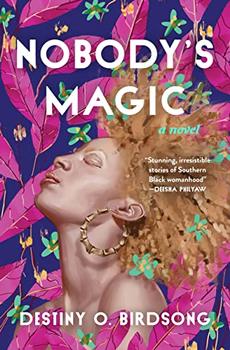
by Destiny O. Birdsong
Published 2023
In this glittering triptych novel, Suzette, Maple and Agnes, three Black women with albinism, call Shreveport, Louisiana home. At the bustling crossroads of the American South and Southwest, these three women find themselves at the crossroads of their own lives.
 (1).gif)
Anagrams
Click Here to find out who said this, as well as discovering other famous literary quotes!

Can you name the title?
Test your book knowledge with our daily trivia challenge!