-
Your next favorite book
is waiting.
Summary | Excerpt | Discuss | Reviews | Beyond the book | Read-Alikes | Genres & Themes | Author Bio

Five Black Ballerinas, Fifty Years of Sisterhood, and Their Reclamation of a Groundbreaking History
by Karen Valby Book Reviewed by:
The forgotten story of a pioneering group of five Black ballerinas and their fifty-year sisterhood, a legacy erased from history—until now.
At the height of the Civil Rights movement, Lydia Abarca was a Black prima ballerina with a major international dance company—the Dance Theatre of Harlem, a troupe of women and men who became each other's chosen family. She was the first Black company ballerina on the cover of Dance magazine, an Essence cover star; she was cast in The Wiz and in a Bob Fosse production on Broadway. She performed in some of ballet's most iconic works with other trailblazing ballerinas, including the young women who became her closest friends—founding Dance Theatre of Harlem members Gayle McKinney-Griffith and Sheila Rohan, as well as first-generation dancers Karlya Shelton and Marcia Sells.
These Swans of Harlem performed for the Queen of England, Mick Jagger, and Stevie Wonder, on the same bill as Josephine Baker, at the White House, and beyond. But decades later there was almost no record of their groundbreaking history to be found. Out of a sisterhood that had grown even deeper with the years, these Swans joined forces again—to share their story with the world.
Captivating, rich in vivid detail and character, and steeped in the glamour and grit of professional ballet, The Swans of Harlem is a riveting account of five extraordinarily accomplished women, a celebration of both their historic careers and the sustaining, grounding power of female friendship, and a window into the robust history of Black ballet, hidden for too long.
Prologue
At the height of the Civil Rights Movement, Lydia Abarca was a Black prima ballerina for a major international company, starring in iconic works like Balanchine's "Agon" and "Swan Lake," Jerome Robbins' "Afternoon of a Faun," and William Dollar's "Le Combat." Critics described her as "the dreaming soul of dance," and "a living ode to beauty, incapable of an ugly gesture or a false movement." She was the first Black ballerina ever to grace the cover of Dance magazine. She performed for queens and kings, in the movie production of The Wiz, for Bob Fosse on Broadway. She was one of Revlon's original Charlie's Girl models. An Essence cover star. The object of affection for everyone from Mick Jagger to David Bowie. Roses collected at her feet around the globe.
Half a century later, during Black History Month, Abarca's thirty-two-year-old daughter Daniella wanted to brag about her mother to their friends and family. She went looking for evidence of all Abarca had done—all the ...
What percentage of the books you’ve read this year have been nonfiction? Did you have a favorite?
10% of my books are non-fiction this year, but they are disproportionately represented among my favorite 10 books for the year (*). Here are my six non-fiction favorites - loved them for different reasons. Some are new books, others are older, two are quiet marvels, while others are thought-provo...
-Gabi_J
Good nonfiction books for book clubs?
I love non-fiction. In addition to Grann and Larson, here are a few other books/authors that I think would be great for bookclub discussions: The Swans of Harlem (Karen Valby) Sisterhood: The Secret History of Women at the CIA (Liza Mundy) The Six - The Untold Story of America's First Women Astro...
-Gabi_J
Journalist Karen Valby's first book, The Swans of Harlem, introduces readers to the little-known history of the Dance Theater of Harlem, which was founded in 1969 by Arthur Mitchell. Using interviews and research from print archives, Valby deftly crafts information into a compelling narrative centered around the company's ballerinas. The fact that none of the names were familiar to me demonstrated the need for the book's existence. I really enjoy histories like this that focus intimately on a small group of people. My biggest complaint is that the book needed a stronger sense of organization and fewer characters to keep track of. Despite those concerns, the book is easy to read and offers a vivid history to get caught up in...continued
Full Review
 (683 words)
(Reviewed by Erin Lyndal Martin).
 Margo Jefferson, author of Constructing a Nervous System
These five original Dance Theatre of Harlem ballerinas fell in love with an art form that most of America believed was white and should remain so. Upon Arthur Mitchell's founding of an all-Black company in 1969, they eagerly took their places at the barre and challenged themselves to the utmost. They triumphed. They showed that Blacks could not only excel at classical ballet but could also shape the art in their own vibrant image. Karen Valby weaves their stories together as a choreographer would: the women form an ensemble, yet each gets her own riveting solo. It's thrilling to watch as they join forces at last and claim their unique place in American ballet's past, present and future. Misty Copeland, New York Times-bestselling author of Black Ballerinas: My Journey To Our Legacy
Karen Valby's The Swans of Harlem brings to life the stories of Black dancers whose contributions to the world of ballet were silenced, marginalized, and otherwise erased. Karen introduces readers to important figures of our past, while inspiring us to courageously chase our dreams. This is the kind of history I wish I learned as a child dreaming of the stage! Tia Williams, New York Times-bestselling author of Seven Days in June
Until Valby's utterly absorbing, flawlessly-researched book, I never knew the story of the original Dance Theatre of Harlem ballerinas—and now, I demand that their lives be taught in schools! Valby finally sheds light on these towering dance pioneers, all of whom triumphed as dancers in a world that didn't believe Black people had a place in the classical art form. Vibrant, propulsive, and inspiring, The Swans of Harlem is a richly drawn portrait of five courageous women whose contributions have been silenced for too long!
Margo Jefferson, author of Constructing a Nervous System
These five original Dance Theatre of Harlem ballerinas fell in love with an art form that most of America believed was white and should remain so. Upon Arthur Mitchell's founding of an all-Black company in 1969, they eagerly took their places at the barre and challenged themselves to the utmost. They triumphed. They showed that Blacks could not only excel at classical ballet but could also shape the art in their own vibrant image. Karen Valby weaves their stories together as a choreographer would: the women form an ensemble, yet each gets her own riveting solo. It's thrilling to watch as they join forces at last and claim their unique place in American ballet's past, present and future. Misty Copeland, New York Times-bestselling author of Black Ballerinas: My Journey To Our Legacy
Karen Valby's The Swans of Harlem brings to life the stories of Black dancers whose contributions to the world of ballet were silenced, marginalized, and otherwise erased. Karen introduces readers to important figures of our past, while inspiring us to courageously chase our dreams. This is the kind of history I wish I learned as a child dreaming of the stage! Tia Williams, New York Times-bestselling author of Seven Days in June
Until Valby's utterly absorbing, flawlessly-researched book, I never knew the story of the original Dance Theatre of Harlem ballerinas—and now, I demand that their lives be taught in schools! Valby finally sheds light on these towering dance pioneers, all of whom triumphed as dancers in a world that didn't believe Black people had a place in the classical art form. Vibrant, propulsive, and inspiring, The Swans of Harlem is a richly drawn portrait of five courageous women whose contributions have been silenced for too long!In The Swans of Harlem, Karen Valby explains how Arthur Mitchell sought to make ballet appealing and relevant to a Black audience. He and his dancers regularly visited schools to give talks and performances. Mitchell loved to point out how ballet could help the students in their daily lives. He'd tell the boys how much higher they could jump during basketball if they learned to jeté. He would demonstrate how you could find ballet anywhere and would break down the latest dance trends to prove it—while making ballet more approachable at the same time.
One popular dance was the "Camel Walk." That was a ragtime dance popular in vaudeville in the 1920s, but it had a resurgence in the '60s and '70s as a retro craze—one that ...
If you liked The Swans of Harlem, try these:

by Nicole Cuffy
Published 2024
A provocative and lyrical debut novel follows a trailblazing Black ballerina who must reconcile the ever-rising stakes of her grueling career with difficult questions of love, loss, and her journey to self-liberation, from a sensuous new voice in fiction.

by Caseen Gaines
Published 2023
The triumphant story of how an all-Black Broadway cast and crew changed musical theatre—and the world—forever.
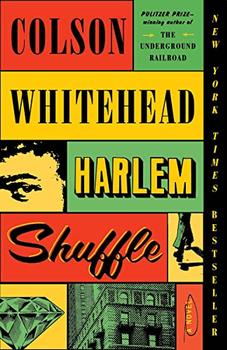
by Colson Whitehead
Published 2022
From the two-time Pulitzer Prize-winning author of The Underground Railroad and The Nickel Boys, a gloriously entertaining novel of heists, shakedowns, and rip-offs set in Harlem in the 1960s.


 (1).gif)
There is no worse robber than a bad book.
Click Here to find out who said this, as well as discovering other famous literary quotes!

Can you name the title?
Test your book knowledge with our daily trivia challenge!