-
Your next favorite book
is waiting.
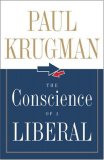
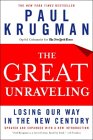
With this major new volume, Paul Krugman, "the heir apparent to Galbraith" (Alan Blinder) and, today's most widely read economist, studies the past eighty years of American history, from the reforms that tamed the harsh inequality of the Gilded Age to the unraveling of that achievement and the reemergence of immense economic and political inequality since the 1970s. Seeking to understand both what happened to middle-class America and what it will take to achieve a "new New Deal," Krugman has created his finest book to date, a work that weaves together a nuanced account of three generations of history with sharp political, social, and economic analysis. This book, written with Krugman's trademark ability to explain complex issues simply, will transform the debate about American social policy in much the same way as did John Kenneth Galbraith's deeply influential book, The Affluent Society.
"Starred Review. [A] compelling historical defense of liberalism and a clarion call for Americans to retake control of their economic destiny." - PW.
This information about The Conscience of a Liberal was first featured
in "The BookBrowse Review" - BookBrowse's membership magazine, and in our weekly "Publishing This Week" newsletter. Publication information is for the USA, and (unless stated otherwise) represents the first print edition. The reviews are necessarily limited to those that were available to us ahead of publication. If you are the publisher or author and feel that they do not properly reflect the range of media opinion now available, send us a message with the mainstream reviews that you would like to see added.
Any "Author Information" displayed below reflects the author's biography at the time this particular book was published.
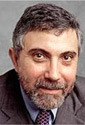
Photo: Fred R. Conrad/The New York Times
Paul Krugman has been a columnist for the The New York Times since 1999 and continues as professor of Economics and International Affairs at Princeton University. He won the Nobel prize for Economics in 2008.
Krugman received his B.A. from Yale University in 1974 and his Ph.D. from MIT in 1977. He has taught at Yale, MIT and Stanford. He is the author or editor of 20 books and more than 200 papers in professional journals and edited volumes. In recognition of that work, in 1991 the American Economic Association awarded him its John Bates Clark medal, a prize given every two years to "that economist under forty who is adjudged to have made a significant contribution to economic knowledge."
Krugman has also written extensively for a broader public audience. Some of his recent articles on ...
Name Pronunciation
Paul Krugman: http://www.krugmanonline.com/

If you liked The Conscience of a Liberal, try these:

by Eowyn Ivey
Published 2012
Alaska, 1920: a brutal place to homestead, and especially tough for recent arrivals Jack and Mabel. Childless, they are drifting apart. In a moment of levity they build a child out of snow. The next morning the snow child is gone--but they glimpse a young, blonde-haired girl running through the trees.
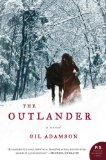
by Gil Adamson
Published 2009
In 1903 a mysterious young woman flees alone across the West, one heart-pounding step ahead of the law. At nineteen, Mary Boulton has just become a widow—and her husband's killer.

by Kevin Patterson
Published 2008
Born on the tundra in the 1950s, Victoria knows nothing but the nomadic life of the Inuit until, at the age of ten, she is diagnosed with tuberculosis and evacuated to a southern sanitarium. When she returns home six years later, she finds a radically different world, where the traditionally rootless tribes have uneasily congregated in small ...


 (1).gif)
Happiness makes up in height for what it lacks in length.
Click Here to find out who said this, as well as discovering other famous literary quotes!

Can you name the title?
Test your book knowledge with our daily trivia challenge!
Your guide toexceptional books
BookBrowse seeks out and recommends the best in contemporary fiction and nonfiction—books that not only engage and entertain but also deepen our understanding of ourselves and the world around us.