-
See Our Best Book
Club Books of 2026!
Summary | Discuss | Reviews | More Information | More Books
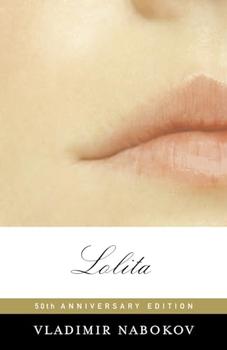
The most famous and controversial novel from one of the greatest writers of the twentieth century tells the story of Humbert Humbert's obsessive, devouring, and doomed passion for the nymphet Dolores Haze.
Awe and exhilaration—along with heartbreak and mordant wit—abound in Lolita, which tells the story of the aging Humbert Humbert's obsession for the nymphet Dolores Haze. Lolita is also the story of a hypercivilized European colliding with the cheerful barbarism of postwar America.
Most of all, it is a meditation on love—love as outrage and hallucination, madness and transformation.
Among our early clues about Quilty is his resemblance to Humbert. How does Quilty conform to the archetype of the Doppelgänger? Does he represent Humbert's evil underself or his higher nature? What sort of double is Quilty?
Quilty is Humbert's moral and artistic double, not his moral opposite. He represents the disintegration of Humbert's delusions—the realization that Humbert's "love story" is no different from the sordid pornography he despises. When Humbert kills Quilty, he attempts to destroy that reflection, bu...
-Karen_M
Why might Nabokov deploy coincidence so liberally in this book? Is it a convenient way of advancing plot or does it call the entire notion of a "realistic" narrative into question? How does coincidence tie in with Nabokov's use of literary allusion?
Nabokov uses coincidence to mock reality, emphasize trickery, and exaggerate false beliefs. It's both the supporting details for and the subject of Lolita - a novel about the seductive, deceptive power of a plan or model.
-Karen_M
Why might Nabokov have chosen to begin his novel with a forward by an outside observer? What is the effect of knowing that the narrative's three main characters are already dead–and, in a sense, nonexistent, since their names have been changed?
I agree with he previous commenters that said the forward gave me distance. It allows the reader to be an observer. My qualifier is that I found this distance difficult to maintain as I read and grappled with the reality of Humbert's actions and predations.
-Vicki_F
How does Humbert's marriage to Valeria foreshadow his relationships with Charlotte and Lolita? How does the revelation of Valeria's infidelity prepare us for Lolita's elopement with Quilty? Why does Humbert respond so differently to these betrayals?
The marriage to Valeria is a meaningless model for Charlotte and Lolita. Valeria's infidelity, almost a farcical betrayal, acts like a tremor before the earthquake of Lolita's escape. Humbert's different reactions reveal his increasing emotional involvement and loss of control. Nabokov represents...
-Karen_M
Quilty makes his first onstage appearance at The Enchanted Hunters, yet rumors and allusions precede him. Does the revelation of Quilty's identity come as a surprise? Is it the true climax of Lolita? How does Nabokov prepare us for this revelation?
Quilty's identity is less a twist than the solution to a carefully constructed puzzle. Nabokov has been preparing us with scattered clues and playful misdirection. The confrontation with Quilty is the novel's resolution of the pursuit plot, while the emotional climax lies in Humbert's belated rec...
-Karen_M
Lolita abounds with games. How does the novel itself resemble a vast and intricate game? Is Nabokov playing with his readers or against them? Do its game-like qualities detract from its emotional seriousness or actually heighten it?
Lolita resembles a complex game through words, structure, and mentality. Nabokov plays with and against his readers, delighting them while testing their moral alertness. Far from trivializing the novel's seriousness, this game intensifies it. The playful surface makes the underlying tragedy more ...
-Karen_M
How does the character of Lolita combine mythology and entomology? What are some of this novel's themes of enchantment and metamorphosis as they apply both to Lolita and Humbert, and perhaps to the reader as well?
Lolita combines mythology and entomology in the way she is perceived and described by Humbert, not in her actual character. Themes of enchantment (Humbert's mythologizing, the reader's seduction) and metamorphosis (Lolita's growth, Humbert's awakening, the reader's shifting perspective) structure...
-Karen_M
Humbert is not only Lolita's debaucher but her stepfather and, after Charlotte's death, the closest thing she has to a parent. What kind of parent is he? How does his behavior toward the girl increasingly come to resemble Charlotte's?
Humbert is not a parent in any nurturing sense—he is a grotesque caricature of a parent using legal authority and emotional manipulation to maintain control. Over time, his behavior begins to resemble Charlotte's: possessive, critical, and threatening. The key difference is that Charlotte's flaws...
-Karen_M
Why might Nabokov have chosen to name his protagonist "Humbert Humbert"? Does the name's parodic double rumble end up distancing us from its owner's depravity? Is it harder to take evil seriously when it goes under an outlandish name?
The double name initially makes Humbert seem less like a traditional villain—it satirizes him and undermines his seriousness. But this effect is purposeful: Nabokov uses the name to draw us into Humbert's unreliable world, so that when the mask slips, the horror is even sharper. The outlandish na...
-Karen_M
Can Humbert ever be said to "love" Lolita? Does he ever perceive her as a separate being? Is the reader ever permitted to see her in ways that Humbert cannot?
Humbert "loves" Lolita only in a distorted, possessive sense. His love is for his fantasy, not for her. He sees her as separate only fleetingly, near the end, and even then, imperfectly. The reader sees her differently. Nabokov ensures that while Humbert narrates, the truth of Lolita emerges betw...
-Karen_M
According to Humbert, Lolita initiates their first sexual encounter, yet later he admits that Lolita sobbed in the night. Do you think that what began as a game for Lolita became an inescapable reality or has Humbert been lying to us from the first?
It's not that what began as a game became inescapable for Lolita on her own terms —it's that Humbert's narrative initially frames it that way to mitigate his culpability. The latter admission reveals that he has been lying to us, and perhaps to himself, from the start. The "game" was never equal;...
-Karen_M
We also learn that Humbert is mad – mad enough, at least, to have been committed to several mental institutions. Is his madness an aspect of his sexual deviance or is it something more fundamental? Can we trust a story told by an insane narrator?
Well said, Karen. HH does love to hear himself talk!
-Jacqueline_B
Humbert's confession is written in an extraordinary language. Is this an extension of Nabokov's own language or is Humbert's language appropriate to his circumstances and motives? What does Humbert's prose hide, and where does it reveal?
I agree with this characterization of the book. The way he speaks, the constant use of French, serves as a wedge, to separate him from "ordinary" hicks he encounters and judges. Perhaps to disguise his own base personality?
-Jacqueline_B
Is all of Lolita the monologue of a pathological solipsist who is incapable of imagining any reality but his own or of granting other people any existence outside his own desires?
It appears that it is for the most part what you describe. The only diversion seems to have been when he brought her and her husband cash and a generous check. His intention was to buy her back and take her away, but she stood her ground. She asked him if she could still keep the money. It seems ...
-Lorraine_D
Having plotted Charlotte's murder and failed to carry it out, she dies through a bizarre accident. Where else does fate makes an intrusion on Humbert's behalf? When does fate conspire to thwart him? Is Humbert in a sense guilty of Charlotte's death?
Charlotte suspected that something was really wrong and broke into Humbert's locked desk drawer. Had she not done that, she would not have reacted, wrote letters, ran to the mailbox. With all that said, I can still say that it seems that he did indirectly cause her death by his obnoxious nature a...
-Lorraine_D
What makes Charlotte Haze so repugnant to Humbert? Does the author appear to share Humbert's antagonism? Does he ever seem to criticize it?
Humbert had only one focused attraction, and that was Lolita. The intervals when he spoke with flattery about Charlotte Haze was when he was trying to convince himself that he could be with her as a means to his goal - always Lolita. Humbert seems incapable of determining what was "false" since h...
-Lorraine_D
Humbert attributes his pedophilia (or "nympholepsy") to his childhood romance with Annabel. How far can we trust this explanation? How do we reconcile Humbert's reliance on the Freudian theory of psychic trauma with his disdain for psychiatrists?
Humbert's Annabel story is less a trustworthy psychological account than a self-serving myth. His reliance on Freudian theory is opportunistic, not consistent. He disdains psychiatrists because they represent judgment and simple explanations, while he craves the authority to narrate his own learn...
-Karen_M
In the early stages of his obsession Humbert sees Lolita merely as a new incarnation of Annabel. In what other ways does Humbert remain a prisoner of the past? Does he ever succeed in escaping it?
Humbert remains a prisoner of the past throughout Lolita . Though he briefly gestures toward release in his late recognition of Lolita's humanity, he cannot break free; his obsession is less with Lolita herself than with reliving and immortalizing his lost Annabel through art.
-Karen_M
What does art offer Humbert and that sexual passion cannot? Is this aesthetic appeal merely the mask with which Humbert justifies his perversion, or is the immortality of art the thing that Humbert has been seeking all along?
Art changes Humbert's sexual passion into something beautiful and spiritual. He is humiliated because he knows sex with young girls is criminal and grotesque. Art enables him to elevate it beyond lust and sex. He turns it into a tragic romance instead of a sordid crime. By wrapping his obsession ...
-Karen_M
Humbert Humbert is an émigré. To what extent is the America of Lolita an exile's America? In what ways is Humbert's foreignness a corollary of his perversion? Is it possible to see Lolita as Nabokov's veiled meditation on his own exile?
Once one has left his moral mooring, the sky is the limit, or the deepest depths.
-Margaret_S
About the Lolita by Vladimir Nabokov Discussion category
I'm sorry I won't be participating in this discussion. I couldn't read the book when I find out the topic and started reading it, I had to quickly give up.
-Marijana_Bankovic
Overall, what did you think of Lolita?
I guess what I enjoy about the book has little to do with the plot. For me, it's more about the fact that it makes me think so much beyond the book. First there's the language. Humbert's narration is intriguing - at times lush, at times very funny, and at times exceptionally manipulative. It ofte...
-kim.kovacs
What are you reading this week? And what did you think of last week’s books? (09-11-2025)
I'm finishing up The Frozen River by Ariel Lawton and will read Lolita by Vladimir Nabokov after that. I'm listening to The Killing on the Hill by Robert Dugoni which is also almost over. Then plan to listen to Like Lions by Brian Panowich.
-Louise_H
Name a book that was really popular that you absolutely hated
The last book I truly hated, did not finish, threw down in disgust was Lolita by Vladimir Nabokov. I'm not a prude and am totally opposed to book banning, but I thought it was nothing but child pornography under the guise of great literature.
-Lana_Maskus
"Lolita blazes with a perversity of a most original kind. For Mr. Nabokov has distilled from his shocking material hundred-proof intellectual farce…Lolita seems an assertion of the power of the comic spirit to wrest delight and truth from the most outlandish materials. It is one of the funniest serious novels I have ever read; and the vision of its abominable hero, who never deludes or excuses himself, brings into grotesque relief the cant, the vulgarity, and the hypocritical conventions that pervade the human comedy." —The Atlantic Monthly
"The conjunction of a sense of humor with a sense of horror [results in] satire of a very special kind, in which vice or folly is regarded not so much with scorn as with profound dismay and a measure of tragic sympathy…The reciprocal flow of irony gives to both the characters and their surroundings the peculiar intensity of significance that attends the highest art." —The New Yorker
"A revealing and indispensable comedy of horrors." —San Francisco Chronicle
This information about Lolita was first featured
in "The BookBrowse Review" - BookBrowse's membership magazine, and in our weekly "Publishing This Week" newsletter. Publication information is for the USA, and (unless stated otherwise) represents the first print edition. The reviews are necessarily limited to those that were available to us ahead of publication. If you are the publisher or author and feel that they do not properly reflect the range of media opinion now available, send us a message with the mainstream reviews that you would like to see added.
Any "Author Information" displayed below reflects the author's biography at the time this particular book was published.
Vladimir Nabokov was born in St. Petersburg, Russia, in 1899. After studying French and Russian literature at Trinity College, Cambridge, he launched his literary career in Berlin and Paris. In 1940 he moved to the United States, here he achieved renown as a novelist, poet, critic, and translator. Lolita, arguably his most famous novel, was first published, by the Olympia Press, Paris, on September 15, 1955, and became a controversial success. Nabokov died in Montreux Switzerland in 1977.
The Sister's Curse
by Nicola Solvinic
The Lost Story of Eva Fuentes
by Chanel Cleeton
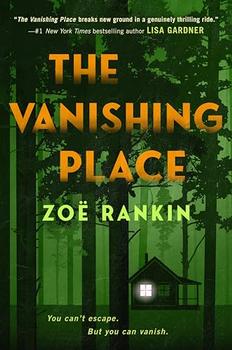
The Vanishing Place
by Zoë Rankin
 (1).gif)
Courage - a perfect sensibility of the measure of danger, and a mental willingness to endure it.
Click Here to find out who said this, as well as discovering other famous literary quotes!

Can you name the title?
Test your book knowledge with our daily trivia challenge!
Your guide toexceptional books
BookBrowse seeks out and recommends the best in contemporary fiction and nonfiction—books that not only engage and entertain but also deepen our understanding of ourselves and the world around us.