-
Your next favorite book
is waiting.
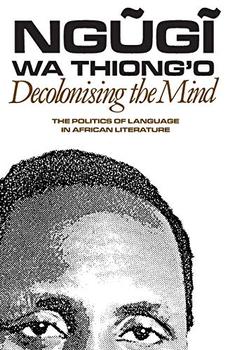
The Politics of Language in African Literature
A collection of essays about language and its constructive role in national culture, history, and identity, that advocates for linguistic decolonization.
'The language of literature', Ngũgĩ writes, 'cannot be discussed meaningfully outside the context of those social forces which have made it both an issue demanding our attention, and a problem calling for a resolution.' First published in 1986, Decolonising the Mind is one of Ngũgĩ's best-known and most-cited non-fiction publications, helping to cement him as a pre-eminent voice theorizing the 'language debate' in postcolonial studies.
Ngũgĩ wrote his first novels and plays in English but was determined, even before his detention without trial in 1978, to move to writing in Gikuyu. He describes the book as 'a summary of some of the issues in which I have been passionately involved for the last twenty years of my practice in fiction, theatre, criticism, and in teaching of literature...'. Split into four essays - 'The Language of African Literature', 'The Language of African Theatre', 'The Language of African Fiction', and 'The Quest for Relevance' - the book offers an anti-imperialist perspective on the destiny of Africa and the role of languages in combatting and perpetrating imperialism and neo-colonialism in African nations.
"... after 25 years of independence, there is beginning to emerge a generation of writers for whom colonialism is a matter of history and not of direct personal experience. In retrospect that literature characterised by Ngugi as Afro-European - the literature written by Africans in European languages - will come to be seen as part and parcel of the uneasy period between colonialism and full independence, a period equally reflected in the continent's political instability as it attempts to find its feet. Ngugi's importance - and that of this book - lies in the courage with which he has confronted this most urgent of issues." ―The New Statesman
"Many of the ideas are familiar from Ngugi's earlier critical books, and earlier lectures, elsewhere. But the material here has a new context and the ideas a new focus. This leading African writer presents the arguments for using African language and forms after successfully using an African language himself." ―The Guardian
This information about Decolonising the Mind was first featured
in "The BookBrowse Review" - BookBrowse's membership magazine, and in our weekly "Publishing This Week" newsletter. Publication information is for the USA, and (unless stated otherwise) represents the first print edition. The reviews are necessarily limited to those that were available to us ahead of publication. If you are the publisher or author and feel that they do not properly reflect the range of media opinion now available, send us a message with the mainstream reviews that you would like to see added.
Any "Author Information" displayed below reflects the author's biography at the time this particular book was published.
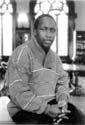
Photo © Courtesy of the author
Ngugi wa Thiong'o, currently Distinguished Professor of English and Comparative Literature at the University of California, Irvine, was born in Kenya, in 1938 into a large peasant family. He was educated at Kamandura, Manguu and Kinyogori primary schools; Alliance High School, all in Kenya; Makerere University College (then a campus of London University), Kampala, Uganda; and the University of Leeds, Britain. He is recipient of seven Honorary Doctorates viz D Litt (Albright); PhD (Roskilde); D Litt (Leeds); D Litt &Ph D (Walter Sisulu University); PhD (Carlstate); D Litt (Dillard) and D Litt (Auckland University). He is also Honorary Member of American Academy of Letters. A many-sided intellectual, he is a novelist, essayist, playwright, journalist, editor, academic and social activist.
...
... Full Biography
Link to Ngugi wa Thiong'o's Website
Name Pronunciation
Ngugi wa Thiong'o: NYOO-gee (hard g) wah TEE-ongo--according to African Literature professor who knows the author and speaks Kikuyu/Gikuyu (from The Millions)

If you liked Decolonising the Mind, try these:


 (1).gif)
Tread softly because you tread on my dreams.
Click Here to find out who said this, as well as discovering other famous literary quotes!

Can you name the title?
Test your book knowledge with our daily trivia challenge!
Your guide toexceptional books
BookBrowse seeks out and recommends the best in contemporary fiction and nonfiction—books that not only engage and entertain but also deepen our understanding of ourselves and the world around us.