-
See Our Best Book
Club Books of 2026!
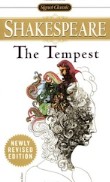
by William Shakespeare
Putting romance onstage, The Tempest gives us a magician, Prospero, a former duke of Milan who was displaced by his treacherous brother, Antonio.
Prospero is exiled on an island, where his only companions are his daughter, Miranda, the spirit Ariel, and the monster Caliban. When his enemies are among those caught in a storm near the island, Prospero turns his power upon them through Ariel and other spirits.
The characters exceed the roles of villains and heroes. Prospero seems heroic, yet he enslaves Caliban and has an appetite for revenge. Caliban seems to be a monster for attacking Miranda, but appears heroic in resisting Prospero, evoking the period of colonialism during which the play was written. Miranda's engagement to Ferdinand, the Prince of Naples and a member of the shipwrecked party, helps resolve the drama.
Media reviews not yet available.
This information about The Tempest (Folger Shakespeare Library) was first featured
in "The BookBrowse Review" - BookBrowse's membership magazine, and in our weekly "Publishing This Week" newsletter. Publication information is for the USA, and (unless stated otherwise) represents the first print edition. The reviews are necessarily limited to those that were available to us ahead of publication. If you are the publisher or author and feel that they do not properly reflect the range of media opinion now available, send us a message with the mainstream reviews that you would like to see added.
Any "Author Information" displayed below reflects the author's biography at the time this particular book was published.
William Shakespeare was born in April 1564 in the town of Stratford-upon-Avon, on England's Avon River. When he was eighteen, he married Anne Hathaway. The couple had three children—an older daughter Susanna and twins, Judith and Hamnet. Hamnet, Shakespeare's only son, died in childhood. The bulk of Shakespeare's working life was spent in the theater world of London, where he established himself professionally by the early 1590s. He enjoyed success not only as a playwright and poet, but also as an actor and shareholder in an acting company. Although some think that sometime between 1610 and 1613 Shakespeare retired from the theater and returned home to Stratford, where he died in 1616, others believe that he may have continued to work in London until close to his death.
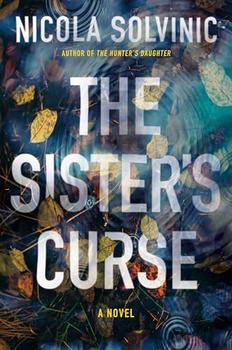
The Sister's Curse
by Nicola Solvinic

The Lost Story of Eva Fuentes
by Chanel Cleeton

The Vanishing Place
by Zoë Rankin
 (1).gif)
The third-rate mind is only happy when it is thinking with the majority. The second-rate mind is only happy when it...
Click Here to find out who said this, as well as discovering other famous literary quotes!

Can you name the title?
Test your book knowledge with our daily trivia challenge!
Your guide toexceptional books
BookBrowse seeks out and recommends the best in contemporary fiction and nonfiction—books that not only engage and entertain but also deepen our understanding of ourselves and the world around us.