Book Club Discussion Questions
In a book club? Subscribe to our Book Club Newsletter and get our best book club books of 2025!
Please be aware that this discussion guide will contain spoilers!
-
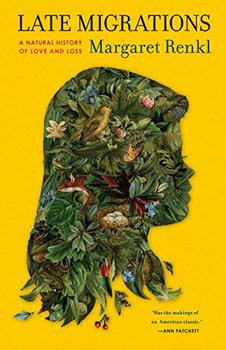
Margaret Renkl writes "[A]ll my life I've turned to woodland paths when the world is too much with me." Does the natural world have a similar affect on you? Do you find solace in nature? In other places? Where do you find comfort when you need it?
-
Although she is a nature writer, Renkl says that she is not a scientist. In fact, she posits that scientific ignorance can be a good thing in that it leads to astonishment. What does she mean? Do you agree that astonishment is a beneficial outcome of scientific ignorance? If you yourself are scientifically knowledgeable, do you lack the ability for awe?
-
The narrative in Late Migrations is studded with stories of Renkl's life. Did you enjoy those episodes, feeling they enhanced the book? Or did you find them interruptive and distracting?
-
Talk about Renkl's childhood family, especially her parents and grandmother. What did you most appreciate about her descriptions each? Do her relationships remind you of your familial connections?
-
Renkl, who nursed both her parents until their deaths, and who also lost her husband, is intimately familiar with personal loss. She says of grief that "this talk of making peace with it," all the talk of "finding a way through, [of] closure. It's all nonsense." What do you think? How have you handled deep, aching grief in your own life? Have you found "a way through"?
-
The author juxtaposes observations of the natural world with family history—as if to remind us that we, too, are biological creatures and that we are shaped by forces beyond our control. What other life lessons does Renkl draw from nature? Do you relate to Renkl's understanding of humanity's position and our role in the natural world? What are the implications of that understanding?
-
Renkl sees in nature "the splendor of decay" and observes that "this life thrives on death." What does she mean? Why, say, is decay filled with "splendor"?
-
Is this a religious or spiritual work? One or the other? Both?
-
Which depictions of the nature world particularly intrigued you: say, the lily pads, dive-bombing blue jays, pecan orchards, thunderstorms? What analogies does she draw between the natural world and we humans. What parallels do you draw? How, for instance does she view creatures' "aggressive territorialism"?
Questions provided with permission from Litlovers.com: https://www.litlovers.com/reading-guides/non-fiction/late-migrations-renkl?start=3
Unless otherwise stated, this discussion guide is reprinted with the permission of Milkweed Editions. Any page references refer to a USA edition of the book, usually the trade paperback version, and may vary in other editions.


 (1).gif)