Book Club Discussion Questions
In a book club? Subscribe to our Book Club Newsletter and get our best book club books of 2025!
Please be aware that this discussion guide will contain spoilers!
-
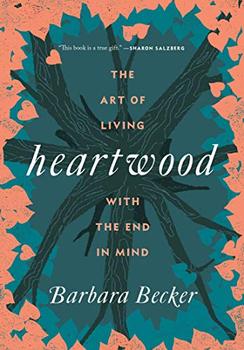
Who are the loved ones you have lost who now form your "heartwood," your pillar of
strength?
-
Who or what are your "growth rings" today?
-
What was the first loss you experienced in your life, and how has your understanding
of what happened changed over time?
-
When Barbara decides to spend a year living as if it were her last, she asks herself every
day to fill in the blank, "I don't want to die without…" What are some of the things that
you would fill in for yourself?
-
In the midst of her miscarriages, Barbara turns to meditation to come to terms with
anxiety and other difficult emotions. Do you have beliefs and practices that help soothe
you and make you feel more resilient?
-
In the chapter on Consolee, who survived the genocide in Rwanda, Barbara writes
about symbols of hope and the rainbow Consolee spotted in Central Park, as well as the
daffodils that were planted throughout New York City after 9/11. What is a "miracle"
to you? What represents hope or reminders of possibility in your life?
-
Barbara and her husband include their children in gathering around her mother's
bedside during the final days of her life. What are your thoughts about having children
present at a death? Have you had discussions with the young people in your life after
loss?
-
Trees play a significant role throughout the book, from the metaphor of heartwood to
specific trees throughout. What symbols are significant in your own life when you think
of life and death?
-
In "Two Turtles," Barbara writes: "We lose things all the time that aren't people. Jobs,
precious objects, beloved pets. Death in the natural world weighs heavily too. A water
source dried up. A forest lost to fire. An entire species gone extinct." In what ways do
you experience loss that isn't necessarily the death of another human being?
-
Barbara writes that "in our culture, we are told that death is the last and greatest
taboo--as welcome as a skunk at a garden party. Yet most often when I spoke of my
experiences with loss, people opened up about their own." What keeps us from opening
up about our losses in our culture? How might we go about changing this?
Unless otherwise stated, this discussion guide is reprinted with the permission of Flatiron Books. Any page references refer to a USA edition of the book, usually the trade paperback version, and may vary in other editions.