
-
Your next favorite book
is waiting.
Summary | Excerpt | Reviews | Beyond the Book | Read-Alikes | Genres & Themes | Author Bio
 Book Reviewed by:
This article relates to Vanishing World

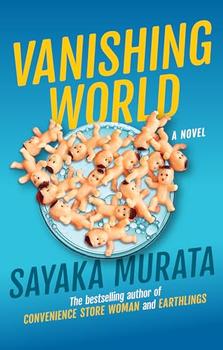
In her novel Vanishing World, Sayaka Murata presents an alternate version of the present, in which most children are conceived either via artificial insemination or using newly available artificial wombs, which are sack-like external devices strapped to the body of a parent that allows them to carry a child without undertaking the risks of pregnancy or childbirth. This scenario may sound like something firmly out of the world of science fiction, but artificial wombs are indeed in the advanced stages of development—although the reality is somewhat different than the version imagined by Murata.
Unlike in Vanishing World, real-life artificial wombs are not yet intended to replace human conception. Instead, it is hoped they will provide a lifeline for extremely premature babies. According to the World Health Organization, premature birth is the leading cause of death among children under five worldwide. Premature babies require weeks or months of intensive care, and only 30% of babies born at 22 weeks will survive (37 weeks is considered full-term; anything under 27 weeks is considered extremely premature). Those that do often experience complex, lifelong health complications.
The aim is for artificial wombs to replicate the conditions of a uterus better than an incubator can, granting a premature baby additional weeks to develop their vital organs and immune system. For example, at such an early stage of development, the fetus's lungs should still be filled with fluid. When a baby is born prematurely and can't breathe on its own, doctors must put a tube in the baby's trachea and force oxygen at a high pressure into their fragile lungs, which can cause injury and sometimes permanent damage. In an artificial womb, babies would be surrounded by a fluid designed to mimic the amniotic fluid that protects them in utero.
There are a few different in-progress versions of artificial wombs being developed today, one of which has been tested on lamb fetuses with promising results, although none are at the point where they could be tested on human babies. The transfer from a human womb to an artificial womb is a risky one and, researchers believe, should only be undertaken if there are few other options and little chance of survival. But selecting a baby to test the technology raises a host of ethical questions; and indeed, the possibility of being able to transfer a baby to an artificial womb raises a number of legal ones as well, including what a woman's right to choose not to be pregnant might look like.
As to whether any of these devices could be used to develop a fetus full-term, from the point of conception, the simple answer is no. The earliest stages of in utero development rely on chemical communications between the pregnant parent's body and the fetus, which scientists don't even fully understand, much less know how to replicate artificially. In addition, all versions of artificial wombs currently in development require doctors to attach tubes to the baby's umbilical cord in order to oxygenate their blood. The smaller the umbilical cord—i.e., the younger the fetus—the more difficult this would be.
Filed under Medicine, Science and Tech
 This article relates to Vanishing World.
It first ran in the May 7, 2025
issue of BookBrowse Recommends.
This article relates to Vanishing World.
It first ran in the May 7, 2025
issue of BookBrowse Recommends.


 (1).gif)
He has only half learned the art of reading who has not added to it the more refined art of skipping and skimming
Click Here to find out who said this, as well as discovering other famous literary quotes!

Can you name the title?
Test your book knowledge with our daily trivia challenge!
Your guide toexceptional books
BookBrowse seeks out and recommends the best in contemporary fiction and nonfiction—books that not only engage and entertain but also deepen our understanding of ourselves and the world around us.