-
Your next favorite book
is waiting.
Summary | Excerpt | Reviews | Beyond the Book | Read-Alikes | Genres & Themes | Author Bio
 Book Reviewed by:
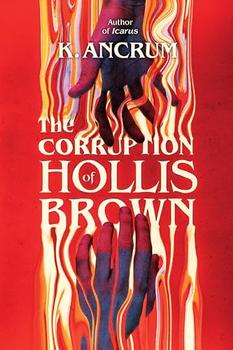
This article relates to The Corruption of Hollis Brown

 In The Corruption of Hollis Brown by K. Ancrum, Walt, a ghost who was born in approximately 1916, shares a body with Hollis, a teenage boy he possesses in order to survive. As the two are still working out how to exist as one person, communicating through their shared mind with tensions and resentments lingering between them, Walt peers into Hollis's family's pantry and becomes emotional. Spotting a jar of pickled asparagus, he asks Hollis, "You're still doing this here…?" Noticing his dismay, Hollis replies, "Don't worry. Along with Little House on the Prairie, I've also read The Jungle. You can close the pantry and walk away if it's too traumatizing for you to look at." "You don't know what it was like," Walt tells him. "If you did, it would never occur to you to be cruel."
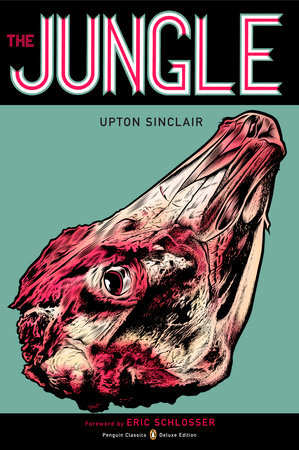
In this scene, Hollis is referencing The Jungle by Upton Sinclair, a 1906 novel that skewered the notion of the American dream by exposing shocking working conditions and corruption. Hollis is using Sinclair's work to mock Walt and the poverty he possibly lived through, because he's still mad about Walt possessing him. He's also still trying to feel out what era Walt is from and what his life was like, and has hit relatively close with his insinuations.
Sinclair's story follows a Lithuanian immigrant named Jurgis Rudkus and his family, who struggle to survive in Chicago, experiencing exploitation and assault, illness, and a seemingly neverending cycle of poverty and desperation. The novel is considered the most influential work among the muckrakers of the early 20th century — writers who tried to call attention to the corruption entwined with the industrialization of the day. As research, Sinclair visited Chicago meatpacking plants undercover. He wanted to show the wider American public what factory labor conditions were like and to foster social change, but the reaction was not what he had hoped for. Many people were shocked and disgusted by what Sinclair's work revealed about the treatment of their food, which led to the passage of legislation that helped set a precedent for food quality and sanitation, but less concerned about the unfair labor practices often faced by immigrants.
A Guardian article by Gary Younge from 2006, one hundred years after The Jungle's publication, pointed out that many of the same societal problems persisted, the main difference being the ethnicities of those subjected to dangerous labor conditions, with a large portion of meatpacking workers being Hispanic. Today, the majority of the industry's workforce continues to be made up of immigrants and racially marginalized people.
It isn't surprising that Walt and Hollis are both familiar with The Jungle, and that the book is fresh in Hollis's mind, because it frequently appears in high school curricula. It is often viewed as more of a historical text that illuminates the issues of the time than as a serious work of literature. Despite this, it remains one of the most influential American novels, and has done what fiction is often not considered to be capable of doing: directly inspiring social change.
Cover of Penguin Classics Deluxe edition of The Jungle by Upton Sinclair, courtesy of Penguin Random House
Filed under Books and Authors
 This article relates to The Corruption of Hollis Brown.
It first ran in the May 21, 2025
issue of BookBrowse Recommends.
This article relates to The Corruption of Hollis Brown.
It first ran in the May 21, 2025
issue of BookBrowse Recommends.
 (1).gif)
The moment we persuade a child, any child, to cross that threshold into a library, we've changed their lives ...
Click Here to find out who said this, as well as discovering other famous literary quotes!

Can you name the title?
Test your book knowledge with our daily trivia challenge!
Your guide toexceptional books
BookBrowse seeks out and recommends the best in contemporary fiction and nonfiction—books that not only engage and entertain but also deepen our understanding of ourselves and the world around us.