Book Club Discussion Questions
Please be aware that this discussion guide will contain spoilers!
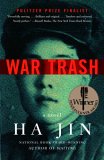
About This Book
When Yu
Yuan, a seventy-three-year-old Chinese man, visits his son and
grandchildren in America he writes a memoir to leave as a legacy for
them.
War Trash is that memoir: it describes the time he spent as
a Communist "volunteer" soldier in the Korean War. He assumed he would
be fending off American and South Korean attacks on the Manchurian
border, but he ends up crossing the Yalu River, suffering starvation and
exposure in an under-supplied army, being gravely wounded by an American
grenade, and then being captured and held in POW camps in South Korea.
Yu Yuan is a quiet man, an intellectual who learned English from a
missionary in his home village. His skill serves him well in prison, as
he is a valued interpreter for the Chinese political leaders and their
American captors. Because he had spent time in the Nationalist military
academy before Mao's rise to power in 1949, his loyalty to the new
Communist China is in question. In the prison camps, the Americans favor
the pro- Nationalist forces loyal to Chiang Kai-shek, who receive far
better food and shelter. While living conditions for the pro-Communist
prisoners are appalling, what they dread most are the "screenings" in
which they will be asked to choose between returning to their homes and
families in Communist China, or being sent to Taiwan. The choice is not
simple: soldiers in Mao's army have been ordered never to surrender, and
death and suicide are considered more honorable than being captured, so
the prisoners face certain shame and punishment if they return home. Yu
Yuan wants to go home at all costs—he is the only child of a widowed
mother and has left his beloved fiancée Julan behind.
Yet by the end of this extraordinary tale—and three years of
captivity—Yuan's whole perspective on his life and his attachments has
changed, and he learns that in more ways than one, he can never go home
again.
Discussion Questions
- The novel
opens with Yuan's description of his tattoo and his plan to have it
removed. He is writing his story, he says, in order that his children
and grandchildren may read it and "feel the full weight of the tattoo on
my belly" [p. 5]. What has it meant, for Yuan, to have his body marked
with political slogans? How is the writing of his memoir related to the
removal of his tattoo?
- Yuan wants his grandson to become a doctor
and wishes he himself had been one: "If I were born again, I would study
medical science devotedly... . Doctors and nurses follow a different
set of ethics, which enables them to transcend political nonsense and
man-made enmity and to act with compassion and human decency" [p. 5]. Is
Yuan's reverence for doctors largely a tribute to Dr. Greene, who
operated on his injured leg? What does the statement suggest about
Yuan's feelings about his life as an English teacher?
- War Trash is narrated entirely in the first person by the
novel's protagonist. How effective is the narrative voice in adding
realism to the story? Do you agree with Russell Banks, who wrote, "You
have to keep reminding yourself that this is a work of fiction and not
an actual memoir" [The New York Times Book Review, October
10, 2004]. How does the intimacy of the narrative affect your
preconceptions about the Korean War and its aftermath?
📖
Get the full reading guide
Join BookBrowse free to unlock all 19 discussion questions, author background, themes, and more for War Trash.
Join free — it takes 30 seconds
Already a member? Log in →
- How does the author develop themes of identity and belonging throughout the narrative?
- What role does the setting play in shaping the characters' decisions and relationships?
- Discuss how the ending reframes the events of the story. Were you surprised?
Unless otherwise stated, this discussion guide is reprinted with the permission of Vintage.
Any page references refer to a USA edition of the book, usually the trade paperback version, and may vary in other editions.


 (1).gif)