-
Your next favorite book
is waiting.
Summary | Excerpt | Reading Guide | Reviews | Read-Alikes | Genres & Themes | Author Bio
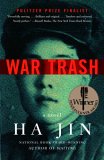
A powerful, unflinching novel that opens a window on an unknown aspect of a little-known war: the experiences of Chinese POWs held by Americans during the Korean conflict.
War Trash, the extraordinary new novel by the National Book Award–winning author of Waiting, is Ha Jin's most ambitious work to date: a powerful, unflinching story that opens a window on an unknown aspect of a little-known war—the experiences of Chinese POWs held by Americans during the Korean conflict—and paints an intimate portrait of conformity and dissent against a sweeping canvas of confrontation.
Set in 1951–53, War Trash takes the form of the memoir of Yu Yuan, a young Chinese army officer, one of a corps of "volunteers" sent by Mao to help shore up the Communist side in Korea. When Yu is captured, his command of English thrusts him into the role of unofficial interpreter in the psychological warfare that defines the POW camp.
Taking us behind the barbed wire, Ha Jin draws on true historical accounts to render the complex world the prisoners inhabit—a world of strict surveillance and complete allegiance to authority. Under the rules of war and the constraints of captivity, every human instinct is called into question, to the point that what it means to be human comes to occupy the foremost position in every prisoner's mind.
As Yu and his fellow captives struggle to create some sense of community while remaining watchful of the deceptions inherent in every exchange, only the idea of home can begin to hold out the promise that they might return to their former selves. But by the end of this unforgettable novel—an astonishing addition to the literature of war that echoes classics like Dostoevsky's Memoirs from the House of the Dead and the works of Siegfried Sassoon and Wilfred Owen—the very concept of home will be more profoundly altered than they can even begin to imagine.
1. Crossing The Yalu
Before the Communists came to power in 1949, I was a sophomore at the Huangpu Military Academy, majoring in political education. The school, at that time based in Chengdu, the capital of Szechuan Province, had played a vital part in the Nationalist regime. Chiang Kai-shek had once been its principal, and many of his generals had graduated from it. In some ways, the role of the Huangpu in the Nationalist army was like that of West Point in the American military.
The cadets at the Huangpu had been disgusted with the corruption of the Nationalists, so they readily surrendered to the People's Liberation Army when the Communists arrived. The new government disbanded our academy and turned it into a part of the Southwestern University of Military and Political Sciences. We were encouraged to continue our studies and prepare ourselves to serve the new China. The Communists promised to treat us fairly, without any discrimination. Unlike most of my fellow ...
PEN/Faulkner Award for Fiction
1905
The story is told with few frills; the descriptions are stark but immensely compelling; and the narrator's voice made more authentic by being sometimes less than eloquent and at other times bursting with raw emotion.
 Amy Tan
I am enthralled by Ha Jin's work he always presents moral conundrums within historical contexts; the frayed edges of humanity; the ways in which both the tenacious and hopeless survive. He is one of our most gifted and essential writers. George Saunders
Ha Jin is one of the finest writers in America subtle, huge-hearted, possessed of an utterly original, mind-altering vision of the world, and an exquisite, disciplined style. His work never fails to thrill me, and expand my ideas about life, and about the transformative powers of fiction. Lisa See, author of On Gold Mountain
Ha Jin's historical novel about Chinese prisoners held during the Korean War couldn't be more topical. In telling this story from the loser's perspective, he has called upon all of his wonderful and impressive skills as a writer. He never shies away from the degradation of the prisoners, while at the time revealing small humanities that happen in even the most desperate of circumstances. Michael Shapiro, author of The Shadow in the Sun A Korean Year of Love and Sorrow
Ha Jin's stark, evocative prose transports us to a harrowing world we have never before seen and which we will not soon forget. Perry Link, Professor of Chinese, Princeton University
Ha Jin is emerging as a major figure in the literary interpretation of life in Communist China. War Trash shows how Chinese men trapped in POW camps in Korea endured cruelty, manipulation, and mind-boggling turns of fate. Still, under Ha Jin's steady moral vision, their humanity, sympathy, and rationality remain apparent. In the end, the trampled ‘trash' uplifts the reader. Robert D. Kaplan, author of Warrior Politics
This is more than a novel. It's an historical document about a forgotten part of a forgotten war. No historian could bring to light this tale of interminable loneliness and suffering about Chinese prisoners during the Korean War as well as Ha Jin has.
Amy Tan
I am enthralled by Ha Jin's work he always presents moral conundrums within historical contexts; the frayed edges of humanity; the ways in which both the tenacious and hopeless survive. He is one of our most gifted and essential writers. George Saunders
Ha Jin is one of the finest writers in America subtle, huge-hearted, possessed of an utterly original, mind-altering vision of the world, and an exquisite, disciplined style. His work never fails to thrill me, and expand my ideas about life, and about the transformative powers of fiction. Lisa See, author of On Gold Mountain
Ha Jin's historical novel about Chinese prisoners held during the Korean War couldn't be more topical. In telling this story from the loser's perspective, he has called upon all of his wonderful and impressive skills as a writer. He never shies away from the degradation of the prisoners, while at the time revealing small humanities that happen in even the most desperate of circumstances. Michael Shapiro, author of The Shadow in the Sun A Korean Year of Love and Sorrow
Ha Jin's stark, evocative prose transports us to a harrowing world we have never before seen and which we will not soon forget. Perry Link, Professor of Chinese, Princeton University
Ha Jin is emerging as a major figure in the literary interpretation of life in Communist China. War Trash shows how Chinese men trapped in POW camps in Korea endured cruelty, manipulation, and mind-boggling turns of fate. Still, under Ha Jin's steady moral vision, their humanity, sympathy, and rationality remain apparent. In the end, the trampled ‘trash' uplifts the reader. Robert D. Kaplan, author of Warrior Politics
This is more than a novel. It's an historical document about a forgotten part of a forgotten war. No historian could bring to light this tale of interminable loneliness and suffering about Chinese prisoners during the Korean War as well as Ha Jin has.
If you liked War Trash, try these:
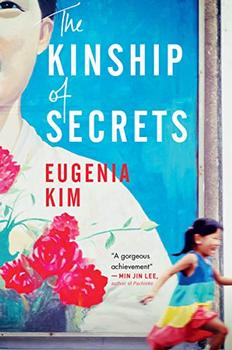
by Eugenia Kim
Published 2019
From the author of The Calligrapher's Daughter comes the riveting story of two sisters, one raised in the United States, the other in South Korea, and the family that bound them together even as the Korean War kept them apart.

by Curtis Dawkins
Published 2018
In this stunning debut collection, Curtis Dawkins, an MFA graduate and convicted murderer serving life without parole, takes us inside the worlds of prison and prisoners with stories that dazzle with their humor and insight, even as they describe a harsh and barren existence.

by Mark Felton
Published 2015
On August 30, 1942 - 'Zero Night' - 40 Allied officers staged the most audacious mass escape of World War II. Told with a novelist's eye for drama and detail, this rip-roaring adventure is all the more thrilling because it really happened.
 (1).gif)
Harvard is the storehouse of knowledge because the freshmen bring so much in and the graduates take so little out.
Click Here to find out who said this, as well as discovering other famous literary quotes!

Can you name the title?
Test your book knowledge with our daily trivia challenge!