-
Your next favorite book
is waiting.
Summary | Excerpt | Reading Guide | Reviews | Read-Alikes | Genres & Themes | Author Bio
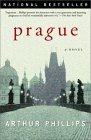
A Novel
by Arthur PhillipsBrilliantly renders the Hungary of past and present: the generations of failed revolutionaries and lyric poets, opportunists and profiteers, heroes and storytellers.
A first novel of startling scope and ambition, Prague depicts an intentionally lost Lost Generation as it follows five American expats who come to Budapest in the early 1990s to seek their fortune--financial, romantic, and spiritual--in an exotic city newly opened to the West. They harbor the vague suspicion that their counterparts in Prague, where the atmospheric decay of post-Cold War Europe is even more cinematically perfect, have it better. Still, they hope to find adventure, inspiration, a gold rush, or history in the making. What they actually find is a deceptively beautiful place that they often fail to understand. What does it mean to fret about your fledgling career when the man across the table was tortured by two different regimes? How does your short, uneventful life compare to the lives of those who actually resisted, fought, and died? What does your angst mean in a city still pocked with bullet holes from war and crushed rebellion?
Journalist John Price finds these questions impossible to answer yet impossible to avoid, though he tries to forget them in the din of Budapest's nightclubs, in a romance with a secretive young diplomat, at the table of an elderly cocktail pianist, and in the moody company of a young man obsessed with nostalgia. Arriving in Budapest one spring day to pursue his elusive brother, John finds himself pursuing something else entirely, something he can't quite put a name to, something that will draw him into stories much larger than himself.
With humor, intelligence, masterly prose, and profound affection for both Budapest and his own characters, Arthur Phillips not only captures his contemporaries but also brilliantly renders the Hungary of past and present: the generations of failed revolutionaries and lyric poets, opportunists and profiteers, heroes and storytellers.
PART ONE
FIRST IMPRESSIONS
I
THE DECEPTIVELY SIMPLE RULES OF THE GAME SINCERITY, AS played late one Friday afternoon in May 1990 on the terrace of the Cafe Gerbeaud in Budapest, Hungary:
 Pagan Kennedy, author of Black Livingstone
In Prague, Arthur Phillips spins the Jazz Age novel. His expatriate Americans have settled in Budapest rather than Paris, and instead of champagne and ragtime, they outfit themselves with Gauloises, paprika-dusted sandwiches, punk rock, and post-Cold War irony. But their passion--to know America and to shrug it off--is timelessly literary. A hip-hop remix of Fitzgerald and Hemingway, a meditation on a generation, a polemic, a love story, a new branch of sociology, Prague tries to do it all and succeeds. Pat Conroy, author of The Prince of Tides
Arthur Phillips's bold and ambitious novel, Prague, is one of those rare books that help define and identify a whole generation, in the same way that Hemingway's The Sun Also Rises introduced his lost generation. Phillip Lopate, author of Portrait of My Body
An intricate and wordly-wise novel, with sly and acute perceptions on every page, Prague sets itself the challenge of extending the tradition of brainy Central European fiction from an American perspective, and succeeds handily.
Pagan Kennedy, author of Black Livingstone
In Prague, Arthur Phillips spins the Jazz Age novel. His expatriate Americans have settled in Budapest rather than Paris, and instead of champagne and ragtime, they outfit themselves with Gauloises, paprika-dusted sandwiches, punk rock, and post-Cold War irony. But their passion--to know America and to shrug it off--is timelessly literary. A hip-hop remix of Fitzgerald and Hemingway, a meditation on a generation, a polemic, a love story, a new branch of sociology, Prague tries to do it all and succeeds. Pat Conroy, author of The Prince of Tides
Arthur Phillips's bold and ambitious novel, Prague, is one of those rare books that help define and identify a whole generation, in the same way that Hemingway's The Sun Also Rises introduced his lost generation. Phillip Lopate, author of Portrait of My Body
An intricate and wordly-wise novel, with sly and acute perceptions on every page, Prague sets itself the challenge of extending the tradition of brainy Central European fiction from an American perspective, and succeeds handily.
If you liked Prague, try these:
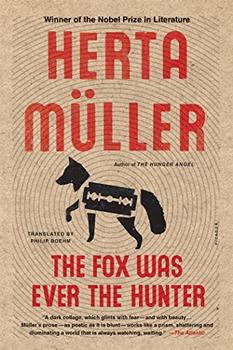
by Herta Muller
Published 2017
An early masterpiece from the winner of the Nobel Prize hailed as the laureate of life under totalitarianism.
by Tom Bissell
Published 2006
Sometimes hilarious, sometimes tragic, but always eerily affecting, these stories show us deeply foreign lands and peoples through our own eyes.

by Cynthia Ozick
Published 2005
A grand romantic novel of desire, fame, fanaticism, and unimaginable reversals of fortune set in the outskirts of the Bronx in the 1930s, as New York fills with Europe's ousted dreamers, turned overnight into refugees.
 (1).gif)
You can lead a man to Congress, but you can't make him think.
Click Here to find out who said this, as well as discovering other famous literary quotes!

Can you name the title?
Test your book knowledge with our daily trivia challenge!