
-
Your next favorite book
is waiting.
Summary | Excerpt | Reviews | Read-Alikes | Genres & Themes | Author Bio
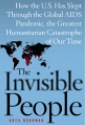
How the U. S. Has Slept through the Global AIDS Pandemic, the Greatest Humanitarian Catastrophe of Our Time
by Greg BehrmanIntensely researched and vividly detailed, The Invisible People is a groundbreaking and compellingly readable account of the appalling destruction caused by more than two decades of American abdication in the face of the defining humanitarian catastrophe of our time.
The Invisible People is a revealing and at times shocking look inside the United States's response to one of the greatest catastrophes the world has ever known -- the global AIDS crisis. A true story of politics, bureaucracy, disease, internecine warfare, and negligence, it illustrates that while the pandemic constitutes a profound threat to U.S. economic and security interests, at every turn the United States has failed to act in the face of this pernicious menace.
During the past twenty years, more than 65 million people across the globe have become infected with HIV. Already 25 million around the world have died -- more than all of the battle deaths in the twentieth century combined. By decade's end there will be an estimated 25 million AIDS orphans. If trends continue, by 2025, 250 million global HIV-AIDS cases are a distinct possibility.
Beyond the ineffable human toll, the pandemic is reshaping the social, economic, and geopolitical dimensions of our world. Eviscerating national economies, creating an entire generation of orphans, and destroying military capacity, the disease is generating pressures that will lead to instability and possibly even state failure and collapse in sub-Saharan Africa. Poised to explode in Eastern Europe, Russia, India, and China, AIDS will have devastating and destabilizing effects of untold proportions that will reverberate throughout the global economy and the international political order.
In this gripping account that draws on more than two hundred interviews with key political insiders, policy makers, and thinkers, Greg Behrman chronicles the red tape, colossal blunders, monumental egos, power plays, and human pain and suffering that comprise America's woeful response to the AIDS crisis. Behrman's unprecedented access takes you inside the halls of power from seminal White House meetings to tumultuous turf battles at World Health Organization headquarters in Geneva, heated debates in the United Nations, and chilling discoveries at the Centers for Disease Control. Behrman also brings us into the field to meet the people who live in the midst of AIDS devastation in places like a school yard in Namibia, the red-light district in Bombay, and an orphanage in South Africa.
Intensely researched and vividly detailed, The Invisible People is a groundbreaking and compellingly readable account of the appalling destruction caused by more than two decades of American abdication in the face of the defining humanitarian catastrophe of our time.
Preface
A Feeble Beginning (1983-1990)
Quiescence (1990-1996)
An Awakening of Sorts (1996-1999)
Opportunities Squandered (1998-2000)
A Great Awakening? (2001-2003)
A Note on Sources ...
Notes
Acknowledgments
Index
Behrman makes a compelling case why the worldwide AIDS crisis is not someone else's problem. Browse this book even if you have no intention of buying it. This is because just reading this excerpt alone, and the excellent interview with the author, will undoubtedly leave you considerably more aware of the current situation, and the forecasted future, than the great majority of the general public - and it is only if people know enough to ask the right questions that there is any chance of things changing.
 Joshua Cooper Ramo - former Senior Editor, World Section, Time
Greg Behrman's The Invisible People is what reporting on global AIDS has been missing a detailed, patient and balanced assessment of how a complete tragedy unfolded more or less in public view. Fifty years from now, when the world wonders how our modern society let 100 million people die of a disease for which treatment was just hours away by plane, Behrman's book will help provide the answer. His vivid prose makes a terrible tragedy more comprehensible--and more awful. This is a great and important book. Philip Bennett, Assistant Managing Editor/Foreign News, The Washington Post
Greg Behrman has solved a mystery at the center of the worldwide AIDS epidemic as tens of millions have died, why have rich and powerful countries responded so feebly? His answer is profoundly disturbing and provocative, and gripping reading. Written with passion and skill, The Invisible People reveals that when it comes to AIDS, all politics is global. This is not simply a story of victims and villains, but of quixotic heroes, and of the mortal drama at the intersection of science, politics, money and foreign policy. Behrman shows that the humanitarian crisis of AIDS is also 'one of the deadliest policy failures in the history of the U.S. government.' It will haunt us for generations. Robert Bilheimer - Oscar nominated Director and Producer, A Closer Walk
Greg Behrman's brilliant account of the U.S. response--or lack of it--to the AIDS pandemic has all the intrigue, suspense, and profound melancholy of a Le Carre novel. Mr. Behrman's story, however, is fact, not fiction, and therein lies the tragedy. There are heroes aplenty in Mr. Behrman's book-- tireless advocates for health, dignity, and human rights--and they are its inspiration. I can't imagine a more important book to read at this point in time. If ever there was a wake-up call, this is it. Theodore C. Sorensen
Save this book to explain to our survivors how we failed to act.
Joshua Cooper Ramo - former Senior Editor, World Section, Time
Greg Behrman's The Invisible People is what reporting on global AIDS has been missing a detailed, patient and balanced assessment of how a complete tragedy unfolded more or less in public view. Fifty years from now, when the world wonders how our modern society let 100 million people die of a disease for which treatment was just hours away by plane, Behrman's book will help provide the answer. His vivid prose makes a terrible tragedy more comprehensible--and more awful. This is a great and important book. Philip Bennett, Assistant Managing Editor/Foreign News, The Washington Post
Greg Behrman has solved a mystery at the center of the worldwide AIDS epidemic as tens of millions have died, why have rich and powerful countries responded so feebly? His answer is profoundly disturbing and provocative, and gripping reading. Written with passion and skill, The Invisible People reveals that when it comes to AIDS, all politics is global. This is not simply a story of victims and villains, but of quixotic heroes, and of the mortal drama at the intersection of science, politics, money and foreign policy. Behrman shows that the humanitarian crisis of AIDS is also 'one of the deadliest policy failures in the history of the U.S. government.' It will haunt us for generations. Robert Bilheimer - Oscar nominated Director and Producer, A Closer Walk
Greg Behrman's brilliant account of the U.S. response--or lack of it--to the AIDS pandemic has all the intrigue, suspense, and profound melancholy of a Le Carre novel. Mr. Behrman's story, however, is fact, not fiction, and therein lies the tragedy. There are heroes aplenty in Mr. Behrman's book-- tireless advocates for health, dignity, and human rights--and they are its inspiration. I can't imagine a more important book to read at this point in time. If ever there was a wake-up call, this is it. Theodore C. Sorensen
Save this book to explain to our survivors how we failed to act.
If you liked The Invisible People, try these:

by Peter Singer
Published 2010
For the first time in history, it is now within our reach to eradicate world poverty and the suffering it brings. The people of the developed world face a profound choice: If we are not to turn our backs on a fifth of the world’s population, we must become part of the solution.

by Melissa Fay Greene
Published 2007
A novel of tragedy and hope set in AIDS-torn Ethiopia. When Haregwoin Teferra’s husband and daughter died within a few years of each other, her life is shattered and she becomes a recluse. But then a priest delivers an orphan to her door. The another, and another... and together they thrive.

by Neely Tucker
Published 2005
Against a background of war, terrorism, disease and unbearable uncertainty about the future, this story of how a foreign correspondent and his wife fought to adopt a Zimbabwean baby emerges as an inspiring testament to the miracles that love and dogged determination can sometimes achieve. Don't miss this gripping memoir.



 (1).gif)
A classic is a book that has never finished saying what it has to say
Click Here to find out who said this, as well as discovering other famous literary quotes!

Can you name the title?
Test your book knowledge with our daily trivia challenge!