-
Your next favorite book
is waiting.
Summary | Excerpt | Reviews | Beyond the book | Read-Alikes | Genres & Themes | Author Bio
 Book Reviewed by:
Against a teeming canvas of Borgia politics, Niccolò Machiavelli and Leonardo da Vinci come together to unmask an enigmatic serial killer, as we learn the secret history behind one of the most controversial works in the western canon, The Prince.
When Pope Alexander dispatches a Vatican courtesan, Damiata, to the remote fortress city of Imola to learn the truth behind the murder of Juan, his most beloved illegitimate son, she cannot fail, for the scheming Borgia pope holds her own young son hostage. Once there, Damiata becomes a pawn in the political intrigues of the pope’s surviving son, the charismatic Duke Valentino, whose own life is threatened by the condottieri, a powerful cabal of mercenary warlords. Damiata suspects that the killer she seeks is one of the brutal condottierri, and as the murders multiply, her quest grows more urgent. She enlists the help of an obscure Florentine diplomat, Niccolò Machiavelli, and Valentino’s eccentric military engineer, Leonardo da Vinci, who together must struggle to decipher the killer’s taunting riddles:
Leonardo with his groundbreaking "science of observation" and Machiavelli with his new "science of men." Traveling across an Italy torn apart by war, they will enter a labyrinth of ancient superstition and erotic obsession to discover at its center a new face of evil - and a truth that will shake the foundations of western civilization.
To Messer Francesco Guicciardini
Lieutenant-general, statesman, and historian
9 January 1527
Magnificent One. I have sent you this great pile of pages in order to provide a more faithful account of the final weeks of the year 1502, when that plague of mercenary warlords known as the condottieriviolently conspired against Duke Valentino and his father, Pope Alexander VI. As you know, my intimate witness of those events inspired my little pamphlet, The Prince; what you do not know is that there was considerably more to the entire matter than I have ever allowed. Hence I submit to you this lengthy "confession," with the hope that you will not judge me--or attempt to write your own history--until you have read these pages entirely. Only then can you begin to grasp the terrifying nature of the secret I deliberately buried, let us say, between the lines of The Prince.
You will find here a narrative divided into four parts, all but one in my own hand. The exception is the account ...
Michael Ennis, an art historian, takes great pains with the historical and cultural authenticity of the story. If read for its historical content and characters, The Malice of Fortune is richly satisfying despite its somewhat convoluted plot...continued
Full Review
 (609 words)
(Reviewed by Elizabeth Whitmore Funk).
 Anne Fortier, author of Juliet
A true masterpiece... Michael Ennis has poured the knowledge and wisdom of many lifetimes into the exquisite form of a mystery so dark, so labyrinthine. The Malice of Fortune is stunning, terrifying, and utterly mesmerizing. I can honestly say I never fully appreciated the genius of Machiavelli, or the savagery of the Borgias, until now. Douglas Preston, co-author of The Monster of Florence
This is a fascinating novel, filled with extraordinary, well-realized historical characters and a plot that is engrossing and wickedly clever. The Malice of Fortune is an excellent, beautifully researched, and well-written novel that has a fine, fine sense of place. It captured my attention up front and kept me turning the pages to the very end. Glenn Cooper, author of Library of the Dead and Book of Souls
For readers who've been waiting all these years for the next The Name of the Rose—here it is. Michael Ennis brings a scholar’s mind and a writer’s heart to this beautifully crafted work of Renaissance intrigue that has a rare quality of feeling ancient and modern at the same time. A powerful thinking-man’s thriller. Lyndsay Faye, author of Gods of Gotham and Dust and Shadows
The Malice of Fortune is more than a thriller--it's a tender love story, a grim exploration of the nature of human evil, and an immersive tour of Renaissance Italy as courageous, perceptive young Niccolo Machiavelli fights for his life against ruthless Borgia factions. A novel written with gusto, panache, and intellectual rigor. Matthew Pearl, author of The Dante Club and The Technologists
With its vivid, well-defined array of characters, The Malice of Fortune captures the glorious and gritty details of Renaissance Italy in a propulsive story. Ennis has achieved a great accomplishment, historical fiction that places us right into the characters' present.
Anne Fortier, author of Juliet
A true masterpiece... Michael Ennis has poured the knowledge and wisdom of many lifetimes into the exquisite form of a mystery so dark, so labyrinthine. The Malice of Fortune is stunning, terrifying, and utterly mesmerizing. I can honestly say I never fully appreciated the genius of Machiavelli, or the savagery of the Borgias, until now. Douglas Preston, co-author of The Monster of Florence
This is a fascinating novel, filled with extraordinary, well-realized historical characters and a plot that is engrossing and wickedly clever. The Malice of Fortune is an excellent, beautifully researched, and well-written novel that has a fine, fine sense of place. It captured my attention up front and kept me turning the pages to the very end. Glenn Cooper, author of Library of the Dead and Book of Souls
For readers who've been waiting all these years for the next The Name of the Rose—here it is. Michael Ennis brings a scholar’s mind and a writer’s heart to this beautifully crafted work of Renaissance intrigue that has a rare quality of feeling ancient and modern at the same time. A powerful thinking-man’s thriller. Lyndsay Faye, author of Gods of Gotham and Dust and Shadows
The Malice of Fortune is more than a thriller--it's a tender love story, a grim exploration of the nature of human evil, and an immersive tour of Renaissance Italy as courageous, perceptive young Niccolo Machiavelli fights for his life against ruthless Borgia factions. A novel written with gusto, panache, and intellectual rigor. Matthew Pearl, author of The Dante Club and The Technologists
With its vivid, well-defined array of characters, The Malice of Fortune captures the glorious and gritty details of Renaissance Italy in a propulsive story. Ennis has achieved a great accomplishment, historical fiction that places us right into the characters' present.The Borgia name is synonymous with corruption, crime, and scandal. In Malice of Fortune, several Borgia family members play both prominent and subtle roles against the backdrop of the Renaissance papacy.
Pope Alexander VI
 Born in Spain as Roderic Llançol i de Borja (Rodrigo Borgia), he studied law in Bologne before being appointed cardinal by his uncle, Pope Callixtus III. During his reign, Alexander VI became known for his illicit relationships, political corruption, and nepotism. In The Prince, Machiavelli writes that "Alexander VI did nothing but deceive men" (chapter XVIII).
Cesare, the Duke of Valentino
 Cesare is believed to be Rodrigo Borgia's oldest son and his ruthless political manner is often cited as Machiavelli'...
If you liked The Malice of Fortune, try these:
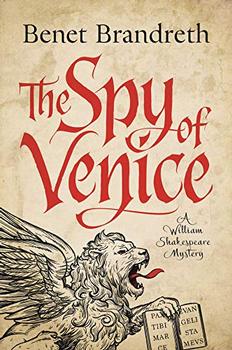
by Benet Brandreth
Published 2019
Shakespeare in Love meets C. J. Sansom in a historical thriller with a swashbuckling twist - and a hero as you've never seen him before.
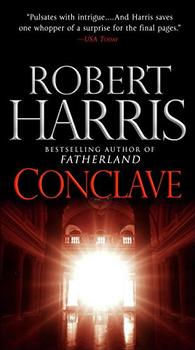
by Robert Harris
Published 2017
The best-selling author of Enigma and Fatherland turns to today's Vatican in a ripped-from-the-headlines novel, and gives us his most ambitious, page-turning thriller yet - where the power of God is nearly equaled by the ambition of men.
by Oliver Potzsch
Published 2013
Chock-full of fascinating historical detail, The Beggar King brings to vibrant life another tremendous tale of an unlikely hangman and his tough-as-nails daughter, confirming Pötzsch's mettle as a storyteller at the height of his powers.

 (1).gif)
Poetry is like fish: if it's fresh, it's good; if it's stale, it's bad; and if you're not certain, try it on the ...
Click Here to find out who said this, as well as discovering other famous literary quotes!

Can you name the title?
Test your book knowledge with our daily trivia challenge!