
-
Your next favorite book
is waiting.
Summary | Excerpt | Reviews | Beyond the book | Read-Alikes | Genres & Themes | Author Bio

Discovering the Common History of Rocks, Planets, and People
by Neil Shubin Book Reviewed by:
From one of our finest and most popular science writers comes the answer to a scientific mystery as big as the world itself: How are the events that formed our solar system billions of years ago embedded inside each of us?
With black-and-white line drawings throughout
From one of our finest and most popular science writers, and the best-selling author of Your Inner Fish, comes the answer to a scientific mystery as big as the world itself: How are the events that formed our solar system billions of years ago embedded inside each of us?
In Your Inner Fish, Neil Shubin delved into the amazing connections between human bodies - our hands, heads, and jaws - and the structures in fish and worms that lived hundreds of millions of years ago. In The Universe Within, with his trademark clarity and exuberance, Shubin takes an even more expansive approach to the question of why we look the way we do. Starting once again with fossils, he turns his gaze skyward, showing us how the entirety of the universe's fourteen-billion-year history can be seen in our bodies. As he moves from our very molecular composition (a result of stellar events at the origin of our solar system) through the workings of our eyes, Shubin makes clear how the evolution of the cosmos has profoundly marked our own bodies.
Prologue
Having spent the better part of my working life staring at rocks on the ground, I've gained a certain perspective on life and the universe. My professional aspiration—uncovering clues to the making of our bodies—lies inside the baked desert floor or deep within the frozen Arctic. While this ambition may seem eccentric, it is not much different from that of colleagues who peer at the light of distant stars and galaxies, map the bottom of the oceans, or chart the surface of barren planets in our solar system. What weaves our work together are some of the most powerful ideas that mankind has ever developed, ones that can explain how we and our world came to be.
These notions inspired my first book, Your Inner Fish. Inside every organ, cell, and piece of DNA in our bodies lie over 3.5 billion years of the history of life. Accordingly, clues to the human story reside within impressions of worms in rock, the DNA of fish, and clumps of algae in a pond.
While I ...
To read The Universe Within is to arrive at all sorts of wonders. Neil Shubin illuminates our inner and outer selves and our world, and demonstrates how beautifully connected, transitory, rare, and changeable we are...continued
Full Review
 (909 words)
(Reviewed by Jo Perry).
 –Donald Johanson, author of Lucy: The Beginnings of Humankind
What better young paleontologist to tie together the physical and biological aspects of our universe to comprehend the emergence of modern humans. Engagingly written, The Universe Within, is sure to enlighten all who peruse this stimulating book. Carl Zimmer, author of Evolution: Making Sense of Life and A Planet of Viruses
'We are stardust,' goes the old song, but most of us don't give the fact much thought. The Universe Within will change that. Neil Shubin roots around our physiology and finds the history of the cosmos lodged in our cells. And in the process, he makes the familiar wondrous. Lawrence Krauss, Director of the Origins Project, Foundation Professor in the School of Earth and Space Exploration at Arizona State University, and author of numerous books including The Physics of Star Trek and A Universe from Nothing
This is beautiful story, beautifully told. Our very bodies store within them the entire arc of cosmic history, and Neil Shubin's tale weaves, with great authority, accuracy and a wonderfully light touch, a grand synthesis that manages to incorporate forefront research in astronomy, geology, paleontology, and genetics. Sean B. Carroll, author of Remarkable Creatures
A fascinating, accessible tour of how life on Earth, include our own, has been shaped by many upheavals in our planet's long history. Full of surprising, yet profound insights. Sean Carroll, theoretical physicist and author of The Particle at the End of the Universe
A truly delightful story of how human beings and life on Earth are connected to the wider universe. We don't observe reality from outside; we're embedded deeply within in it, and it shows. Neil Shubin is a sure-handed and entertaining guide to the big picture of how we came to be. Sean Carroll, theoretical physicist and author of The Particle at the End of the Universe
A truly delightful story of how human beings and life on Earth are connected to the wider universe. We don't observe reality from outside; we're embedded deeply within in it, and it shows. Neil Shubin is a sure-handed and entertaining guide to the big picture of how we came to be.
–Donald Johanson, author of Lucy: The Beginnings of Humankind
What better young paleontologist to tie together the physical and biological aspects of our universe to comprehend the emergence of modern humans. Engagingly written, The Universe Within, is sure to enlighten all who peruse this stimulating book. Carl Zimmer, author of Evolution: Making Sense of Life and A Planet of Viruses
'We are stardust,' goes the old song, but most of us don't give the fact much thought. The Universe Within will change that. Neil Shubin roots around our physiology and finds the history of the cosmos lodged in our cells. And in the process, he makes the familiar wondrous. Lawrence Krauss, Director of the Origins Project, Foundation Professor in the School of Earth and Space Exploration at Arizona State University, and author of numerous books including The Physics of Star Trek and A Universe from Nothing
This is beautiful story, beautifully told. Our very bodies store within them the entire arc of cosmic history, and Neil Shubin's tale weaves, with great authority, accuracy and a wonderfully light touch, a grand synthesis that manages to incorporate forefront research in astronomy, geology, paleontology, and genetics. Sean B. Carroll, author of Remarkable Creatures
A fascinating, accessible tour of how life on Earth, include our own, has been shaped by many upheavals in our planet's long history. Full of surprising, yet profound insights. Sean Carroll, theoretical physicist and author of The Particle at the End of the Universe
A truly delightful story of how human beings and life on Earth are connected to the wider universe. We don't observe reality from outside; we're embedded deeply within in it, and it shows. Neil Shubin is a sure-handed and entertaining guide to the big picture of how we came to be. Sean Carroll, theoretical physicist and author of The Particle at the End of the Universe
A truly delightful story of how human beings and life on Earth are connected to the wider universe. We don't observe reality from outside; we're embedded deeply within in it, and it shows. Neil Shubin is a sure-handed and entertaining guide to the big picture of how we came to be.Neil Shubin describes The Universe Within as a "timeline" covering great events and processes of the history of the cosmos, the planet and life on earth. But his is also a timeline of scientists and scientific discoveries that enlarged our understanding of the world. One scientist who stood out for me was Henrietta Leavitt (1868-1921).
 Leavitt became interested in astronomy while a student at Radcliffe College. After graduation, an illness robbed her of her hearing and she became a researcher at the Harvard College Observatory where she cared for telescopes and directed the photographic photometry department. Edward Charles Pickering was director of the observatory and hired his maid, Williamina Fleming, Leavitt and other women to do...
If you liked The Universe Within, try these:
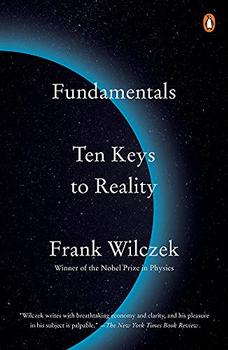
by Frank Wilczek
Published 2022
One of our great contemporary scientists reveals the ten profound insights that illuminate what everyone should know about the physical world.
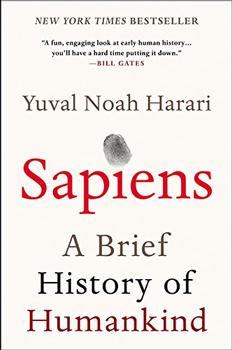
by Yuval Noah Harari
Published 2018
A groundbreaking narrative of humanity's creation and evolution that explores the ways in which biology and history have defined us and enhanced our understanding of what it means to be "human."

by Ed Yong
Published 2018
Joining the ranks of popular science classics like The Botany of Desire and The Selfish Gene, a groundbreaking, wondrously informative, and vastly entertaining examination of the most significant revolution in biology since Darwin - a "microbe's-eye view" of the world that reveals a marvelous, radically reconceived picture of life on earth.


 (1).gif)
Great literature cannot grow from a neglected or impoverished soil...
Click Here to find out who said this, as well as discovering other famous literary quotes!

Can you name the title?
Test your book knowledge with our daily trivia challenge!