-
Your next favorite book
is waiting.
Summary | Excerpt | Reading Guide | Reviews | Beyond the book | Read-Alikes | Genres & Themes | Author Bio

 Book Reviewed by:
Set at a moment of profound artistic, cultural, and societal change, The Painted Girls is a tale of two remarkable sisters rendered uniquely vulnerable to the darker impulses of "civilized society." In the end, each will come to realize that her salvation, if not survival, lies with the other
1878 Paris. Following their father's sudden death, the van Goethem sisters find their lives upended. Without his wages, and with the small amount their laundress mother earns disappearing into the absinthe bottle, eviction from their lodgings seems imminent. With few options for work, Marie is dispatched to the Paris Opéra, where for a scant seventeen francs a week, she will be trained to enter the famous ballet. Her older sister, Antoinette, finds work as an extra in a stage adaptation of Émile Zola's naturalist masterpiece L'Assommoir.
Marie throws herself into dance and is soon modeling in the studio of Edgar Degas, where her image will forever be immortalized as Little Dancer Aged Fourteen. There she meets a wealthy male patron of the ballet, but might the assistance he offers come with strings attached? Meanwhile Antoinette, derailed by her love for the dangerous Émile Abadie, must choose between honest labor and the more profitable avenues open to a young woman of the Parisian demimonde.
Set at a moment of profound artistic, cultural, and societal change, The Painted Girls is a tale of two remarkable sisters rendered uniquely vulnerable to the darker impulses of "civilized society." In the end, each will come to realize that her salvation, if not survival, lies with the other.
Monsieur LeBlanc leans against the doorframe, his arms folded over a belly grown round on pork crackling. A button is missing from his waistcoat, pulled too tight for the threads to bear. Maman wrings her hands—laundress's hands, marked by chapped skin, raw knuckles. "But, Monsieur LeBlanc," she says, "we just put my dead husband in the ground."
"It's been two weeks, Madame van Goethem. You said you needed two weeks." No sooner had Papa taken his last breath upon this earth than, same as now, Monsieur LeBlanc stood in the doorway of our lodging room demanding the three months' rent Papa had fallen behind since getting sick.
Maman drops to her knees, grasps the hem of Monsieur LeBlanc's greatcoat. "You cannot turn us out. My daughters, all three good girls, you would put them on the street?"
"Take pity," I say, joining Maman at his feet.
"Yes, pity," says Charlotte, my younger sister, and I wince. She plays her part too well for a child not yet ...
Cathy Marie Buchanan offers an unsentimental look at family and love during an era more noted for its glamor and optimism, wealth and excess. While the story can be heartbreaking at moments, Buchanan's beautiful prose gives this emotional read, hope...continued
Full Review
 (1003 words)
(Reviewed by Jennifer Dawson Oakes).
 Amy Greene, author of Bloodroot
Beautiful and haunting. From the first page, I was swept up and enchanted. Heidi W. Durrow, author of The Girl Who Fell From the Sky
Part mystery, part love story, The Painted Girls breathes heart and soul into a fascinating era of the City of Lights. One can't help but be drawn in by this compelling and lyrical tale of sister love and rivalry. Kate Alcott, author of The Dressmaker
Will hold you enthralled as it spools out the vivid story of young sisters in late 19th century Paris struggling to transcend their lives of poverty through the magic of dance. I guarantee, you will never look at Edgar Degas's immortal sculpture of the Little Dancer in quite the same way again. Meg Waite Clayton, author of The Wednesday Sisters
Sisters, dance, art, ambition, and intrigue in late 1800s Paris. The Painted Girls offers the best of historical fiction: compelling characters brought backstage at l'Opera and front and center in Degas' studio. This one has 'book club favorite' written all over it. Melanie Benjamin, author of Alice I Have Been
The Painted Girls is historical fiction at its finest, awash in period details of the Paris of Degas and Zola while remaining, at its heart, the poignant story of two sisters struggling to stay together even as they find themselves pulled toward different, and often misunderstood, dreams. Shilpi Somaya Gowda, New York Times and internationally bestselling author of Secret Daughter
If you've ever looked at a famed piece of art and wondered what the artist was thinking or who the subjects really were, you will be swept away by The Painted Girls. Wonderfully imagined and masterfully rendered, this story of 19th century Paris and life behind the scenes of its legendary Opera House will change the way you see the world of ballet, art and the lives it portrays.
Amy Greene, author of Bloodroot
Beautiful and haunting. From the first page, I was swept up and enchanted. Heidi W. Durrow, author of The Girl Who Fell From the Sky
Part mystery, part love story, The Painted Girls breathes heart and soul into a fascinating era of the City of Lights. One can't help but be drawn in by this compelling and lyrical tale of sister love and rivalry. Kate Alcott, author of The Dressmaker
Will hold you enthralled as it spools out the vivid story of young sisters in late 19th century Paris struggling to transcend their lives of poverty through the magic of dance. I guarantee, you will never look at Edgar Degas's immortal sculpture of the Little Dancer in quite the same way again. Meg Waite Clayton, author of The Wednesday Sisters
Sisters, dance, art, ambition, and intrigue in late 1800s Paris. The Painted Girls offers the best of historical fiction: compelling characters brought backstage at l'Opera and front and center in Degas' studio. This one has 'book club favorite' written all over it. Melanie Benjamin, author of Alice I Have Been
The Painted Girls is historical fiction at its finest, awash in period details of the Paris of Degas and Zola while remaining, at its heart, the poignant story of two sisters struggling to stay together even as they find themselves pulled toward different, and often misunderstood, dreams. Shilpi Somaya Gowda, New York Times and internationally bestselling author of Secret Daughter
If you've ever looked at a famed piece of art and wondered what the artist was thinking or who the subjects really were, you will be swept away by The Painted Girls. Wonderfully imagined and masterfully rendered, this story of 19th century Paris and life behind the scenes of its legendary Opera House will change the way you see the world of ballet, art and the lives it portrays.The more than forty year period from the early 1870s to the beginning of World War I saw peace across much of Europe. Fueled by the continuing advancements of the Industrial Revolution, the era was marked by optimism and prosperity - for some. In France, this period is known as La Belle Époque, 'the beautiful age', a description applied to it in hindsight after the horrors of the First World War. During this time, the arts flourished. Theater, music, visual arts and literature evolved and gained worldwide attention.
 Many well-known artists came in to prominence during the Belle Époque. Artists Paul Gauguin, Henri Matisse, Henri Rousseau, Henri de Toulouse-Lautrec and a very young Pablo Picasso were hard at work. Writers Guy...
If you liked The Painted Girls, try these:
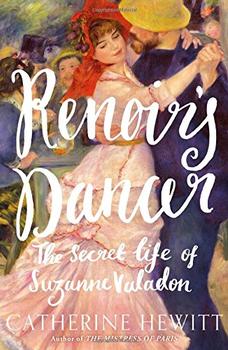
by Catherine Hewitt
Published 2018
Catherine Hewitt's richly told biography of Suzanne Valadon, the illegitimate daughter of a provincial linen maid who became famous as a model for the Impressionists and later as a painter in her own right.

To Capture What We Cannot Keep
by Beatrice Colin
Published 2017
Set against the construction of the Eiffel Tower, this novel charts the relationship between a young Scottish widow and a French engineer who, despite constraints of class and wealth, fall in love.

by Priya Parmar
Published 2015
The work of exciting young newcomer Priya Parmar, Vanessa and Her Sister exquisitely captures the champagne-heady days of prewar London and the extraordinary lives of sisters Vanessa Bell and Virginia Woolf.
 (1).gif)
It is among the commonplaces of education that we often first cut off the living root and then try to replace its ...
Click Here to find out who said this, as well as discovering other famous literary quotes!

Can you name the title?
Test your book knowledge with our daily trivia challenge!