
-
Your next favorite book
is waiting.
Summary | Excerpt | Reviews | Beyond the book | Read-Alikes | Genres & Themes | Author Bio
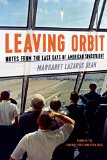
Notes from the Last Days of American Spaceflight
by Margaret Lazarus Dean Book Reviewed by:
Winner of the Graywolf Press Nonfiction Prize, a breathtaking elegy to the waning days of human spaceflight as we have known it.
In the 1960s, humans took their first steps away from Earth, and for a time our possibilities in space seemed endless. But in a time of austerity and in the wake of high-profile disasters like Challenger, that dream has ended. In early 2011, Margaret Lazarus Dean traveled to Cape Canaveral for NASA's last three space shuttle launches in order to bear witness to the end of an era. With Dean as our guide to Florida's Space Coast and to the history of NASA, Leaving Orbit takes the measure of what American spaceflight has achieved while reckoning with its earlier witnesses, such as Norman Mailer, Tom Wolfe, and Oriana Fallaci. Along the way, Dean meets NASA workers, astronauts, and space fans, gathering possible answers to the question: What does it mean that a spacefaring nation won't be going to space anymore?
PROLOGUE
Air and Space
The Smithsonian National Air and Space Museum in Washington, DC, has a grand entrance on Independence Avenue, a long row of smoked-glass doors set into an enormous white edifice. Most of the buildings nearby are marble or stone, neoclassical, meant to appear as old as the Capitol and the Washington Monument, which flank them. The Air and Space Museum, completed in 1976, is an exception: it is meant to look ultramodern, futuristic, which is to say it looks like a 1970s idea of the future.
I remember pulling open one of those doors as a child, the airconditioning creating a suction that fought me for the door's weight.
When I was seven, in 1979, I first visited the Air and Space Museum with my father and little brother, and for years of weekends after. This was what we did now that my parents had officially separated, now that our court-ordered visitation arrangements gave our weekends a sense of structure they had never had before. Divorce is supposed to be ...
Leaving Orbit succeeds on many levels — in its evocative descriptions of Florida's humid, mosquito-infested space coast, and by delivering a heartfelt ode to a slice of American history. However, readers (like me), expecting a more probing and wide-ranging exploration of the hows and whys of the end days of an era of American spaceflight, might be a little let down by Lazarus Dean's check-all-the-boxes approach to the New Journalism format...continued
Full Review
 (749 words)
(Reviewed by Poornima Apte).
 Ander Monson
Dean digs deep and does not avert her gaze. She has the heart of a storyteller, the head of an essayist, and a transcendent enthusiasm for American spaceflight. I came away from Leaving Orbit with a renewed case of space brain, my heart once more in my throat Donovan Hohn, author of Moby-Duck
Margaret Lazarus Dean has written the space shuttle the obituary it deserves, documenting the program's final countdown in prose that makes you feel by turns wistful and wonderstruck. Lynn Sherr, author of Sally Ride: America's First Woman in Space
In this eloquent farewell to NASA's space shuttle program, Margaret Lazarus Dean celebrates the extraordinary optimism that lifted humans off the Earth, dreaming of worlds far beyond. Her passion for cosmic travel is matched by her poetic vision of the past - once our future. If you lived it, you'll rejoice in the memories; if you didn't, you'll wish you'd been there. Either way, you'll beg for more. Thomas Lynch, author of The Undertaking
Journalist, essayist, memoirist and storyteller, [Margaret Lazarus Dean 's] prized text shows Americans, each and every, how we came to be the ones we are. And where we're going. This is rocket science, reliable witness, replete with poetry.
Ander Monson
Dean digs deep and does not avert her gaze. She has the heart of a storyteller, the head of an essayist, and a transcendent enthusiasm for American spaceflight. I came away from Leaving Orbit with a renewed case of space brain, my heart once more in my throat Donovan Hohn, author of Moby-Duck
Margaret Lazarus Dean has written the space shuttle the obituary it deserves, documenting the program's final countdown in prose that makes you feel by turns wistful and wonderstruck. Lynn Sherr, author of Sally Ride: America's First Woman in Space
In this eloquent farewell to NASA's space shuttle program, Margaret Lazarus Dean celebrates the extraordinary optimism that lifted humans off the Earth, dreaming of worlds far beyond. Her passion for cosmic travel is matched by her poetic vision of the past - once our future. If you lived it, you'll rejoice in the memories; if you didn't, you'll wish you'd been there. Either way, you'll beg for more. Thomas Lynch, author of The Undertaking
Journalist, essayist, memoirist and storyteller, [Margaret Lazarus Dean 's] prized text shows Americans, each and every, how we came to be the ones we are. And where we're going. This is rocket science, reliable witness, replete with poetry.In Leaving Orbit, Margaret Lazarus Dean celebrates the utilitarian model of spaceflight as imagined by the Shuttle program, which was initiated in 1981.
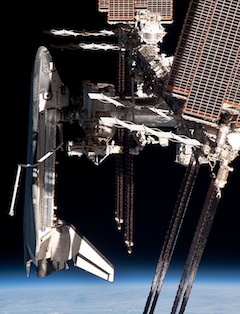 Before Shuttle, during the "heroic" era of spaceflight, small capsules were launched into space on the backs of rockets and disintegrated over the ocean upon the rockets' reentry and landing. The large spaceships of the Shuttle program, however, were designed to get to space and return so they could be reused. "From the start, the idea of the shuttle had been an idea for a fleet, with the reliability that comes with multiple identical vehicles," Lazarus Dean explains. "One orbiter could be prepared for flight while another was in space and yet another undergoing repairs. Ultimately, the...
If you liked Leaving Orbit, try these:
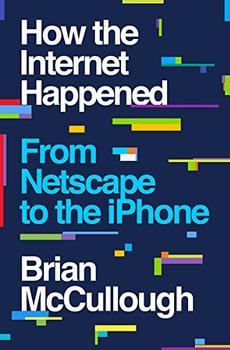
by Brian McCullough
Published 2018
Tech-guru Brian McCullough delivers a rollicking history of the internet, why it exploded, and how it changed everything.

by Meredith Wadman
Published 2018
The epic and controversial story of a major breakthrough in cell biology that led to the conquest of rubella and other devastating diseases.

by Benjamin Johncock
Published 2016
Set against the backdrop of one of the most emotionally charged periods in American history, The Last Pilot is a mesmerizing debut novel of loss and finding courage in the face of it from an extraordinary new talent.


 (1).gif)
Knowledge is of two kinds. We know a subject ourselves, or we know where we can find information on it.
Click Here to find out who said this, as well as discovering other famous literary quotes!

Can you name the title?
Test your book knowledge with our daily trivia challenge!