
-
Your next favorite book
is waiting.
Summary | Excerpt | Reviews | Beyond the book | Read-Alikes | Genres & Themes | Author Bio
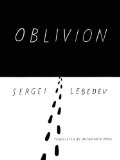
 Book Reviewed by:
A masterful novel about the search for the truth about a shadowy neighbor represents an epic attempt to rescue history from the brink of oblivion.
In one of the first 21st century Russian novels to probe the legacy of the Soviet prison camp system, a young man travels to the vast wastelands of the Far North to uncover the truth about a shadowy neighbor who saved his life, and whom he knows only as Grandfather II. What he finds, among the forgotten mines and decrepit barracks of former gulags, is a world relegated to oblivion, where it is easier to ignore both the victims and the executioners than to come to terms with a terrible past.
This disturbing tale evokes the great and ruined beauty of a land where man and machine worked in tandem with nature to destroy millions of lives during the Soviet century. Emerging from today's Russia, where the ills of the past are being forcefully erased from public memory, this masterful novel represents an epic literary attempt to rescue history from the brink of oblivion.
Translated by Antonina W. Bouis, one of the leading translators of Russian literature working today. She has translated over 80 works from authors such as Evgeny Yevtushenko, Mikhail Bulgakov, Andrei Sakharov, and Sergei Dovlatov. Bouis, previously executive director of the Soros Foundation in the former USSR, now lives in New York City.
Excerpt
Oblivion
The sun had filled the lake at the foot of the mountains with light; convex, like a drop on glass, its contour struck me in the eye. A mean trick of nature, a joke that had waited several million years: the lake looked like Lenin's profile, which was imprinted on us by medals, badges, stamps, statues, paintings, and drawings in books.
The lake with its thick, almost pastry-like icing of sunny light seemed like a monstrous monument, monstrous because the natural forms easily and willingly took on the features of something man-made, and this acceptance, without coercion, clearly evinced the meaningless, memory-less existence of nature, which we had anthropomorphized much too frequently.
Seeing this betrayal of matter—betrayal of the men who climbed up to the heaps every day from the barracks, looking at the profile of the dead leader in whose name they were forced to labor—I rejected the feeling of closeness with these mountains, from the line of ...
Lebedev’s rich and searing story explores how the oppressive weight of history, especially one that is not acknowledged, can smother the life out of an individual...continued
Full Review
 (867 words)
(Reviewed by Poornima Apte).
 Celestine Bohlen, International New York Times columnist and former Moscow correspondent for The New York Times
An extraordinary book that takes readers across Russia's desolate northern landscape and turns up secrets about the terrible legacy of the Soviet gulags, described through evocative, often poetic portraits of people and places. Edward Lucas, senior editor, The Economist and author of The New Cold War: Putin's Russia and the Threat to the West
Beautifully written, haunting and unputdownable. A masterpiece novel which relates the horrors of Russia's unburied Soviet past through the eyes of a man revisiting - and filling in the gaps in - his half-understood childhood. Jack F. Matlock, Jr, former US Ambassador to the Soviet Union
An important book about where Russia is today, with poetic descriptions and unforgettable images evoking that nation's often elusive attempts to understand its dark past. I stand in awe of both the author and translator. Michael Zantovsky, former press secretary to Czech President Vaclav Havel, author of Havel: A Life and former Czech Ambassador to the United States, Israel and Britain
The subject matter of Oblivion is the eerie frozen landscape scattered with the human detritus of an inhuman bygone era. What brings it back from oblivion is the author's exceptional power of language. A haunting read. Solomon Volkov, author of Shostakovich and Stalin, St. Petersburg: A Cultural History, and The Magical Chorus: A History of Russian Culture from Tolstoy to Solzhenitsyn
Sergei Lebedev's debut novel is a haunting tale about the loss of national memory and its moral consequences for the individual. The brilliant translation by Antonina W. Bouis captures the evocative beauty of the poetic first-person narration and renders it into memorable English.
Celestine Bohlen, International New York Times columnist and former Moscow correspondent for The New York Times
An extraordinary book that takes readers across Russia's desolate northern landscape and turns up secrets about the terrible legacy of the Soviet gulags, described through evocative, often poetic portraits of people and places. Edward Lucas, senior editor, The Economist and author of The New Cold War: Putin's Russia and the Threat to the West
Beautifully written, haunting and unputdownable. A masterpiece novel which relates the horrors of Russia's unburied Soviet past through the eyes of a man revisiting - and filling in the gaps in - his half-understood childhood. Jack F. Matlock, Jr, former US Ambassador to the Soviet Union
An important book about where Russia is today, with poetic descriptions and unforgettable images evoking that nation's often elusive attempts to understand its dark past. I stand in awe of both the author and translator. Michael Zantovsky, former press secretary to Czech President Vaclav Havel, author of Havel: A Life and former Czech Ambassador to the United States, Israel and Britain
The subject matter of Oblivion is the eerie frozen landscape scattered with the human detritus of an inhuman bygone era. What brings it back from oblivion is the author's exceptional power of language. A haunting read. Solomon Volkov, author of Shostakovich and Stalin, St. Petersburg: A Cultural History, and The Magical Chorus: A History of Russian Culture from Tolstoy to Solzhenitsyn
Sergei Lebedev's debut novel is a haunting tale about the loss of national memory and its moral consequences for the individual. The brilliant translation by Antonina W. Bouis captures the evocative beauty of the poetic first-person narration and renders it into memorable English.In Oblivion, the unnamed narrator travels to the abandoned uranimum mines on the outer edges of the Siberian taiga to discover the truth about Grandfather II, a family friend who played an important role in his upbringing.
In the race for the atomic bomb in the lead up to World War II, the Allies had effectively secured most of the world uranium ore deposits under their power. The Russians had to come up with a plan to exploit what they could of their own resources. Scattered uranium deposits had been found in remote and inaccessible locations, including Siberia and parts of Tajikistan. The Soviet Union, which at the time had sovereign control over the central Asian country, built their first uranium mine there under government ...
If you liked Oblivion, try these:
The Narrow Road to the Deep North
by Richard Flanagan
Published 2015
Moving deftly from a Japanese POW camp to contemporary Australia, this savagely beautiful novel tells a story of love, death, and family, exploring the many forms of good and evil, war and truth, guilt and transcendence.
All That Is Solid Melts into Air
by Darragh McKeon
Published 2014
A gripping end-of-empire novel charting the collapse of the Soviet Union through the focalpoint of the Chernobyl disaster.

by Masha Gessen
Published 2013
The chilling account of how Vladimir Putin, a low-level, small-minded KGB operative, ascended to the Russian presidency and destroyed years of progress to make his country once more a threat to her own people and to the world.
 (1).gif)
It is a fact of life that any discourse...will always please if it is five minutes shorter than people expect
Click Here to find out who said this, as well as discovering other famous literary quotes!

Can you name the title?
Test your book knowledge with our daily trivia challenge!