
-
Your next favorite book
is waiting.
Summary | Excerpt | Reviews | Beyond the book | Read-Alikes | Genres & Themes | Author Bio

An Armenian Odyssey
by Dawn Anahid MacKeen Book Reviewed by:
An epic tale of one man's courage in the face of genocide and his granddaughter's quest to tell his story.
In the heart of the Ottoman Empire as World War I rages, Stepan Miskjian's world becomes undone. He is separated from his family as they are swept up in the government's mass deportation of Armenians into internment camps. Gradually realizing the unthinkable - that they are all being driven to their deaths - he fights, through starvation and thirst, not to lose hope. Just before killing squads slaughter his caravan during a forced desert march, Stepan manages to escape, making a perilous six-day trek to the Euphrates River carrying nothing more than two cups of water and one gold coin. In his desperate bid for survival, Stepan dons disguises, outmaneuvers gendarmes, and, when he least expects it, encounters the miraculous kindness of strangers.
The Hundred-Year Walk alternates between Stepan's saga and another journey that takes place a century later, after his family discovers his long-lost journals. Reading this rare firsthand account, his granddaughter Dawn MacKeen finds herself first drawn into the colorful bazaars before the war and then into the horrors Stepan later endured. Inspired to retrace his steps, she sets out alone to Turkey and Syria, shadowing her resourceful, resilient grandfather across a landscape still rife with tension. With his journals guiding her, she grows ever closer to the man she barely knew as a child. Their shared story is a testament to family, to home, and to the power of the human spirit to transcend the barriers of religion, ethnicity, and even time itself.
Part One
Before
The Lost World
2006
For as long as I can remember, my mother has been talking to her dead parents. Growing up, I would find her in the kitchen, locked in conversation with Mama and Baba. At the sink, her hands scrubbing a dish, her voice a murmur. So it was no surprise when, in the summer of 2006, I stumbled on her again like this. It had been just a few weeks since I had moved back into my childhood home, and there I was in the doorway trying to eavesdrop, just like I had back in grade school. Only now I was thirty-five. I couldn't quite make out her words, drowned as they were by running water and the clank of Corelle plates. Oblivious to me standing there, my mother continued to shake her cropped brown bob back and forth, moving her lips furtively.
"Inch ge medadzes," she said, shaking her head, the Armenian words sounding like gibberish to me.
"Are you talking to them again?" I asked.
"Yes," she replied...
The Hundred-Year Walk is difficult to read, as it's never easy to read about people being cruel to each other – or even worse, dispassionately killing them or allowing them to die. It is however, an important book that reminds us that humanity is capable of such acts. It's both well-written and compelling, and highly recommended to anyone who wishes to know more about the Armenian genocide or who has an interest in stories about survival in the face of near-certain death...continued
Full Review
 (886 words)
(Reviewed by Kim Kovacs).
 Aline Ohanesian, author of Orhan's Inheritance
Part family heirloom, part history lesson, The HundredYear Walk is an emotionally poignant work, powerfully imagined and expertly crafted. The considerable archival scaffolding remains invisible as MacKeen carries her readers on an emotional journey full of heartache and hope. David Talbot, author of The Devil's Chessboard
The Hundred-Year Walk is an unforgettable contribution to the literature of suffering and memory, and to the growing conviction that we must say 'Never again' to the mass destruction of human life and culture. Meghan Daum, author of The Unspeakable: And Other Subjects of Discussion
With the meticulousness of a historian, the courage of an investigative reporter, and the compassion of a daughter mining a fraught and cherished family legacy, MacKeen has accomplished the near impossible. She has elucidated a complicated ethnic and political history through a delightfully literary lens. Her sentences sing. Her research shines. Her readers will be rapt and a lot smarter by the end. S. C. Gwynne, author of Empire of the Summer Moon
In her remarkable book, The Hundred-Year Walk, Dawn MacKeen has taken the Armenian genocide and shown us its terrifying flesh, blood, bone, and sinew. Her vehicle is her grandfather's forced deportation, and she uses it to take the reader on a horrific ride into the heart of one of history's darkest moments.
Aline Ohanesian, author of Orhan's Inheritance
Part family heirloom, part history lesson, The HundredYear Walk is an emotionally poignant work, powerfully imagined and expertly crafted. The considerable archival scaffolding remains invisible as MacKeen carries her readers on an emotional journey full of heartache and hope. David Talbot, author of The Devil's Chessboard
The Hundred-Year Walk is an unforgettable contribution to the literature of suffering and memory, and to the growing conviction that we must say 'Never again' to the mass destruction of human life and culture. Meghan Daum, author of The Unspeakable: And Other Subjects of Discussion
With the meticulousness of a historian, the courage of an investigative reporter, and the compassion of a daughter mining a fraught and cherished family legacy, MacKeen has accomplished the near impossible. She has elucidated a complicated ethnic and political history through a delightfully literary lens. Her sentences sing. Her research shines. Her readers will be rapt and a lot smarter by the end. S. C. Gwynne, author of Empire of the Summer Moon
In her remarkable book, The Hundred-Year Walk, Dawn MacKeen has taken the Armenian genocide and shown us its terrifying flesh, blood, bone, and sinew. Her vehicle is her grandfather's forced deportation, and she uses it to take the reader on a horrific ride into the heart of one of history's darkest moments.In The Hundred Year Walk, author Dawn MacKeen mentions observations made by non-Turkish individuals who were unwilling witnesses to the Armenian Genocide. One person she cites several times is Henry Morgenthau, Sr. (1856-1946), who was the United States Ambassador to the Ottoman Empire from 1913 to 1916, and as such bore witness to actions the Turkish government took against its Armenian citizens and did everything in his power to make sure those in the United States knew exactly what was taking place. .
Morgenthau immigrated to the United States in 1866 with his family, Jewish German expatriates who moved to New York after the U.S. Civil War. After graduating from Columbia Law School, Morgenthau was a successful lawyer and made a ...
If you liked The Hundred-Year Walk, try these:
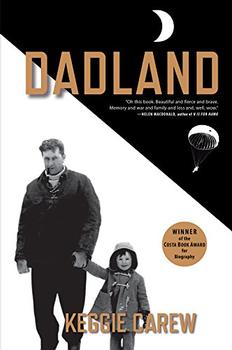
by Keggie Carew
Published 2018
A spellbinding journey into surprising and shady corners of twentieth-century politics, a rackety English childhood, the poignant breakdown of a family, the corridors of dementia and beyond.

by Aline Ohanesian
Published 2016
Moving between the last years of the Ottoman Empire and the 1990s, a story of passionate love, unspeakable horrors, incredible resilience, and the hidden stories that haunt a family.
by Helga Weiss
Published 2014
The remarkable diary of a young girl who survived the Holocaust—appearing in English for the first time.

 (1).gif)
Never read a book through merely because you have begun it
Click Here to find out who said this, as well as discovering other famous literary quotes!

Can you name the title?
Test your book knowledge with our daily trivia challenge!