-
Your next favorite book
is waiting.
Summary | Excerpt | Reviews | Beyond the book | Read-Alikes | Genres & Themes | Author Bio

A Memoir
by Rob Spillman Book Reviewed by:
In his intimate, entertaining, and heartfelt memoir, Spillman narrates a colorful, music-filled coming-of-age portrait of an artist's life that is also a cultural exploration of a shifting Berlin.
Rob Spillman, the award-winning, charismatic cofounding editor of the legendary Tin House magazine, has devoted his life to the rebellious pursuit of artistic authenticity. Born in Germany to two driven musicians, his childhood was spent among the West Berlin cognoscenti, in a city two hundred miles behind the Iron Curtain. There, the Berlin Wall stood as a stark reminder of the split between East and West, between suppressed dreams and freedom of expression.
After an unsettled youth moving between divorced parents in disparate cities, Spillman would eventually find his way into the literary world of New York City, only to abandon it to return to Berlin just months after the Wall came down. Twenty-five and newly married, Spillman and his wife, the writer Elissa Schappell, moved to the anarchic streets of East Berlin in search of the bohemian lifestyle of their idols. But Spillman soon discovered he was chasing the one thing that had always eluded him: a place, or person, to call home.
1
"Art should be life. It's an imitation of life. It should have some humanity in it."
"THIS MUST BE THE PLACE." I point to the street signs above us, then back down at the flyer.
"If you say so," Elissa says.
"Where else should we possibly be?" I ask, and raise my glass. Four months before reunification, we are drinking a previously impossible-to-obtain West German wine at a makeshift sidewalk café stumbling distance from our illegal coldwater flat. Although the Wall has "fallen" the previous October, West German authorities don't yet have authority to cross into the East. When the German Democratic Republic (GDR) police's wages vanished, so did they. The only authority left here is the elite riot police and the remnants of the GDR's army. They keep order by bashing the skinheads and anarchists in running street battles every night. We haven't seen many other Westerners on this side of ...
Spillman captures the rawness of youthful artistic ambition eloquently and self-consciously, the "amplified emotions you only feel in your twenties, when you are wildly changeable." His seeking of authenticity and creative fulfillment, from latching on to early influences like Hunter Thompson to his disappointment in the debauched literary culture of 1980s New York, make for a melancholy but ultimately redemptive journey...continued
Full Review
 (728 words)
(Reviewed by Lisa Butts).
 David Shields, author of Reality Hunger: A Manifesto
Rob Spillman's memoir is built out of an extraordinary and extraordinarily powerful and significant paradox: Spillman wants only art; at every juncture he chooses only life; the book succeeds precisely because we love Spillman for what he decries in himself. An achingly beautiful and brilliantly structured book. Michael Hainey, author of After Visiting Friends
Set in large part against the backdrop of Berlin in the raucous months after the wall was torn down and people struggled with re-unification, Spillman unspools a story that will resonate with everyone who's ever searched for home. Nick Flynn, author of Another Bullshit Night In Suck City
How anyone becomes who they are meant to be is an enduring mystery, yet Rob Spillman takes us along on the wild ride that led him to become the utterly compelling and generous presence he is today...This memoir rivets me to the page. Rachel Kushner, author of The Flamethrowers
Rob Spillman's story of rarefied opera culture as a child, and East German nightlife an adult, is limpid and lively in its telling, and it covers fascinating ground.
David Shields, author of Reality Hunger: A Manifesto
Rob Spillman's memoir is built out of an extraordinary and extraordinarily powerful and significant paradox: Spillman wants only art; at every juncture he chooses only life; the book succeeds precisely because we love Spillman for what he decries in himself. An achingly beautiful and brilliantly structured book. Michael Hainey, author of After Visiting Friends
Set in large part against the backdrop of Berlin in the raucous months after the wall was torn down and people struggled with re-unification, Spillman unspools a story that will resonate with everyone who's ever searched for home. Nick Flynn, author of Another Bullshit Night In Suck City
How anyone becomes who they are meant to be is an enduring mystery, yet Rob Spillman takes us along on the wild ride that led him to become the utterly compelling and generous presence he is today...This memoir rivets me to the page. Rachel Kushner, author of The Flamethrowers
Rob Spillman's story of rarefied opera culture as a child, and East German nightlife an adult, is limpid and lively in its telling, and it covers fascinating ground.In his memoir All Tomorrow's Parties, Rob Spillman, the son of American expat musicians, includes a flashback to his childhood in Germany. He paints a bleak portrait of East Berlin in the 1970s, with its worthless currency, "sour-faced" military guards, secret police, and drab institutional architecture. It is not surprising that by the late '80s, citizens were spoiling for revolution and a domino effect of political events and popular uprising resulted in just that. In the more contemporary sections of the book, Spillman and his wife spend time in East Berlin as reunification is underway.
In addition to the factors mentioned above, widespread economic crisis worsened dissatisfaction among the East German populace. In 1989, Hungary ...
If you liked All Tomorrow's Parties, try these:

by Lea Ypi
Published 2022
A reflection on "freedom" in a dramatic, beautifully written memoir of the end of Communism in the Balkans. Longlisted for the 2021 Baillie Gifford Prize for Non-Fiction.
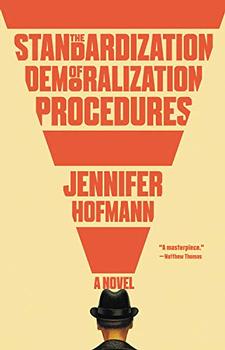
The Standardization of Demoralization Procedures
by Jennifer Hofmann
Published 2020
An audacious debut that combines spycraft, betrayals, and reversals to show that sometimes it's the secret that destroys you.

by Taylor Jenkins Reid
Published 2020
A New York Times bestseller. A gripping novel about the whirlwind rise of an iconic 1970s rock group and their beautiful lead singer, revealing the mystery behind their infamous breakup.
 (1).gif)
If we did all the things we are capable of, we would literally astound ourselves
Click Here to find out who said this, as well as discovering other famous literary quotes!

Can you name the title?
Test your book knowledge with our daily trivia challenge!