
-
Your next favorite book
is waiting.
Summary | Excerpt | Reviews | Beyond the book | Read-Alikes | Genres & Themes | Author Bio

 Book Reviewed by:
From the award-winning, nationally bestselling author of A Golden Age and The Good Muslim comes a lyrical, deeply moving modern love story about belonging, migration, tragedy, survival, and the mysteries of origins.
On the eve of her departure to find the bones of the walking whale - the fossil that provides a missing link in our evolution - Zubaida Haque falls in love with Elijah Strong, a man she meets in a darkened concert hall in Boston. Their connection is immediate and intense, despite their differences: Elijah belongs to a prototypical American family; Zubaida is the adopted daughter of a wealthy Bangladeshi family in Dhaka. When a twist of fate sends her back to her hometown, the inevitable force of society compels her to take a very different path: she marries her childhood best friend and settles into a traditional Bangladeshi life.
While her family is pleased by her obedience, Zubaida seethes with discontent. Desperate to finally free herself from her familial constraints, she moves to Chittagong to work on a documentary film about the infamous beaches where ships are destroyed, and their remains salvaged by locals who depend on the goods for their survival. Among them is Anwar, a shipbreaker whose story holds a key that will unlock the mysteries of Zubaida's past - and the possibilities of a new life. As she witnesses a ship being torn down to its bones, this woman torn between the social mores of her two homes - Bangladesh and America - will be forced to strip away the vestiges of her own life ... and make a choice from which she can never turn back.
Without really knowing, we divine; our life has a sister ship, following quite another route. While the sun blazes behind the islands.
The Blue House, Thomas Transtromer
I saw you today, Elijah. You were crossing the road. There is a building on the corner of Mass Ave and Harvard Street that looks like a miniature version of the Flatiron Building in New York. You had your back to the building, and when the little white man began to blink, you stepped off the sidewalk and onto the street – that's when I saw you. You made a little gesture with your hand that made me think you had seen me too, that you were waving, but it was a small motion of your wrist that meant nothing – you were just bruising the cold November air, and before you caught my eye, I bolted.
I knew it would only be a matter of time before we ran into each other. Cambridge is a small town and the orbits are modest. I've been back three months, and every day I've swept the corners of my vision, ...
The Bones of Grace completes Tahmima Anam’s Bangladesh trilogy. The three novels, which can be be read independently or together, illustrate, through the compelling storytelling and adept characterization of three female family members over successive generations, how historical events impacted their lives and their place in the social fabric of Dhaka and Chittagong since Bangladesh’s independence from West Pakistan in 1971...continued
Full Review
 (576 words)
(Reviewed by Claire McAlpine).
 Kamila Shamsie, author of Burnt Shadows
A novel of heart, brain, and muscle - the competing pulls of history and love are evoked here with a rare honesty, and great skill. Manil Suri, author of The Death Of Vishnu
Love and estrangement, science and tradition, discovery and loss - with majesty, brilliant metaphor and unerring precision, Tahmima Anam explores the essential dichotomies of our present and past. Tash Aw, author of Five Star Billionaire
Expansive yet intimate, weighty yet incisively funny, The Bones of Grace is a powerful examination of what it means to live in a world of collapsing boundaries and conflicting values. Few people write about identity and culture with such elegance and intelligence as Tahmima Anam. Yiyun Li, author of Kinder than Solitude and The Vagrants, PEN/Hemingway Award Winner
Fierce and intimate, lyrical and expansive, The Bones of Grace offers what a great novel does: symphonic movements, historical landscapes that shape our private landscapes of love and life, mysteries and enchantments, the unforgettable and the unforgotten. Tahmima Anam is a mesmerizer.
Kamila Shamsie, author of Burnt Shadows
A novel of heart, brain, and muscle - the competing pulls of history and love are evoked here with a rare honesty, and great skill. Manil Suri, author of The Death Of Vishnu
Love and estrangement, science and tradition, discovery and loss - with majesty, brilliant metaphor and unerring precision, Tahmima Anam explores the essential dichotomies of our present and past. Tash Aw, author of Five Star Billionaire
Expansive yet intimate, weighty yet incisively funny, The Bones of Grace is a powerful examination of what it means to live in a world of collapsing boundaries and conflicting values. Few people write about identity and culture with such elegance and intelligence as Tahmima Anam. Yiyun Li, author of Kinder than Solitude and The Vagrants, PEN/Hemingway Award Winner
Fierce and intimate, lyrical and expansive, The Bones of Grace offers what a great novel does: symphonic movements, historical landscapes that shape our private landscapes of love and life, mysteries and enchantments, the unforgettable and the unforgotten. Tahmima Anam is a mesmerizer.Zubaida Haque, the main character in Tahmima Anam's The Bones of Grace, is a marine paleontologist with a particular interest in Ambulocetus, an amphibious (able to live on land and water) cetacean (carnivorous, finned, aquatic marine mammal) that lived over 40 million years ago. Fossils of Ambulocetus are believed to show how whales evolved from land-living mammals, thus its name which comes from the Latin ambulare 'to walk' and cetus 'whale'. It is more often simply known as the walking whale.
 In 1980, American paleontologist Robert West was the first to recognize, based on the teeth, that whales once lived in what is now Pakistan. A year later, Philip Gingerich of the University of Michigan described a whale's braincase from a ...
If you liked The Bones of Grace, try these:

by Soniah Kamal
Published 2020
In this one-of-a-kind retelling of Pride and Prejudice set in modern-day Pakistan, Alys Binat has sworn never to marry - until an encounter with one Mr. Darsee at a wedding makes her reconsider.
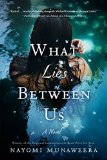
by Nayomi Munaweera
Published 2017
From Nayomi Munaweera, the award-winning author of Island of a Thousand Mirrors, comes the confession of a woman, driven by the demons of her past to commit a single and possibly unforgivable crime.
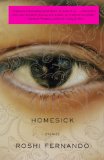
by Roshi Fernando
Published 2013
A stunning debut novel about an extended Sri Lankan family - a kaleidoscopic view of contemporary immigrant life, by turns darkly funny, sad, poignant, and uproariously beautiful.


 (1).gif)
The moment we persuade a child, any child, to cross that threshold into a library, we've changed their lives ...
Click Here to find out who said this, as well as discovering other famous literary quotes!

Can you name the title?
Test your book knowledge with our daily trivia challenge!