
-
Your next favorite book
is waiting.
Summary | Excerpt | Reading Guide | Reviews | Beyond the book | Read-Alikes | Genres & Themes | Author Bio
 Book Reviewed by:
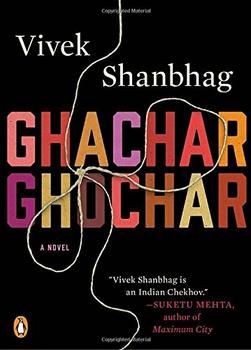
For readers of Akhil Sharma, Mohsin Hamid, and Teju Cole, a haunting, masterly novel about a family splintered by success in rapidly changing India.
A young man's close-knit family is nearly destitute when his uncle founds a successful spice company, changing their fortunes overnight. As they move from a cramped, ant-infested shack to a larger house on the other side of Bangalore, and try to adjust to a new way of life, allegiances realign; marriages are arranged and begin to falter; and conflict brews ominously in the background. Things become "ghachar ghochar" - a nonsense phrase uttered by one of the characters that comes to mean something tangled beyond repair, a knot that can't be untied. Elegantly written and punctuated by moments of unexpected warmth and humor, Ghachar Ghochar is a quietly enthralling, deeply unsettling novel about the shifting meanings - and consequences - of financial gain in contemporary India.
One
Vincent is a waiter at Coffee House. It's called just that—Coffee House. The name hasn't changed in a hundred years, even if the business has. You can still get a good cup of coffee here, but it's now a bar and restaurant. Not one of those low-lit bars with people crammed around tables, where you come to suspect that drinking may not be such a wholesome activity after all. No, this place is airy, spacious, high-ceilinged. Drinking here makes you feel cultured, sophisticated. The walls are paneled in wood to shoulder height. Old photographs hang on the sturdy square pillars in the center of the room, showing you just how beautiful this city was a century ago. The photographs evoke a gentler, more leisurely time, and somehow Coffee House still manages to belong to that world. For instance, you can visit at seven in the evening when it's busiest, order only a coffee and occupy a table for two hours, and no one will object. They seem to know that someone who ...
Brilliantly translated by Srinath Perur, Ghachar Ghochar is a finely narrated epic in every way – it’s a slim novel that packs a punch and is a true heavyweight in all the ways that matter...continued
Full Review
 (685 words)
(Reviewed by Poornima Apte).
 Garth Greenwell, National Book Award longlisted author of What Belongs to You
In this exquisitely observed, wry and moving novel, the smallest detail can conjure entire worlds of feeling. Vivek Shanbhag is a writer of rare and wonderful gifts. One of my favorite contemporary writers in English translates one of the leading figures of Kannada literature. The result is mesmerizing, distressing - and altogether brilliant.
Karan Mahajan, National Book Award longlisted author of The Association of Small Bombs Pankaj Mishra
One of the best novels to have come out of India in recent decades. Pankaj Mishra, author of From the Ruins of Empire
Tenderly alert to the new passions and disappointments of a 'rising' bourgeoisie, and handling its complex material with brilliant artistic economy, Ghachar Ghochar is one of the best novels to have come out of India in recent decades. Suketu Mehta, author of Maximum City
Vivek Shanbhag is an Indian Chekhov. Yiyun Li, author of Dear Friend, from My Life I Write to You in Your Life
Vivek Shanbhag is one of those writers whose voice takes your breath away at the first encounter. Ghachar Ghochar presents life and its undercurrents with limpid prose and quiet insight.
Garth Greenwell, National Book Award longlisted author of What Belongs to You
In this exquisitely observed, wry and moving novel, the smallest detail can conjure entire worlds of feeling. Vivek Shanbhag is a writer of rare and wonderful gifts. One of my favorite contemporary writers in English translates one of the leading figures of Kannada literature. The result is mesmerizing, distressing - and altogether brilliant.
Karan Mahajan, National Book Award longlisted author of The Association of Small Bombs Pankaj Mishra
One of the best novels to have come out of India in recent decades. Pankaj Mishra, author of From the Ruins of Empire
Tenderly alert to the new passions and disappointments of a 'rising' bourgeoisie, and handling its complex material with brilliant artistic economy, Ghachar Ghochar is one of the best novels to have come out of India in recent decades. Suketu Mehta, author of Maximum City
Vivek Shanbhag is an Indian Chekhov. Yiyun Li, author of Dear Friend, from My Life I Write to You in Your Life
Vivek Shanbhag is one of those writers whose voice takes your breath away at the first encounter. Ghachar Ghochar presents life and its undercurrents with limpid prose and quiet insight. In Ghachar Ghochar, the narrator lives in a joint family, and it is really this sociological unit that has been the mainstay of Indian life for centuries.
A joint family is defined as a unit of extended members of a family all living together under one roof, who also cook and eat together. Usually driven by patriarchal order, the patriarch and his wife and sons and their wives and children and so on form one group. A joint family is compared to socialism where each contributes according to ability and takes according to need. One of the common negatives against a joint family, is that it contributes to people being slackers. The narrator in Ghachar Ghochar for example, simply mooches off the family's collective earnings without ...
If you liked Ghachar Ghochar, try these:
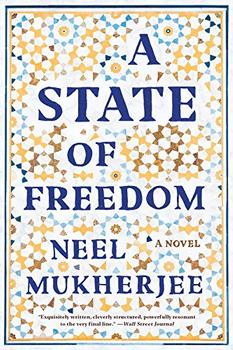
by Neel Mukherjee
Published 2019
What happens when one attempts to exchange the life one is given for something better? Can we transform the possibilities we are born into?

by Neel Mukherjee
Published 2015
Ambitious, rich, and compassionate, The Lives of Others is a novel of unflinching power and emotional force which anatomizes the soul of a nation as it unfolds a family's history.

by Jane Smiley
Published 2015
From the winner of the Pulitzer Prize, a powerful, engrossing new novel - the life and times of a remarkable family over three transformative decades in America


 (1).gif)
I find that a great part of the information I have was acquired by looking something up and finding something else ...
Click Here to find out who said this, as well as discovering other famous literary quotes!

Can you name the title?
Test your book knowledge with our daily trivia challenge!