-
Your next favorite book
is waiting.
Summary | Excerpt | Reading Guide | Discuss | Reviews | Beyond the book | Read-Alikes | Genres & Themes | Author Bio
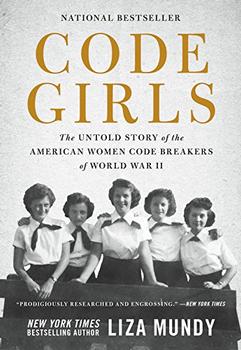
The Untold Story of the American Women Code Breakers of World War II
by Liza Mundy Book Reviewed by:
"Code Girls reveals a hidden army of female cryptographers, whose work played a crucial role in ending World War II.... Mundy has rescued a piece of forgotten history, and given these American heroes the recognition they deserve." - Nathalia Holt, bestselling author of Rise of the Rocket Girls
Recruited by the U.S. Army and Navy from small towns and elite colleges, more than ten thousand women served as codebreakers during World War II. While their brothers and boyfriends took up arms, these women moved to Washington and learned the meticulous work of code-breaking. Their efforts shortened the war, saved countless lives, and gave them access to careers previously denied to them. A strict vow of secrecy nearly erased their efforts from history; now, through dazzling research and interviews with surviving code girls, bestselling author Liza Mundy brings to life this riveting and vital story of American courage, service, and scientific accomplishment.
CHAPTER EIGHT
"Hell's Half-Acre"
April 1943
Young Annie Caracristi washed her hair with laundry soap. Observing her, Wilma Berryman felt convinced of it. Fels-Naptha, most likely: the strong-smelling bar soap meant for treating stains. You weren't supposed to use Fels-Naptha on your skin unless you had something dire like poison ivy—certainly not on your hair—but some people did, these days. Shampoo, like so many items, was not always easy to come by. The results were not ideal: Annie's hair was thick and curly and flew everywhere. But a tendency to dishevelment only increased Wilma's fondness for her.
Blue-eyed, blond, and good- natured, Ann Caracristi came to work at Arlington Hall each day wearing bobby socks, flat shoes, and a pleated skirt that billowed and swung. She looked like a bobby-soxer, the kind of carefree and heedless college girl who lived for boyfriends and swing dances. But appearances were deceiving. What hidden depths Ann Caracristi had. ...
Good nonfiction books for book clubs?
...men, there are books about women out there, too, if you look for them. Some really great titles that come to mind include: Fly Girls by Keith O'Brien Code Girls by Liza Mundy Radium Girls by Kate Moore (irritating how they all use "girls" in the title) Valiant Women by Lena S. Andrews Yale Needs Women by Anne Gardiner Perk...
-kim.kovacs
Here are some of the comments posted about Code Girls in our legacy forum.
You can see the full discussion here.
Did any of the women stand out for you? Whose story most moved you?
I had a hard time with this; all the women were so talented and memorable. But the one who stands out for me is Genevieve Grotjan. She was quiet and unassuming, yet she was the one who figured out the way into the Purple machine. She didn't gloat ... - juliaa
Do you believe the women had an impact beyond the end of the war, and if so, what?
Yes, but in order to protect current intelligence sources and methods, the intelligence community has to be careful how much even WWII codebreaking is discussed. It’s refreshing that the early codebreakers’ accomplishments are recognized in Mundy’s ... - marianned
Do you think the women employed as civilian code-breakers faced challenges that their enlisted male counterparts did not?
Liza Mundy does show the inequality in the hiring practices against women and men. Women were often hired as civilians working within the Army or Navy, and the enlisted men got more recognition, credit, prestige, and more money. - teachlz
Do you think the women's motivations for signing up as code breakers differed from those of the men?
I think the women wanted the chance to be able to do more than just be housewives. This gave them a chance to use talents they may not have otherwise been able to - inkdrunnergirl
Frank Raven, while acknowledging the skills of the women, also concluded that many of were "damn pretty gals." What effect might this statement and the perspective of people like Raven have had on the women and their work?
I think this statement from Raven was a reflection of the times, and sadly, it may still be in effect. Beauty and intelligence are often a hard concept for people to reconcile. Often, intelligence is not associated with beauty, and for him, it may ... - PattiPM

Liza Mundy's latest work, Code Girls, takes advantage of recently declassified government documents to highlight the little-known work of the hundreds of women involved in cracking Japanese and German encryption to help bring WWII to a successful conclusion. Beyond a peek at the lives of the code-breakers themselves, readers get a real feel for America at war. Code Girls will appeal to a wide audience; in particular, anyone with an interest in WWII history — both fiction and nonfiction readers alike — will very likely find much to love here...continued
Full Review
 (651 words)
(Reviewed by Kim Kovacs).
 Gayle Tzemach Lemmon, senior fellow at the Council on Foreign Relations and New York Times bestselling author of The Dressmaker of Khair Khana and Ashley's War
Code Girls is not just a great slice of history--one that would have been lost to us without Liza's storytelling and the work of some heroic archivists--but a story relevant to every discussion we have now about America's security agencies and how they came to be. I am delighted readers will finally know about these pioneering women and their incredible contributions to America. Glenn Frankel, Pulitzer Prize-winning author of High Noon
[A] superbly researched and stirringly written social history of a pivotal chapter in the struggle for women's rights, told through the powerful and poignant stories of the individuals involved. In exploring the vast, obscure, and makeshift offices of wartime Washington where these women performed seemingly impossible deeds, Mundy has discovered a birthplace of modern America. Karen Abbott, New York Times bestselling author of Sin in the Second City and Liar, Temptress, Solider, Spy
Code Girls is an extraordinary book by an extraordinary author. Liza Mundy's portraits of World War II codebreakers are so skillfully and vividly drawn that I felt as if I were right there with them--mastering ciphers, outwitting the Japanese army, sinking ships, breaking hearts, and even accidentally insulting Eleanor Roosevelt. I am an evangelist for this book: You must read it. Lynn Povich, author of The Good Girls Revolt
Code Girls is a riveting account of the thousands of young coeds who flooded into Washington to help America win World War II. Liza Mundy has written a thrilling page-turner that illuminates the patriotism, rivalry, and sexism of the code-breakers' world. Nathalia Holt, New York Times bestselling author of Rise of the Rocket Girls
I cannot overstate the importance of this book; Mundy has rescued a piece of forgotten history, and given these American heroes the recognition they deserve.
Gayle Tzemach Lemmon, senior fellow at the Council on Foreign Relations and New York Times bestselling author of The Dressmaker of Khair Khana and Ashley's War
Code Girls is not just a great slice of history--one that would have been lost to us without Liza's storytelling and the work of some heroic archivists--but a story relevant to every discussion we have now about America's security agencies and how they came to be. I am delighted readers will finally know about these pioneering women and their incredible contributions to America. Glenn Frankel, Pulitzer Prize-winning author of High Noon
[A] superbly researched and stirringly written social history of a pivotal chapter in the struggle for women's rights, told through the powerful and poignant stories of the individuals involved. In exploring the vast, obscure, and makeshift offices of wartime Washington where these women performed seemingly impossible deeds, Mundy has discovered a birthplace of modern America. Karen Abbott, New York Times bestselling author of Sin in the Second City and Liar, Temptress, Solider, Spy
Code Girls is an extraordinary book by an extraordinary author. Liza Mundy's portraits of World War II codebreakers are so skillfully and vividly drawn that I felt as if I were right there with them--mastering ciphers, outwitting the Japanese army, sinking ships, breaking hearts, and even accidentally insulting Eleanor Roosevelt. I am an evangelist for this book: You must read it. Lynn Povich, author of The Good Girls Revolt
Code Girls is a riveting account of the thousands of young coeds who flooded into Washington to help America win World War II. Liza Mundy has written a thrilling page-turner that illuminates the patriotism, rivalry, and sexism of the code-breakers' world. Nathalia Holt, New York Times bestselling author of Rise of the Rocket Girls
I cannot overstate the importance of this book; Mundy has rescued a piece of forgotten history, and given these American heroes the recognition they deserve.The National Security Administration (NSA) is the direct descendant of the group established to decode enemy communications during WWII featured in Code Girls. Established by U.S. President Harry Truman in 1952, the NSA is the government agency responsible for signal intelligence — "Intelligence derived from electronic signals and systems used by foreign targets, such as communications systems, radars, and weapons systems."
The once entirely clandestine NSA has started declassifying some of its secret documents and has established three closely affiliated organizations to celebrate its history and to train the next generation of cryptographers.
The first of these, the National Cryptologic School, was founded in 1965 by ...
If you liked Code Girls, try these:

by Kate Quinn
Published 2025
The New York Times bestselling author of The Diamond Eye and The Rose Code returns with a haunting and powerful story of female friendships and secrets in a Washington, DC, boardinghouse during the McCarthy era.
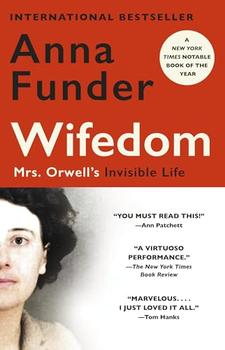
by Anna Funder
Published 2025
This is the story of the marriage behind some of the most famous literary works of the 20th century - and a probing consideration of what it means to be a wife and a writer in the modern world.
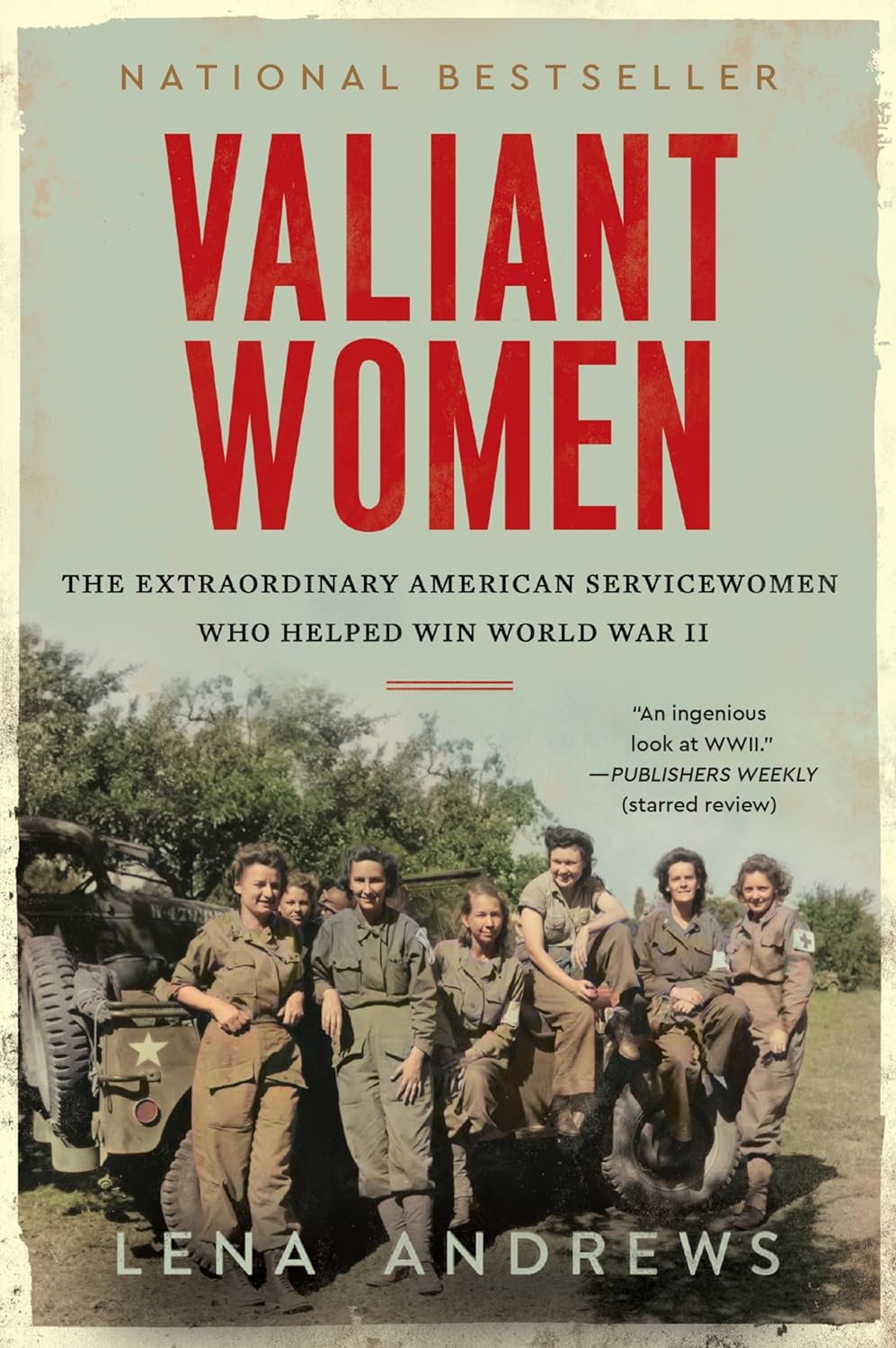
by Lena S. Andrews
Published 2024
A groundbreaking new history of the role of American servicewomen in WWII, illuminating their forgotten yet essential contributions to the Allies' victory.

 (1).gif)
I find that a great part of the information I have was acquired by looking something up and finding something else ...
Click Here to find out who said this, as well as discovering other famous literary quotes!

Can you name the title?
Test your book knowledge with our daily trivia challenge!