-
Your next favorite book
is waiting.
Summary | Excerpt | Reading Guide | Discuss | Reviews | Beyond the book | Read-Alikes | Genres & Themes | Author Bio

 Book Reviewed by:
Fierce, angry, funny, heartbreaking - Tommy Orange's first novel is a wondrous and shattering portrait of an America few of us have ever seen, and it introduces a brilliant new author at the start of a major career.
There There is a relentlessly paced multigenerational story about violence and recovery, memory and identity, and the beauty and despair woven into the history of a nation and its people. It tells the story of twelve characters, each of whom have private reasons for traveling to the Big Oakland Powwow. Jacquie Red Feather is newly sober and trying to make it back to the family she left behind in shame. Dene Oxendene is pulling his life back together after his uncle's death and has come to work at the powwow to honor his uncle's memory. Opal Viola Victoria Bear Shield has come to watch her nephew Orvil, who has taught himself traditional Indian dance through YouTube videos and has come to the powwow to dance in public for the very first time. There will be glorious communion, and a spectacle of sacred tradition and pageantry. And there will be sacrifice, and heroism, and unspeakable loss.
Here is a voice we have never heard - a voice full of poetry and rage, exploding onto the page with stunning urgency and force. Tommy Orange writes of the plight of the urban Native American, the Native American in the city, in a stunning novel that grapples with a complex and painful history, with an inheritance of beauty and profound spirituality, and with a plague of addiction, abuse, and suicide. An unforgettable debut, destined to become required reading in schools and universities across the country.
Prologue
"In the dark times
Will there also be singing?
Yes, there will also be singing.
About the dark times?"
Bertolt Brecht
Indian Head
There was an Indian head, the head of an Indian, the drawing of the head of a headdressed, long haired, Indian depicted, drawn by an unknown artist in 1939, broadcast until the late 1970s to American TVs everywhere after all the shows ran out. It's called the Indian Head Test Pattern. If you left the TV on, you'd hear a tone at 440 hertz—the tone used to tune instruments—and you'd see that Indian, surrounded by circles that looked like sights through rifle scopes. There was what looked like a bullseye in the middle of the screen, with numbers like coordinates. The Indian head was just above the bullseye, like all you'd need to do was nod up in agreement to set the sights on the target. This was just a test.
In 1621, colonists invited Massasoit, chief of the Wampanoags, to a feast after a recent land deal. ...
What are you reading this week? (4/17/2025)
I just finished The Golden Gate by Amy Chua, and enjoyed the way she took me into 1930s and 40s California. Historical information inserted in the narrative was interesting, and not intrusive. I'm listening to There, There by Tommy Orange. I should have read it a long time ago. The audio version ...
-Robin_G
What audience would you recommend Wandering Stars to? Is there another book or author you feel has a similar theme or style?
I would recommend Wandering Stars for all that have read There There. It adds background details and enhances a further understanding of that book. I would also recommend both books be read with a gathering of HS students with their parents and possibly grandparents together. Maybe moderated by a...
-Nancy_S1
Overall, what did you think of Wandering Stars? (no spoilers, please!)
I'm sorry but I just couldn't finish this book. I hardly ever abandon books but I did Wandering Stars. I just couldn't get into the style of the writer.
-Jeanne_M
Someone tells Omelogor, “You know they don’t want us to learn our history.” She responds, “Go and learn your history. It’s not anybody’s responsibility to teach you.” What did you think of this scene? Do you agree with Omelogor?
Omelegor is right to suggest we owe it to ourselves to take our history (as people of a certain identity that matters to us) into our own hands. I think that is what she meant. She wanted him to care about their history. It is not unlike the message in Tommy Orange's Wandering Stars : some people...
-JLPen77
There are many instances where names and their significance are discussed in the narrative. What is the importance of names as they tie into identity, culture, and assimilation? What does it mean for a character to change their name?
There is so much talk and reaction these days to stealing of identity - and it is mind boggling how such unconscionable stealing of identity was done on such a wide scale to the native Americans. It was like wrenching their very life essence from within them and then Remolding them into becoming ...
-Mitra_V
What effects does interracial adoption have on Native people and communities as represented in the book? What did you think about Vicky’s adoption in particular?
It was a very painful part of the story. Vicky's travails gave me sleepless nights for a while. What sadness and what a level of exploitation. Unfathomable cruelty. A really devastating chapter of the book.
-Mitra_V
While Jude Star is at Fort Marion, he talks about white visitors coming to see them "perform being Indian." In what ways are Native Americans or their culture exploited throughout the book? Has changed over time, and if so, in what ways?
I have visited Indian communities in the Santa Fe area and definitely felt like an interloper. However it is an important source of income to them. Using non white or those with non conforming body types has a sad tradition, I am old enough to remember circus sideshows. Jude knew he was being use...
-Dianne_S
In the prologue, Tommy Orange discusses a history of colonial violence and assimilation. How did this affect how you approached the novel, if at all? In what ways do you think the prologue sets the stage for the rest of the book?
My approach to the novel was not affected because I am familiar with the egregious history and the fake narrative in many history books about the white settlers "helped" the so-called Indians to get educated, etc. I really liked the fact that the author was a first-people/Native American person a...
-Rebecca_R
The story begins with Jude and then unfolds across seven generations. Why is it important that the story is told through multiple generations in one family? What do the parents in the novel pass down to their children? What is lost over time?
Actually I found the many generations detrimental to the book. Each episode felt like I dropped into the middle and then the episode ended before any conclusion/resolution was reached. I never any connection with any of the characters.
-Becky_Haase
Is there a quote or scene in Wandering Stars that stood out for you? Why do you suppose it resonated?
Although there were several quotes in the book which hit a cord this one really made me think "America's longest war… How true that is and I never thought about it that way.
-Barbara_B2
How do you think identity and community affect healing? How did you see this represented in the novel?
I don't think that anyones identity was helped in this book by the community they lived in. They were all immured with the same problems- so how do you help someone just like yourself? The only times community seemed to help was when they got together for their powwows
-Christine_Brady
Opal Viola tells her unborn child about their father, saying, “[T]he dead are never far. They find us in dreams, and keep teaching us from the inside long after they go.” What do you suppose she means? Do you agree?
Our ancestors genes- good and bad- are with us whether we choose them or not. I think the best we can do is embrace those that enlighten our spirit and lives and ignore those that cause us grief and disquiet.
-Christine_Brady
Was there a specific character that you developed the most sympathy for? Why do you think you felt more connected to them than the others?
It's gotta be Orvil for me. I grew attached to him and his dancing in There There , then the aftermath and his struggles in Wandering Stars made me feel further connected to him. Whenever an Orvil chapter or story came up, I got a sense that the author was deeply invested in this character. He fe...
-Ann_Beman
Throughout the novel, dreaming is something that ties the characters together. How do the characters' dreams reflect their emotional states, in your opinion?
Carl Jung spoke about the collective unconscious, a shared pool of memories and stories that are passed down through generation. Dreaming is important to their culture. Opal gave Orvil a dream catcher which he was initially reluctant to hang in his car, because it was so stereotypical. But he eve...
-Susan_A
How do Orvil, Loother, and Lony each respond to trauma? In what way is this affected by their disconnection from their Indigenous community?
Orvil completely escapes through numbing. Lony is just the opposite, cutting himself so he will feel. Loother, who is the middle child, appears to want to just blend in. I think their responses are fueled by their disconnection from their community. They have only heard stereotyped versions of in...
-Susan_A
What similarities do you see within each character’s stories and experiences? How do they reflect the effects of intergenerational trauma?
Each character has had to deal with the past. They are all defined in some way or other by the experiences of their an ancestors. They all have struggles with generations of trauma and violence. This has caused them to be hard pressed to find a place in the world where they are comfortable and do...
-Nancy_D
Stars, birds and horses are woven throughout the entire novel. What do you think they symbolize? Why do you think the author chose the title, Wandering Stars?
There's the obvious level of Star as the surname for one family whose generations wander across the country, having been uprooted from their ancestral homeland, language and culture. There's also that connection Opal learns from her mother, Bird Woman: "The stars are our ancestors." They are a "g...
-JLPen77
Why do you think Opal kept cultural knowledge and family stories from the boys? At the end of chapter 25, Opal asks herself that question. What is the reasoning behind her shift in opinion?
I agree that Opal was trying to be protective of the boys, and maybe also burying what she knew of the past was necessary to her moving forward, creating a more stable life for herself. But she changes her mind when she reads the family papers in the box that Maxine passed on to her. She realizes...
-JLPen77
What is the significance of Opal giving Charles a traditional burial? How does the story shift with the end of this chapter? Why do you suppose the author makes this choice?
I think she wanted him to have some type of ritual that was a part of his heritage. By hanging him high in the tree he is closer to his reward. Opal was giving Charles one last gift. Once Opal dies and Vickie is adopted, all connection to Charles's heritage will be gone.
-Nancy_D
Opal Viola remembers hearing, “A nation is not conquered until the hearts of its women are on the ground. Then it is finished, no matter how brave its warriors or how strong its weapons.” What do you think of this statement?
I think women are the core of any civilization. They're generally the ones who keep culture alive, I think.
-kim.kovacs
In what ways do you feel colonization affects a parent's or grandparent's relationship with their children and grandchildren? What examples of this did you see in the book?
There seems to be a no-win contest between the need to fit in to survive (have a home, a job) on the individual level, to raise children/m and/or grandchildren, and the need to survive as distinct Native cultures, to pass down the language, stories and the rituals. This is true for immigrants too...
-JLPen77
Have you read the author’s previous work, There There? If so, how do the books compare? How do you believe Wandering Stars reinforces and adds to the themes presented in the earlier novel?
I have not read There There but after reading this book I plan to. He is an excellent writer.
-Paula_Walters
What book or books are you reading this week? (02/06/2025)
I'm reading Wandering Stars by Tommy Orange for the book club. Pretty interesting book and it's interesting that he ties into the characters of his first book, There, There. It's pretty heavy and I'm not expecting much of a resolution but I highly appreciate books that show a different perspectiv...
-nick
What book or books are you reading this week? (01/23/2025)
Reading Wandering Stars by Tommy Orange for an upcoming book club discussion. So far I'm really enjoying it. I've only just started, so I'm still on the first character - Jude - but I'm pleasantly surprised at the character's complexity. In audiobook format, I'm just finishing book 1 of the Silo ...
-kim.kovacs
About the Wandering Stars by Tommy Orange Discussion category
Please join us in our book club discussion of Wandering Stars by Tommy Orange.
-system
What book or books are you reading this week? (01/09/2025)
Re: Wandering Stars by Tommy Orange I don't know whether or not you read There There by Tommy Orange but it is his first novel and definitely informs this one. I liked Wandering Stars best of the two. I think he writes in a very specific style and it...
-Anne_Glasgow

National Book Critics Circle Awards
2018
Orange's debut novel is a masterful new addition to the canon of Native-American literature. There There is a stunning portrait of the interactions between culture and city and family and freedom...continued
Full Review
 (765 words)
(Reviewed by Meara Conner).
 Claire Vaye Watkins
There There is an urgent, invigorating, absolutely vital book by a novelist with more raw virtuosic talent than any young writer I've come across in a long, long time. Maybe ever. Tommy Orange is a stylist with substance, a showboater with a deeply moral compass. I want to call him heir to Gertrude Stein by way of George Saunders, but he is even more original than that. This book will make your heart swell. Louise Erdrich
Welcome to a brilliant and generous artist who has already enlarged the landscape of American Fiction. There There is a comic vision haunted by profound sadness. Tommy Orange is a new writer with an old heart. Margaret Atwood, via Twitter
A gripping deep dive into urban indigenous community in California: an astonishing literary debut! Marlon James, author of A Brief History of Seven Killings
There There drops on us like a thunderclap; the big, booming, explosive sound of 21st century literature finally announcing itself. Essential. Omar El Akkad, author of American War
There There is a miraculous achievement, a book that wields ferocious honesty and originality in service of telling a story that needs to be told. This is a novel about what it means to inhabit a land both yours and stolen from you, to simultaneously contend with the weight of belonging and unbelonging. There is an organic power to this book – a revelatory, controlled chaos. Tommy Orange writes the way a storm makes landfall. Pam Houston
This is Tommy Orange. Remember his name. His book's gonna blow the roof off.
Claire Vaye Watkins
There There is an urgent, invigorating, absolutely vital book by a novelist with more raw virtuosic talent than any young writer I've come across in a long, long time. Maybe ever. Tommy Orange is a stylist with substance, a showboater with a deeply moral compass. I want to call him heir to Gertrude Stein by way of George Saunders, but he is even more original than that. This book will make your heart swell. Louise Erdrich
Welcome to a brilliant and generous artist who has already enlarged the landscape of American Fiction. There There is a comic vision haunted by profound sadness. Tommy Orange is a new writer with an old heart. Margaret Atwood, via Twitter
A gripping deep dive into urban indigenous community in California: an astonishing literary debut! Marlon James, author of A Brief History of Seven Killings
There There drops on us like a thunderclap; the big, booming, explosive sound of 21st century literature finally announcing itself. Essential. Omar El Akkad, author of American War
There There is a miraculous achievement, a book that wields ferocious honesty and originality in service of telling a story that needs to be told. This is a novel about what it means to inhabit a land both yours and stolen from you, to simultaneously contend with the weight of belonging and unbelonging. There is an organic power to this book – a revelatory, controlled chaos. Tommy Orange writes the way a storm makes landfall. Pam Houston
This is Tommy Orange. Remember his name. His book's gonna blow the roof off.According to the 2010 U.S. Census, 5.2 million Native Americans currently live within the United States. But their stories are largely ignored by mainstream literature. In a world where literature is dominated by white male-driven narratives, it is even more important that we popularize and appreciate indigenous stories. I'd like to take this opportunity to highlight two of my favorite Native American authors.
 Louise Erdrich's debut novel, Love Medicine was published in 1984. She quickly made a place for herself as one of America's great contemporary authors, but is most notable for her detailed and thoughtful portrayals of Native American communities throughout the United States. Part of the Chippewa tribe, Erdrich recognized...
If you liked There There, try these:

by Karen Russell
Published 2025
From Pulitzer finalist, MacArthur Fellowship recipient, and bestselling author of Swamplandia! and Vampires in the Lemon Grove Karen Russell: a gripping dust bowl epic about five characters whose fates become entangled after a storm ravages their small Nebraskan town.

by Louise Erdrich
Published 2024
In this stunning novel, Pulitzer Prize and National Book Award–winning author Louise Erdrich tells a story of love, natural forces, spiritual yearnings, and the tragic impact of uncontrollable circumstances on ordinary people's lives.
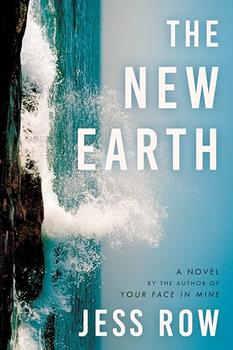
by Jess Row
Published 2024
A globe-spanning epic novel about a fractured New York family reckoning with the harms of the past and confronting humanity's uncertain future, from award-winning author Jess Row
 (1).gif)
The only completely consistent people are the dead
Click Here to find out who said this, as well as discovering other famous literary quotes!

Can you name the title?
Test your book knowledge with our daily trivia challenge!