-
Your next favorite book
is waiting.
Summary | Excerpt | Reviews | Beyond the book | Read-Alikes | Genres & Themes | Author Bio
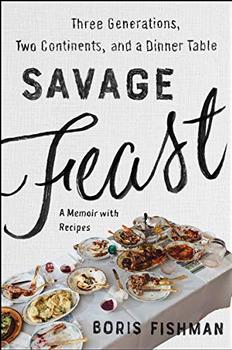
Three Generations, Two Continents, and a Dinner Table (a Memoir with Recipes)
by Boris Fishman Book Reviewed by:
The acclaimed author of A Replacement Life shifts between heartbreak and humor in this gorgeously told, recipe-filled memoir. A family story, an immigrant story, a love story, and an epic meal, Savage Feast explores the challenges of navigating two cultures from an unusual angle.
A revealing personal story and family memoir told through meals and recipes, Savage Feast begins with Boris's childhood in Soviet Belarus, where good food was often worth more than money. He describes the unlikely dish that brought his parents together and how years of Holocaust hunger left his grandmother so obsessed with bread that she always kept five loaves on hand. She was the stove magician and Boris' grandfather the master black marketer who supplied her, evading at least one firing squad on the way. These spoils kept Boris' family—Jews who lived under threat of discrimination and violence—provided-for and protected.
Despite its abundance, food becomes even more important in America, which Boris' family reaches after an emigration through Vienna and Rome filled with marvel, despair, and bratwurst. How to remain connected to one's roots while shedding their trauma? The ambrosial cooking of Oksana, Boris's grandfather's Ukrainian home aide, begins to show him the way. His quest takes him to a farm in the Hudson River Valley, the kitchen of a Russian restaurant on the Lower East Side, a Native American reservation in South Dakota, and back to Oksana's kitchen in Brooklyn. His relationships with women—troubled, he realizes, for reasons that go back many generations—unfold concurrently, finally bringing him, after many misadventures, to an American soulmate.
Savage Feast is Boris' tribute to food, that secret passage to an intimate conversation about identity, belonging, family, displacement, and love.
CHAPTER 1
1988
What to cook in a Nazi cast-iron pot in a furnace in Minsk after the war
What to cook to get your not-even-son-in-law the grade that he needs
What to cook when meeting your son's wealthy girlfriend
The door of the sleeper sailed open, breaking the tu-tum-tu-tum of the wheels on the track, the medical blue of the overhead light panels dispelling the secretive blue of night on a train. Two uniformed men filled the doorway. My grandmother—the next compartment held my mother, father, and grandfather—lowered her swollen legs to the floor. In her sleeveless nightgown and the pink net in which she preserved her hairstyle at night, she looked too intimate next to the uniformed men. "Dokumenty," they said, the word just like the Russian.
If you want a shortcut to the Eastern European experience, you must have yourself woken from the sarcophagus of a sleeper's ceiling berth by border guards in the night. You must have every light lit. You must be spoken to in a...
There's an at-times solemn, at-times playful, always easy rhythm to Fishman's reminisces. He wants readers to know everything he can possibly tell them about his and his family members' lives, but he wants to take his time in getting there...continued
Full Review
 (663 words)
(Reviewed by Rory L. Aronsky).
 Anya Von Bremzen, James Beard Award-winning author of The Art of Soviet Cooking
Rabelaisian in appetite but Chekhovian in its spare and keen psychological detail, this marvelous memoir of family, exile, breakup, and one prodigious cook named Oksana sets a new standard for literary gastronomic writing. Even the recipes—who wouldn't salivate over garlicky peppers marinated in buckwheat honey?—are as surprising and fresh as Fishman's prose. Sigrid Nunez, author of The Friend, National Book Award Winner
A superb memoir — artful, ambitious, deeply soulful, often hilarious — by one of our cleverest and most original writers. Tracy K. Smith, U.S. Poet Laureate and Pulitzer Prize Winner
In prose as visceral and tightly coiled as the best poetry, Savage Feast assures me we are bound by the part of the self that is healed, coaxed, chastened and captivated by even the memory of a good meal.
Anya Von Bremzen, James Beard Award-winning author of The Art of Soviet Cooking
Rabelaisian in appetite but Chekhovian in its spare and keen psychological detail, this marvelous memoir of family, exile, breakup, and one prodigious cook named Oksana sets a new standard for literary gastronomic writing. Even the recipes—who wouldn't salivate over garlicky peppers marinated in buckwheat honey?—are as surprising and fresh as Fishman's prose. Sigrid Nunez, author of The Friend, National Book Award Winner
A superb memoir — artful, ambitious, deeply soulful, often hilarious — by one of our cleverest and most original writers. Tracy K. Smith, U.S. Poet Laureate and Pulitzer Prize Winner
In prose as visceral and tightly coiled as the best poetry, Savage Feast assures me we are bound by the part of the self that is healed, coaxed, chastened and captivated by even the memory of a good meal.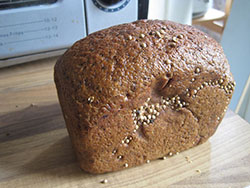 Early on in Savage Feast, Boris Fishman, beginning to recount his family's exodus from the Soviet Union, states that there were 800 kinds of bread in the U.S.S.R. It's true. According to an article in the Christian Science Monitor in 1985, there is domashanya, a basic household roll; stolichniye, the bread of Moscow, and orlovsky, which combines rye and wheat flour. The list goes on from there.
But the one that loomed over all of Mother Russia, including Fishman's Belarus, was Borodinsky, which he describes as having a "dark, slightly charred top," with coriander seeds meant to resemble "grapeshot," which are small iron balls fired from a cannon. According to him, the story goes that a Russian general died at the Battle of Borodino ...
If you liked Savage Feast, try these:
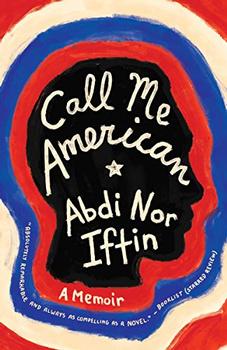
by Abdi Nor Iftin
Published 2019
The incredible true story of a boy living in war-torn Somalia who escapes to America--first by way of the movies; years later, through a miraculous green card.

by Gary Shteyngart
Published 2014
A memoir of an immigrant family coming to America, as told by a lifelong misfit who forged from his imagination an essential literary voice and, against all odds, a place in the world.

by Gabrielle Hamilton
Published 2012
Blood, Bones & Butter is an unflinching and lyrical work. Gabrielle Hamilton's story is told with uncommon honesty, grit, humor, and passion. By turns epic and intimate, it marks the debut of a tremendous literary talent.

 (1).gif)
I have always imagined that paradise will be a kind of library
Click Here to find out who said this, as well as discovering other famous literary quotes!

Can you name the title?
Test your book knowledge with our daily trivia challenge!