-
Your next favorite book
is waiting.
Summary | Excerpt | Reviews | Beyond the book | Read-Alikes | Genres & Themes | Author Bio

What Ten Thinkers Can Teach Us About Science and Authority
by Robert P. Crease Book Reviewed by:
A fascinating look at key thinkers throughout history who have shaped public perception of science and the role of authority.
When does a scientific discovery become accepted fact? Why have scientific facts become easy to deny? And what can we do about it? In The Workshop and the World, philosopher and science historian Robert P. Crease answers these questions by describing the origins of our scientific infrastructure―the "workshop"―and the role of ten of the world's greatest thinkers in shaping it. At a time when the Catholic Church assumed total authority, Francis Bacon, Galileo Galilei, and René Descartes were the first to articulate the worldly authority of science, while writers such as Mary Shelley and Auguste Comte told cautionary tales of divorcing science from the humanities. The provocative leaders and thinkers Kemal Atatürk and Hannah Arendt addressed the relationship between the scientific community and the public in in times of deep distrust.
As today's politicians and government officials increasingly accuse scientists of dishonesty, conspiracy, and even hoaxes, engaged citizens can't help but wonder how we got to this level of distrust and how we can emerge from it. This book tells dramatic stories of individuals who confronted fierce opposition―and sometimes risked their lives―in describing the proper authority of science, and it examines how ignorance and misuse of science constitute the preeminent threat to human life and culture. An essential, timely exploration of what it means to practice science for the common good as well as the danger of political action divorced from science, The Workshop and the World helps us understand both the origins of our current moment of great anti-science rhetoric and what we can do to help keep the modern world from falling apart.
Introduction
In the summer of 2018, I went to see the Mer de Glace, the longest glacier in France. I knew what it looked like— or thought I did. For nearly three centuries it has been one of the most painted, photographed, and described natural features in Europe. From the northern slopes of Mont Blanc, the highest mountain in the Alps, it twists its way slowly and inexorably between the peaks like a giant icy crocodile. Its jagged white blocks inspired Goethe, Wordsworth, and other poets. In Mary Shelley's novel Frankenstein, the glacier's wildness is the backdrop for the monster's first confrontation with the creator who abandoned him. Many artists, including J. M. W. Turner, Caspar David Friedrich, and John Ruskin, painted its dramatic and disordered surface in images that ran from majestic and ethereal to terrifying. Visitors compared it to a hurricane- whipped ocean that had suddenly frozen and turned sheet- white.
I boarded a rack railway that had been built in 1908 to ...
The subject matter is philosophically complex, but Crease makes it accessible. He synthesizes each thinker's contribution to the broad philosophical sphere, demonstrating how their work built upon the thinking of their predecessors. He also includes examples of contemporary science denial that highlight the pernicious consequences of failing to listen to reason...continued
Full Review
 (891 words)
(Reviewed by Chris Fredrick).
 Charles C. Mann, author of 1491 and The Wizard and the Prophet
Science is under assault. Crease's vital new book explains how science acquired its authority, how that authority has benefited us all?and how the seeds of attack came from within science itself. Edward S. Casey, author of The World on Edge
An eloquent, timely account of what went right and what wrong in modernity when it comes to the ways in which scientific discoveries and theories were received by contemporaries...Speaking forcefully to the present moment, Crease spells out a series of concrete and efficacious steps by which science denial can be addressed and combated in our own time. Jimena Canales, author of The Physicist and the Philosopher
How to get angry the right way?that is the question motivating Robert Crease's magisterial account of ten of history's smartest men and women on the verge of making the world a better place...Through the lives and thoughts of these indispensable apostles of truth, Crease offers readers a profound meditation about the breaking point of modern civilization. Peter Woit, author of Not Even Wrong
We live in a frightening time of assault on the notion of ‘truth' and authority. Crease's historical account of the relationship between the public and the expert sheds important light on our current plight. Philip Ball, author of Serving the Reich
In this urgent book, Crease shows that there is nothing obvious or inevitable about the social reception of science. Beautifully and clearly written, it is required reading for anyone who cares about the role of science in society. Robert C. Scharff, author of How History Matters to Philosophy
Rather than hard-sell current scientific claims to those unlikely to listen, Crease enhances the cultural ‘authority of the workshop' by showing how science becomes authoritative in the first place. His unique combination of talents and expertise is a benefit to us all.
Charles C. Mann, author of 1491 and The Wizard and the Prophet
Science is under assault. Crease's vital new book explains how science acquired its authority, how that authority has benefited us all?and how the seeds of attack came from within science itself. Edward S. Casey, author of The World on Edge
An eloquent, timely account of what went right and what wrong in modernity when it comes to the ways in which scientific discoveries and theories were received by contemporaries...Speaking forcefully to the present moment, Crease spells out a series of concrete and efficacious steps by which science denial can be addressed and combated in our own time. Jimena Canales, author of The Physicist and the Philosopher
How to get angry the right way?that is the question motivating Robert Crease's magisterial account of ten of history's smartest men and women on the verge of making the world a better place...Through the lives and thoughts of these indispensable apostles of truth, Crease offers readers a profound meditation about the breaking point of modern civilization. Peter Woit, author of Not Even Wrong
We live in a frightening time of assault on the notion of ‘truth' and authority. Crease's historical account of the relationship between the public and the expert sheds important light on our current plight. Philip Ball, author of Serving the Reich
In this urgent book, Crease shows that there is nothing obvious or inevitable about the social reception of science. Beautifully and clearly written, it is required reading for anyone who cares about the role of science in society. Robert C. Scharff, author of How History Matters to Philosophy
Rather than hard-sell current scientific claims to those unlikely to listen, Crease enhances the cultural ‘authority of the workshop' by showing how science becomes authoritative in the first place. His unique combination of talents and expertise is a benefit to us all.According to Robert P. Crease, science denial is a personal rejection of only those specific scientific findings that conflict with an individual's political, economic or personal/religious beliefs. The Workshop and the World by Robert P. Crease looks at science denial throughout history and offers a synthesis that outlines: 1) the characteristics of scientific study that make it vulnerable to denial, and 2) better rhetorical tactics for countering this denial.
Science denial isn't simply about a few bad actors who are politically, financially or philosophically motivated. It has a deeper dynamic. The same characteristics that make coordinated scientific study an engine for innovation and progress also make it vulnerable to repudiation. ...
If you liked The Workshop and the World, try these:
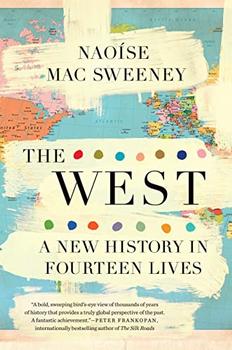
by Naoíse Mac Sweeney
Published 2023
Prize-winning historian Naoíse Mac Sweeney delivers a captivating exploration of how "Western Civilization" - the concept of a single cultural inheritance extending from ancient Greece to modern times - is a powerful figment of our collective imagination. An urgently needed emergent voice in big history, she offers a bold new account of ...

by Jonah Berger
Published 2022
From the author of New York Times bestsellers Contagious and Invisible Influence comes a revolutionary approach to changing anyone's mind.
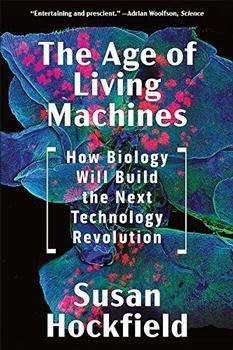
by Susan Hockfield
Published 2020
From the former president of MIT, the story of the next technology revolution, and how it will change our lives.

 (1).gif)
If passion drives you, let reason hold the reins
Click Here to find out who said this, as well as discovering other famous literary quotes!

Can you name the title?
Test your book knowledge with our daily trivia challenge!