
-
Your next favorite book
is waiting.
Summary | Excerpt | Reviews | Beyond the book | Read-Alikes | Genres & Themes | Author Bio

How Biology Will Build the Next Technology Revolution
by Susan Hockfield Book Reviewed by:
From the former president of MIT, the story of the next technology revolution, and how it will change our lives.
A century ago, discoveries in physics came together with engineering to produce an array of astonishing new technologies: radios, telephones, televisions, aircraft, radar, nuclear power, computers, the Internet, and a host of still-evolving digital tools. These technologies so radically reshaped our world that we can no longer conceive of life without them.
Today, the world's population is projected to rise to well over 9.5 billion by 2050, and we are currently faced with the consequences of producing the energy that fuels, heats, and cools us. With temperatures and sea levels rising, and large portions of the globe plagued with drought, famine, and drug-resistant diseases, we need new technologies to tackle these problems.
But we are on the cusp of a new convergence, argues world-renowned neuroscientist Susan Hockfield, with discoveries in biology coming together with engineering to produce another array of almost inconceivable technologies―next-generation products that have the potential to be every bit as paradigm shifting as the twentieth century's digital wonders.
The Age of Living Machines describes some of the most exciting new developments and the scientists and engineers who helped create them. Virus-built batteries. Protein-based water filters. Cancer-detecting nanoparticles. Mind-reading bionic limbs. Computer-engineered crops. Together they highlight the promise of the technology revolution of the twenty-first century to overcome some of the greatest humanitarian, medical, and environmental challenges of our time.
Excerpt unavailable.
A champion of interdisciplinary research and development, Hockfield sees a compelling new future in science: bioengineering. The Age of Living Machines provides an incredible glimpse of the future for science novices and intermediates, pop-science readers, science trend followers, futurists, and life-long learners interested in exploring notes and references...continued
Full Review
 (696 words)
(Reviewed by Jamie Chornoby).
 Ashton B. Carter, former U.S. secretary of defense, director of the Belfer Center for Science and International Affairs, Harvard Kennedy School, and MIT Innovation Fellow
Susan Hockfield's lively and authoritative book brings to life the bio-revolution that is coming and that will dwarf the computer revolution in causing disruption?for better and worse. Drew Gilpin Faust, president emerita and Lincoln Professor of History, Harvard University
A highly readable and deeply informative look over the scientific horizon into a future where biology and engineering converge to offer extraordinary means to improve our world. Ernest J. Moniz, former U.S. secretary of energy
Beautifully captures the science and the stories underpinning the convergence of biology and engineering as a transformative twenty-first century enterprise. One of those stories?biologically organized batteries?addresses the clean-energy revolution needed for mitigating climate change, capturing both of Hockfield's signature initiatives as MIT President. Graham Allison, Douglas Dillon Professor of Government, Harvard Kennedy School, and author of Destined for War: Can America and China Escape Thucydides's Trap?
Timely, provocative insights into ways the genomic and bioengineering revolution is likely to transform our world in the next half century as profoundly as computer chips powering the information revolution transformed the past fifty years. Phillip A. Sharp, winner of the Nobel Prize in Physiology or Medicine, Koch Institute for Integrative Cancer Research at MIT
Life sciences are at the doorstep of meeting the major challenges of our time: energy, food, water, and disease. Hockfield views this future through the eyes of scientists at the interface of engineering and biology in an exciting and enjoyable book. Vartan Gregorian, president of Carnegie Corporation of New York
An essential book for our fast-moving times. Hockfield covers an immense range of the emerging technologies that will reshape our lives. At the same time, she offers a crucial synthesis, much needed in an age of fragmentation. The result is a powerful reading experience, combining depth and clarity, and offering a generous supplement of hope.
Ashton B. Carter, former U.S. secretary of defense, director of the Belfer Center for Science and International Affairs, Harvard Kennedy School, and MIT Innovation Fellow
Susan Hockfield's lively and authoritative book brings to life the bio-revolution that is coming and that will dwarf the computer revolution in causing disruption?for better and worse. Drew Gilpin Faust, president emerita and Lincoln Professor of History, Harvard University
A highly readable and deeply informative look over the scientific horizon into a future where biology and engineering converge to offer extraordinary means to improve our world. Ernest J. Moniz, former U.S. secretary of energy
Beautifully captures the science and the stories underpinning the convergence of biology and engineering as a transformative twenty-first century enterprise. One of those stories?biologically organized batteries?addresses the clean-energy revolution needed for mitigating climate change, capturing both of Hockfield's signature initiatives as MIT President. Graham Allison, Douglas Dillon Professor of Government, Harvard Kennedy School, and author of Destined for War: Can America and China Escape Thucydides's Trap?
Timely, provocative insights into ways the genomic and bioengineering revolution is likely to transform our world in the next half century as profoundly as computer chips powering the information revolution transformed the past fifty years. Phillip A. Sharp, winner of the Nobel Prize in Physiology or Medicine, Koch Institute for Integrative Cancer Research at MIT
Life sciences are at the doorstep of meeting the major challenges of our time: energy, food, water, and disease. Hockfield views this future through the eyes of scientists at the interface of engineering and biology in an exciting and enjoyable book. Vartan Gregorian, president of Carnegie Corporation of New York
An essential book for our fast-moving times. Hockfield covers an immense range of the emerging technologies that will reshape our lives. At the same time, she offers a crucial synthesis, much needed in an age of fragmentation. The result is a powerful reading experience, combining depth and clarity, and offering a generous supplement of hope.In The Age of Living Machines, Susan Hockfield tells readers about the work of Angela Belcher, a chemist and bioengineer who found a way to make affordable, clean and natural renewable energy. Belcher and her colleagues did this by harnessing the power of viruses to make electric circuits that were then turned into high-powered batteries. Yet in 1999, when Belcher first submitted grant proposals to fund what would become a breakthrough discovery, reviewers called the idea insane, denying the request. Belcher's story is not uncommon in that securing funds is a huge obstacle in research.
The sources and motivations for STEM (Science, Technology, Engineering and Mathematics) funding have evolved throughout history. In the past, funding was ...
If you liked The Age of Living Machines, try these:
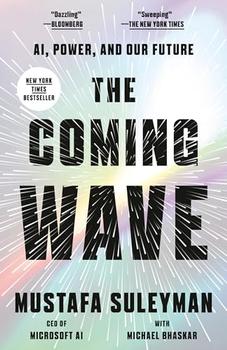
by Mustafa Suleyman
Published 2025
An urgent warning of the unprecedented risks that AI and other fast-developing technologies pose to global order, and how we might contain them while we have the chance—from a co-founder of the pioneering artificial intelligence company DeepMind
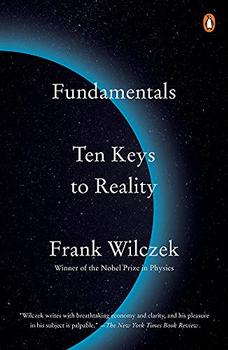
by Frank Wilczek
Published 2022
One of our great contemporary scientists reveals the ten profound insights that illuminate what everyone should know about the physical world.
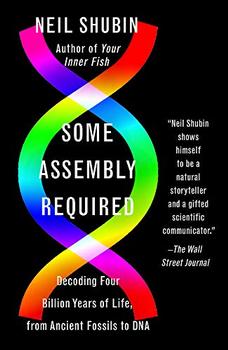
by Neil Shubin
Published 2021
The author of the best-selling Your Inner Fish gives us a lively and accessible account of the great transformations in the history of life on Earth--a new view of the evolution of human and animal life that explains how the incredible diversity of life on our planet came to be.
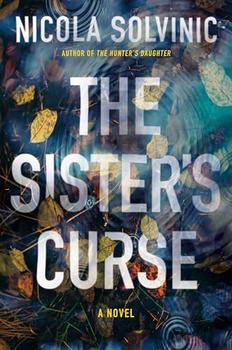


 (1).gif)
Finishing second in the Olympics gets you silver. Finishing second in politics gets you oblivion.
Click Here to find out who said this, as well as discovering other famous literary quotes!

Can you name the title?
Test your book knowledge with our daily trivia challenge!