
-
Your next favorite book
is waiting.
Summary | Excerpt | Reading Guide | Reviews | Beyond the book | Read-Alikes | Genres & Themes | Author Bio

A Novel
by Marjan Kamali Book Reviewed by:
A powerful love story exploring loss, reconciliation, and the quirks of fate.
Roya is a dreamy, idealistic teenager living in 1953 Tehran who, amidst the political upheaval of the time, finds a literary oasis in kindly Mr. Fakhri's neighborhood book and stationery shop. She always feels safe in his dusty store, overflowing with fountain pens, shiny ink bottles, and thick pads of soft writing paper.
When Mr. Fakhri, with a keen instinct for a budding romance, introduces Roya to his other favorite customer—handsome Bahman, who has a burning passion for justice and a love for Rumi's poetry—she loses her heart at once. And, as their romance blossoms, the modest little stationery shop remains their favorite place in all of Tehran.
A few short months later, on the eve of their marriage, Roya agrees to meet Bahman at the town square, but suddenly, violence erupts—a result of the coup d'etat that forever changes their country's future. In the chaos, Bahman never shows. For weeks, Roya tries desperately to contact him, but her efforts are fruitless. With a sorrowful heart, she resigns herself to never seeing him again.
Until, more than sixty years later, an accident of fate leads her back to Bahman and offers her a chance to ask him the questions that have haunted her for more than half a century: Why did he leave? Where did he go? How was he able to forget her?
The Stationery Shop is a beautiful and timely exploration of devastating loss, unbreakable family bonds, and the overwhelming power of love.
Chapter One
2013
The Center
"I made an appointment to see him."
She said it as if she were seeing the dentist or a therapist or the pushy refrigerator salesman who had promised her and Walter a lifetime guarantee of cold milk and crisp vegetables and unspoiled cheese if only they would buy this brand-new model.
Walter dried the dishes, his gaze on the kitchen towel and its print of a yellow chick holding an umbrella. He didn't argue. Walter Archer's penchant for logic, his ability to let reason trump all, was a testament to Roya's own good judgment. For hadn't she married a man who was reasonable and, my goodness, unbelievably understanding? Hadn't she, in the end, not married that boy, the one she had met so many decades ago in a small stationery shop in Tehran, but lassoed her life instead to this Massachusetts-born pillar of stability? This Walter. Who ate a hard-boiled egg for breakfast almost every single day, who said as he dried the dishes, "If you want to see him, then you should....
A testament to the enduring powers of storytelling and first love, The Stationery Shop is likely to be a favorite with booksellers and book groups. The author’s website provides a reading guide; the novel absolutely invites reading and discussion along with sweet or savory Iranian cuisine...continued
Full Review
 (825 words)
(Reviewed by Karen Lewis).
 Alyson Richman, international bestselling author of The Lost Wife and The Secret of Clouds
Set against the political turmoil of 1950's Tehran, Marjan Kamali's The Stationery Shop illuminates how love is experienced over time and influenced by the fingerprints of others. Yet. despite every obstacle, the power of heart and memory endure. A beautiful and sensitive novel that I loved from the first page. Elinor Lipman, author of Good Riddance and Turpentine Lane
What a pleasure—a novel that is all at once masterfully plotted, beautifully written, and populated by characters who are arresting, lovable and so real. Brava, Marjan Kamali; now that I've finished, I miss this world of yours. Jasmin Darznik, New York Times bestselling author of The Good Daughter and Song Of A Captive Bird
A beautifully immersive tale, The Stationery Shop brings to life a lost and complex world and the captivating characters who once called it home. Whitney Scharer, author of The Age of Light
Evocative, devastating, and hauntingly beautiful, The Stationery Shop explores love's power to transcend time and distance—and the ways fate can tear people apart and bring them back together. This book broke my heart again and again.
Alyson Richman, international bestselling author of The Lost Wife and The Secret of Clouds
Set against the political turmoil of 1950's Tehran, Marjan Kamali's The Stationery Shop illuminates how love is experienced over time and influenced by the fingerprints of others. Yet. despite every obstacle, the power of heart and memory endure. A beautiful and sensitive novel that I loved from the first page. Elinor Lipman, author of Good Riddance and Turpentine Lane
What a pleasure—a novel that is all at once masterfully plotted, beautifully written, and populated by characters who are arresting, lovable and so real. Brava, Marjan Kamali; now that I've finished, I miss this world of yours. Jasmin Darznik, New York Times bestselling author of The Good Daughter and Song Of A Captive Bird
A beautifully immersive tale, The Stationery Shop brings to life a lost and complex world and the captivating characters who once called it home. Whitney Scharer, author of The Age of Light
Evocative, devastating, and hauntingly beautiful, The Stationery Shop explores love's power to transcend time and distance—and the ways fate can tear people apart and bring them back together. This book broke my heart again and again.In Marjan Kamali's novel The Stationery Shop, Iranian food plays a central role, whether a simple melon smoothie drink, hot tea sweetened with rock sugar candy (nabat), or a more complicated feast for Persian New Year. Traditional cuisine from Iran, also known as Persia, is a mélange of many cultures partly due to a vibrant trading history, situated along the ancient Silk Road.
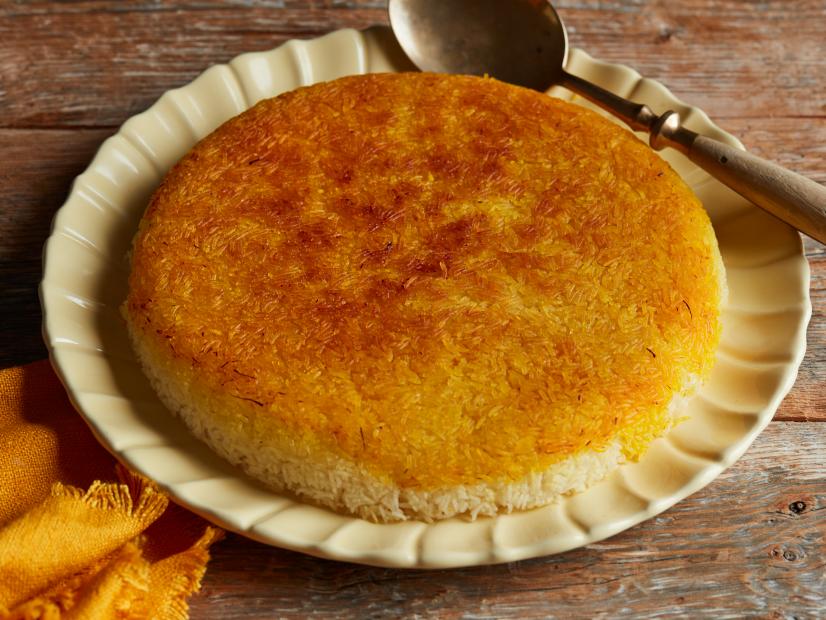 Most Iranian meals include rice. In the novel, Roya uses basmati rice to prepare crunchy rice called tahdig. To accompany the rice, a popular choice is gormeh sabzi, which is a stew simmered with lamb and beans, liberally seasoned with coriander, parsley, scallions, and other herbs. Dried limes add a sour flavor. Roya goes to a special market in the San ...
If you liked The Stationery Shop, try these:

by Marjan Kamali
Published 2025
From the nationally bestselling author of the "powerful, heartbreaking" (Shelf Awareness) The Stationery Shop, a heartfelt, epic new novel of friendship, betrayal, and redemption set against three transformative decades in Tehran, Iran.
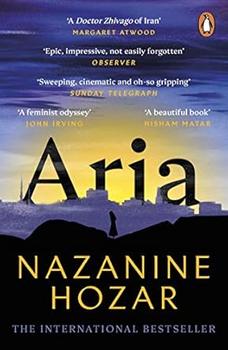
by Nazanine Hozar
Published 2021
An extraordinary, cinematic saga of rags-to-riches-to-revolution--called a "Doctor Zhivago of Iran" by Margaret Atwood--that follows an orphan girl coming of age at a time of dramatic upheaval.

by Jokha Alharthi
Published 2019
In the village of al-Awafi in Oman, we encounter three sisters: Mayya, who marries after a heartbreak; Asma, who marries from a sense of duty; and Khawla, who chooses to refuse all offers and await a reunion with the man she loves, who has emigrated to Canada.

 (1).gif)
Silent gratitude isn't much use to anyone
Click Here to find out who said this, as well as discovering other famous literary quotes!

Can you name the title?
Test your book knowledge with our daily trivia challenge!