
-
Your next favorite book
is waiting.
Summary | Excerpt | Reviews | Beyond the book | Read-Alikes | Genres & Themes | Author Bio
 Book Reviewed by:
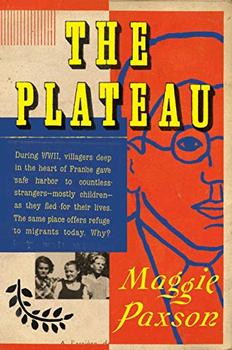
During World War II, French villagers offered safe harbor to countless strangers - mostly children - as they fled for their lives. The same place offers refuge to migrants today. Why?
In a remote pocket of Nazi-held France, ordinary people risked their lives to rescue many hundreds of strangers, mostly Jewish children. Was this a fluke of history, or something more? Anthropologist Maggie Paxson, certainties shaken by years of studying strife, arrives on the Plateau to explore this phenomenon: What are the traits that make a group choose selflessness?
In this beautiful, wind-blown place, Paxson discovers a tradition of offering refuge that dates back centuries. But it is the story of a distant relative that provides the beacon for which she has been searching. Restless and idealistic, Daniel Trocmé had found a life of meaning and purpose--or it found him--sheltering a group of children on the Plateau, until the Holocaust came for him, too. Paxson's journey into past and present turns up new answers, new questions, and a renewed faith in the possibilities for us all, in an age when global conflict has set millions adrift. Riveting, multilayered, and intensely personal, The Plateau is a deeply inspiring journey into the central conundrum of our time.
Chapter 1
Unanswered
I Daniel was grieved in my spirit in the midst of my body, and the visions of my head troubled me.
—Daniel 7:15
Let's just say that suddenly you are a social scientist and you want to study peace. That is, you want to understand what makes for a peaceful society. Let's say that, for years in your work in various parts of the world, you've been surrounded by evidence of violence and war. From individual people, you've heard about beatings and arrests and murders and rapes; you've heard about deportations and black-masked men demanding people's food or their lives. You've heard about family violence and village violence and state violence. You've heard these stories from old women with loose, liquid tears; from young men with arms full of prison tattoos.
There were men on horseback calling the boys to war, and long black cars arriving to steal people away in the dead of night; girls who'd wandered the landscape, insane after sexual violations; there was the ...
Paxson's personal reflections sometimes turn outward into sweeping and confusing assertions about humanity when it seems they might have more naturally continued inward into analysis of her own struggles. For example, she expresses concern about the "moral hazard" of identifying as a member of any group before identifying as human, stating that "the oneness of humanity is an absolute truth." It seems important to acknowledge, alongside this statement, that groups in power have often used people's religious and ethnic identities as reason to treat them inhumanely...continued
Full Review
 (1114 words)
(Reviewed by Elisabeth Cook).
 Alex Kotlowitz, author of There Are No Children Here and An American Summer
Maggie Paxson takes us on this wondrous, probing journey in her search for the roots of kindness. How is it, she asks, that this one small place has so bravely stood up for strangers? The Plateau and the people you'll meet in its pages are just the right antidote for these unsettling times. David Finkel, author of The Good Soldiers and Thank You for Your Service
Maggie Paxson went in search of human goodness and found a story that affected me in ways few books ever have. The Plateau is exquisite, excruciating, fearless -- a book not only for these times, when our need for understanding is so great, but for all times. A masterpiece. Larissa MacFarquhar, author of Strangers Drowning
After so much written about evil and pathology, here at last is a beautiful book that proves that selflessness is not a fairy tale. In describing an astonishing tradition of idealism and sacrifice, Maggie Paxson captures human goodness in all its complexity and ferocity. Sarah Wildman, author of Paper Love: Searching for the Girl My Grandfather Left Behind
In a world that feels increasingly dark, Paxson's remarkable search for parallels and paths to goodness between past and present, war and peace, is a heartbreaking and clear-eyed exploration of all that makes us human. She offers readers the key to survival: hope.
Alex Kotlowitz, author of There Are No Children Here and An American Summer
Maggie Paxson takes us on this wondrous, probing journey in her search for the roots of kindness. How is it, she asks, that this one small place has so bravely stood up for strangers? The Plateau and the people you'll meet in its pages are just the right antidote for these unsettling times. David Finkel, author of The Good Soldiers and Thank You for Your Service
Maggie Paxson went in search of human goodness and found a story that affected me in ways few books ever have. The Plateau is exquisite, excruciating, fearless -- a book not only for these times, when our need for understanding is so great, but for all times. A masterpiece. Larissa MacFarquhar, author of Strangers Drowning
After so much written about evil and pathology, here at last is a beautiful book that proves that selflessness is not a fairy tale. In describing an astonishing tradition of idealism and sacrifice, Maggie Paxson captures human goodness in all its complexity and ferocity. Sarah Wildman, author of Paper Love: Searching for the Girl My Grandfather Left Behind
In a world that feels increasingly dark, Paxson's remarkable search for parallels and paths to goodness between past and present, war and peace, is a heartbreaking and clear-eyed exploration of all that makes us human. She offers readers the key to survival: hope. Righteous Among the Nations refers to non-Jewish people who have been honored by Yad Vashem, The World Holocaust Memorial Center in Israel, for putting their lives at risk to help Jews at the time of the Holocaust. Yad Vashem set up a commission in 1963 to establish the criteria for the award and examine cases to determine recipients of the title. Since then, Yad Vashem has given the title of Righteous to over 27,000 individuals from over 50 countries. The Israeli government grants honorary citizenship to the Righteous, and organizations such as the Jewish Foundation for the Righteous offer assistance to surviving Righteous who experience economic hardship.
Yad Vashem names individuals as Righteous who meet four requirements:
If you liked The Plateau, try these:
by Burkhard Bilger
Published 2024
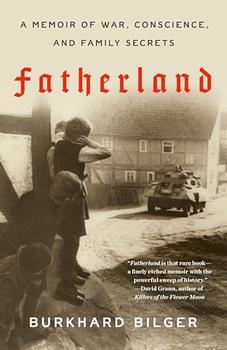
A New Yorker staff writer investigates his grandfather, a Nazi Party Chief, in this "unflinching, gorgeously written, and deeply moving exploration of morality, family, and war" (Patrick Radden Keefe, author of Empire of Pain).

by Francoise Frenkel
Published 2020
"A beautiful and important book" (The Independent) in the tradition of rediscovered works like Suite Française and The Nazi Officer's Wife, the prize-winning memoir of a fearless Jewish bookseller on a harrowing fight for survival across Nazi-occupied Europe.
by Julie Orringer
Published 2020
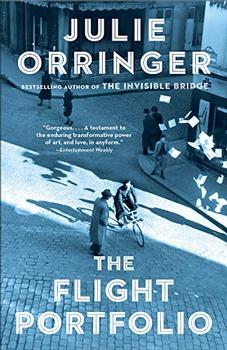
The long-awaited new work from the best-selling author of The Invisible Bridge takes us back to occupied Europe in this gripping historical novel based on the true story of Varian Fry's extraordinary attempt to save the work, and the lives, of Jewish artists fleeing the Holocaust.


 (1).gif)
Finishing second in the Olympics gets you silver. Finishing second in politics gets you oblivion.
Click Here to find out who said this, as well as discovering other famous literary quotes!

Can you name the title?
Test your book knowledge with our daily trivia challenge!