-
Your next favorite book
is waiting.
Summary | Excerpt | Reading Guide | Discuss | Reviews | Beyond the book | Read-Alikes | Genres & Themes | Author Bio

One Woman, Her Incredible Fight for Freedom, and the Men Who Tried to Make Her Disappear
by Kate Moore Book Reviewed by:
From the New York Times, USA Today, and Wall Street Journal bestselling author of The Radium Girls comes another dark and dramatic but ultimately uplifting tale of a forgotten woman whose inspirational journey sparked lasting change for women's rights and exposed injustices that still resonate today.
1860: As the clash between the states rolls slowly to a boil, Elizabeth Packard, housewife and mother of six, is facing her own battle. The enemy sits across the table and sleeps in the next room. Her husband of twenty-one years is plotting against her because he feels increasingly threatened―by Elizabeth's intellect, independence, and unwillingness to stifle her own thoughts. So Theophilus makes a plan to put his wife back in her place. One summer morning, he has her committed to an insane asylum.
The horrific conditions inside the Illinois State Hospital in Jacksonville, Illinois, are overseen by Dr. Andrew McFarland, a man who will prove to be even more dangerous to Elizabeth than her traitorous husband. But most disturbing is that Elizabeth is not the only sane woman confined to the institution. There are many rational women on her ward who tell the same story: they've been committed not because they need medical treatment, but to keep them in line―conveniently labeled "crazy" so their voices are ignored.
No one is willing to fight for their freedom and, disenfranchised both by gender and the stigma of their supposed madness, they cannot possibly fight for themselves. But Elizabeth is about to discover that the merit of losing everything is that you then have nothing to lose...
Bestselling author Kate Moore brings her sparkling narrative voice to The Woman They Could Not Silence, an unputdownable story of the forgotten woman who courageously fought for her own freedom―and in so doing freed millions more. Elizabeth's refusal to be silenced and her ceaseless quest for justice not only challenged the medical science of the day, and led to a giant leap forward in human rights, it also showcased the most salutary lesson: sometimes, the greatest heroes we have are those inside ourselves.
Chapter 1
JUNE 18, 1860
MANTENO, ILLINOIS
IT WAS THE LAST DAY, BUT SHE DIDN'T KNOW IT.
In truth, we never do.
Not until it is too late.
She woke in a handsome maple bed, body covered by a snow-white counterpane. As her senses resurfaced after a restless night's sleep, Elizabeth Packard's brown eyes blearily mapped the landmarks of her room: embroidered ottoman, mahogany bureau, and smart green shutters that—for some reason—were failing to let in any light.
Ordinarily, her husband of twenty-one years—Theophilus, a preacher—would have been snoring next to her, his gravity-defying, curly red hair an impromptu pillow beneath his head. But a few long weeks before, he'd abandoned their marital bed.
He thought it best, or so he'd said, to sleep alone these days.
Instead, her senses were filled by the precious proximity of her slumbering six-year-old son. Unconsciously, Elizabeth reached out for ten-year-old Libby and baby Arthur too—the other two ...
What are you reading this week? And what did you think of last week’s books? (10/30/2025)
I'm reading The Woman They Could Not Silence by Kate Moore..it was published in 2021..not sure how I missed it! It's my local book club selection..non fiction but reads like historical fiction..story of Eliza...
-Deanna_H
Good nonfiction books for book clubs?
I second Kate Moore's The Woman They Could Not Silence and many of the other books mentioned above. Madame Restell: The Life, Death, and Resurrection of Old New York's Most Fabulous, Fearless, and Infamous Abortionist is another that is woman centric but the topic of abortion could be too devisiv...
-Barbara_B1
Throughout the book, there is a disturbing similarity between the bystanders of Packard's time and those of today, especially pertaining to domestic abuse and harassment of women by men in power. Readers will also be able to locate clear parallels between measures used to certify a woman "insane" in the 1800s and the standards and expectations used against women now regarding appearance, age and intelligence. Today, women are still battling gender-based judgments having to do with body shape and size, signs of aging, make-up use, hairstyles, fashion, etc. While The Woman They Could Not Silence is an account of what happened to Elizabeth Packard in the 1800s, its messaging around equality, empowerment and the dangers of allowing only one group of people to maintain societal control is timely...continued
Full Review
 (783 words)
(Reviewed by Nichole Brazelton).
 Abbott Kahler, author (as Karen Abbott) of The Ghosts of Eden Park
The Woman They Could Not Silence tells the captivating story of Elizabeth Packard, a forgotten heroine whose harrowing ordeal in an insane asylum seems straight from the mind of Stephen King - except every word is true. Blending impeccable research with novelistic flair, Kate Moore brings the indomitable Packard to brilliant life, and proves she belongs among our most celebrated women leaders. Liza Mundy, New York Times bestselling author of Code Girls
What a story - and what a telling! Kate Moore has hit another one out of the park. In the best tradition of The Radium Girls, Moore recounts the stunning true account of a woman who fought back against a tyrannical husband, a complicit doctor, and 19th-century laws that gave men shocking power to silence and confine their wives. By challenging these norms, Elizabeth Packard became a heroine on the scale of the suffragists. In Moore's expert hands, this beautifully-written tale unspools with drama and power, and puts Elizabeth Packard on the map at the most relevant moment imaginable. You will be riveted - and inspired. Bravo! Marie Benedict, New York Times bestselling author
What an incredible narrative about a singular historical woman. In The Woman They Could Not Silence, Kate Moore once again utilizes her astonishing talent in discovering the important, forgotten women of history. In bringing to life the account of Elizabeth Packard, wife and mother of six, Moore shares the stories of many sane women committed to insane asylums simply because they did not abide by the societal expectations about women and the one woman who successfully challenged these practices. Through these pages, Moore enthralls as she ensures that such women will be silent no more.
Abbott Kahler, author (as Karen Abbott) of The Ghosts of Eden Park
The Woman They Could Not Silence tells the captivating story of Elizabeth Packard, a forgotten heroine whose harrowing ordeal in an insane asylum seems straight from the mind of Stephen King - except every word is true. Blending impeccable research with novelistic flair, Kate Moore brings the indomitable Packard to brilliant life, and proves she belongs among our most celebrated women leaders. Liza Mundy, New York Times bestselling author of Code Girls
What a story - and what a telling! Kate Moore has hit another one out of the park. In the best tradition of The Radium Girls, Moore recounts the stunning true account of a woman who fought back against a tyrannical husband, a complicit doctor, and 19th-century laws that gave men shocking power to silence and confine their wives. By challenging these norms, Elizabeth Packard became a heroine on the scale of the suffragists. In Moore's expert hands, this beautifully-written tale unspools with drama and power, and puts Elizabeth Packard on the map at the most relevant moment imaginable. You will be riveted - and inspired. Bravo! Marie Benedict, New York Times bestselling author
What an incredible narrative about a singular historical woman. In The Woman They Could Not Silence, Kate Moore once again utilizes her astonishing talent in discovering the important, forgotten women of history. In bringing to life the account of Elizabeth Packard, wife and mother of six, Moore shares the stories of many sane women committed to insane asylums simply because they did not abide by the societal expectations about women and the one woman who successfully challenged these practices. Through these pages, Moore enthralls as she ensures that such women will be silent no more.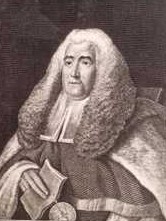 As is made clear in Kate Moore's The Woman They Could Not Silence, the laws of coverture were to blame for the abuse, institutionalization and subsequent poverty Elizabeth Packard suffered at the hands of her husband and other men in her community. Brought to North America by English colonizers, "coverture" was a common law that made married women completely dependent on their husbands. The word "coverture" comes from Old French and means "to cover." Under coverture, women were fully "covered" by the legal identity of their husbands. This meant that, once married, a woman effectively no longer existed in the eyes of the law.
The judge William Blackstone provided the first written description of English coverture in 1765, writing, "By...
If you liked The Woman They Could Not Silence, try these:
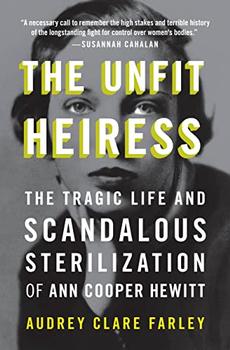
by Audrey Farley
Published 2023
For readers of The Immortal Life of Henrietta Lacks and The Phantom of Fifth Avenue, a page-turning drama of fortunes, eugenics and women's reproductive rights framed by the sordid court battle between Ann Cooper Hewitt and her socialite mother.

by Amy Sohn
Published 2022
The New York Times–bestselling author Amy Sohn presents a narrative history of Anthony Comstock, anti-vice activist and U.S. Postal Inspector, and the remarkable women who opposed his war on women's rights at the turn of the twentieth century.
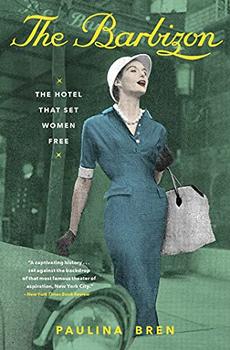
by Paulina Bren
Published 2022
From award-winning author Paulina Bren comes the first history of New York's most famous residential hotel - The Barbizon - and the remarkable women who lived there.

 (1).gif)
When an old man dies, a library burns to the ground.
Click Here to find out who said this, as well as discovering other famous literary quotes!

Can you name the title?
Test your book knowledge with our daily trivia challenge!