
-
Your next favorite book
is waiting.
Summary | Excerpt | Reviews | Beyond the book | Read-Alikes | Genres & Themes | Author Bio

A New History of Humanity
by David Graeber, David Wengrow Book Reviewed by:
A dramatically new understanding of human history, challenging our most fundamental assumptions about social evolution―from the development of agriculture and cities to the origins of the state, democracy, and inequality―and revealing new possibilities for human emancipation.
For generations, our remote ancestors have been cast as primitive and childlike―either free and equal innocents, or thuggish and warlike. Civilization, we are told, could be achieved only by sacrificing those original freedoms or, alternatively, by taming our baser instincts. David Graeber and David Wengrow show how such theories first emerged in the eighteenth century as a conservative reaction to powerful critiques of European society posed by Indigenous observers and intellectuals. Revisiting this encounter has startling implications for how we make sense of human history today, including the origins of farming, property, cities, democracy, slavery, and civilization itself.
Drawing on pathbreaking research in archaeology and anthropology, the authors show how history becomes a far more interesting place once we learn to throw off our conceptual shackles and perceive what's really there. If humans did not spend 95 percent of their evolutionary past in tiny bands of hunter-gatherers, what were they doing all that time? If agriculture, and cities, did not mean a plunge into hierarchy and domination, then what kinds of social and economic organization did they lead to? The answers are often unexpected, and suggest that the course of human history may be less set in stone, and more full of playful, hopeful possibilities, than we tend to assume.
The Dawn of Everything fundamentally transforms our understanding of the human past and offers a path toward imagining new forms of freedom, new ways of organizing society. This is a monumental book of formidable intellectual range, animated by curiosity, moral vision, and a faith in the power of direct action.
1
Farewell to Humanity's Childhood
Or, why this is not a book about the origins of inequality
'This mood makes itself felt everywhere, politically, socially, and philosophically. We are living in what the Greeks called the Kairos – the right time – for a "metamorphosis of the gods," i.e. of the fundamental principles and symbols.'
C. G. Jung, The Undiscovered Self (1958)
Most of human history is irreparably lost to us. Our species, Homo sapiens, has existed for at least 200,000 years, but for most of that time we have next to no idea what was happening. In northern Spain, for instance, at the cave of Altamira, paintings and engravings were created over a period of at least 10,000 years, between around 25,000 and 15,000 BC. Presumably, a lot of dramatic events occurred during this period. We have no way of knowing what most of them were.
This is of little consequence to most people, since most people rarely think about the broad sweep of human history anyway. They don't have ...
From our earliest origins, it seems, human civilizations have evolved in highly particularized and sometimes counterintuitive ways. Here you will find examples of prehistoric hunter-gatherer societies that lived in grand, architecturally complex temples, and nomad societies such as the Nambikwara, who had kings in winter, but not in summer. Graeber and Wengrow spend time delving into the rich political philosophies of early Native American peoples, expounding on a lacerating critique of colonial settlers by demonstrating how these philosophies influenced European ideas of freedom and equality. The historical evidence presented in this book challenges some of the most basic assumptions about the meaning of civilization. It opens the door to a far richer and more complex understanding of human creativity and political thought...continued
Full Review
 (812 words)
(Reviewed by Grace Graham-Taylor).
 Corey Robin, Brooklyn College and the CUNY Graduate Center
Graeber and Wengrow take up a question as old as Rousseau―the origin of social inequality―only to reveal that it predates Rousseau and may in fact be the wrong question, based on rubbish history and reactionary speculation. Scavenging through the most up-to-date archaeological research and most recent anthropological record, the authors give us a world more various and unexpected than we knew, and more open and free than we imagine. This is social theory in the grand, old-fashioned sense, delivered with spell-binding velocity and an exhilarating sense of discovery. James C. Scott, Sterling Professor of Political Science and Anthropology ('Demeritus'), Yale University, author of Seeing Like a State
Not content with different answers to the great questions of human history, Graeber and Wengrow insist on revolutionizing the very questions we ask. The result: a dazzling, original, and convincing account of the rich, playful, reflective, and experimental symposia that 'pre-modern' indigenous life represents; and a challenging re-writing of the intellectual history of anthropology and archaeology. The Dawn of Everything deserves to become the port of embarkation for virtually all subsequent work on these massive themes. Those who do embark will have, in the two Davids, incomparable navigators. Nassim Nicholas Taleb, author of The Black Swan
This is not a book. This is an intellectual feast. There is not a single chapter that does not (playfully) disrupt well seated intellectual beliefs. It is deep, effortlessly iconoclastic, factually rigorous, and pleasurable to read. Pankaj Mishra, author of The Age of Anger
Synthesizing much recent scholarship, The Dawn of Everything briskly overthrows old and obsolete assumptions about the past, renews our intellectual and spiritual resources, and reveals, miraculously, the future as open-ended. It is the most bracing book I have read in recent years. Rebecca Solnit, author of Hope in the Dark and Orwell's Roses
The Dawn of Everything is also the radical revision of everything, liberating us from the familiar stories about humanity's past that are too often deployed to impose limitations on how we imagine humanity's future...another of the powerful currents running through this book is a reclaiming of Indigenous perspectives as a colossal influence on European thought, a valuable contribution to decolonizing global histories. Robin D.G. Kelley, Gary B. Nash Endowed Chair in U.S. History, UCLA, author of Freedom Dreams: The Black Radical Imagination
Graeber and Wengrow have effectively overturned everything I ever thought about the history of the world...The authors don't just debunk the myths, they give a thrilling intellectual history of how they came about, why they persist, and what it all means for the just future we hope to create. The most profound and exciting book I've read in thirty years.
Corey Robin, Brooklyn College and the CUNY Graduate Center
Graeber and Wengrow take up a question as old as Rousseau―the origin of social inequality―only to reveal that it predates Rousseau and may in fact be the wrong question, based on rubbish history and reactionary speculation. Scavenging through the most up-to-date archaeological research and most recent anthropological record, the authors give us a world more various and unexpected than we knew, and more open and free than we imagine. This is social theory in the grand, old-fashioned sense, delivered with spell-binding velocity and an exhilarating sense of discovery. James C. Scott, Sterling Professor of Political Science and Anthropology ('Demeritus'), Yale University, author of Seeing Like a State
Not content with different answers to the great questions of human history, Graeber and Wengrow insist on revolutionizing the very questions we ask. The result: a dazzling, original, and convincing account of the rich, playful, reflective, and experimental symposia that 'pre-modern' indigenous life represents; and a challenging re-writing of the intellectual history of anthropology and archaeology. The Dawn of Everything deserves to become the port of embarkation for virtually all subsequent work on these massive themes. Those who do embark will have, in the two Davids, incomparable navigators. Nassim Nicholas Taleb, author of The Black Swan
This is not a book. This is an intellectual feast. There is not a single chapter that does not (playfully) disrupt well seated intellectual beliefs. It is deep, effortlessly iconoclastic, factually rigorous, and pleasurable to read. Pankaj Mishra, author of The Age of Anger
Synthesizing much recent scholarship, The Dawn of Everything briskly overthrows old and obsolete assumptions about the past, renews our intellectual and spiritual resources, and reveals, miraculously, the future as open-ended. It is the most bracing book I have read in recent years. Rebecca Solnit, author of Hope in the Dark and Orwell's Roses
The Dawn of Everything is also the radical revision of everything, liberating us from the familiar stories about humanity's past that are too often deployed to impose limitations on how we imagine humanity's future...another of the powerful currents running through this book is a reclaiming of Indigenous perspectives as a colossal influence on European thought, a valuable contribution to decolonizing global histories. Robin D.G. Kelley, Gary B. Nash Endowed Chair in U.S. History, UCLA, author of Freedom Dreams: The Black Radical Imagination
Graeber and Wengrow have effectively overturned everything I ever thought about the history of the world...The authors don't just debunk the myths, they give a thrilling intellectual history of how they came about, why they persist, and what it all means for the just future we hope to create. The most profound and exciting book I've read in thirty years.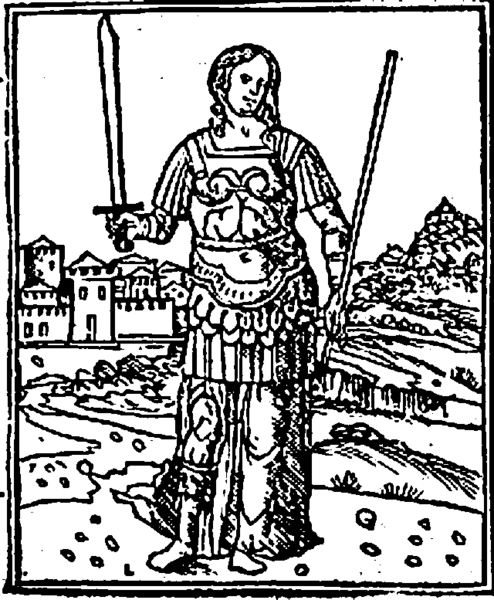 Among the many fascinating anecdotes presented in David Graeber and David Wengrow's The Dawn of Everything, one stood out to me. This was the myth of Semiramis (also known as Sammu-ramat), a woman of low stature who rose to become queen of the empire of Assyria. Graeber and Wengrow mention her in a chapter discussing role reversals, using her as an example of the flexibility of hierarchies in earlier periods of human history. Behind the mythical Semiramis is a real woman who lived in the ninth century BC and is known for her keen intelligence and military prowess.
Semiramis's approximate five-year rule over the Assyrian Empire has inspired artists for centuries. She waged several successful military campaigns in Persia and North ...
If you liked The Dawn of Everything, try these:
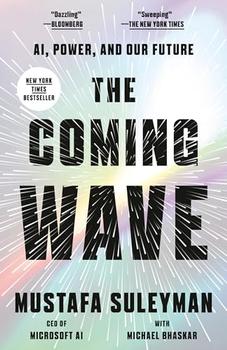
by Mustafa Suleyman
Published 2025
An urgent warning of the unprecedented risks that AI and other fast-developing technologies pose to global order, and how we might contain them while we have the chance—from a co-founder of the pioneering artificial intelligence company DeepMind

by Sarah Wynn-Williams
Published 2025
An explosive memoir charting one woman's career at the heart of one of the most influential companies on the planet, Careless People gives you a front-row seat to Facebook, the decisions that have shaped world events in recent decades, and the people who made them.
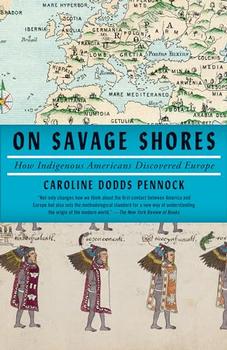
by Caroline Dodds Pennock
Published 2024
A landmark work of narrative history that shatters our previous Eurocentric understanding of the Age of Discovery by telling the story of the Indigenous Americans who journeyed across the Atlantic to Europe after 1492


 (1).gif)
I am what the librarians have made me with a little assistance from a professor of Greek and a few poets
Click Here to find out who said this, as well as discovering other famous literary quotes!

Can you name the title?
Test your book knowledge with our daily trivia challenge!